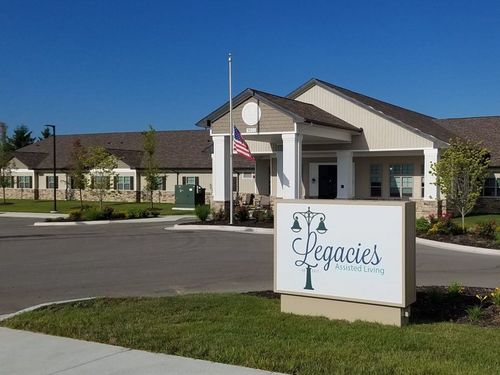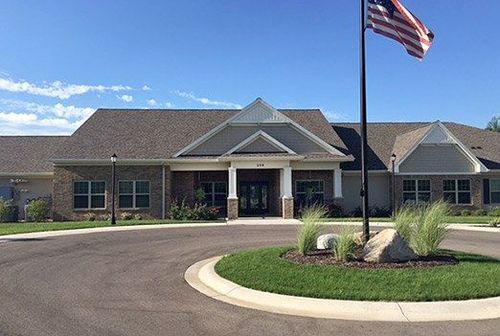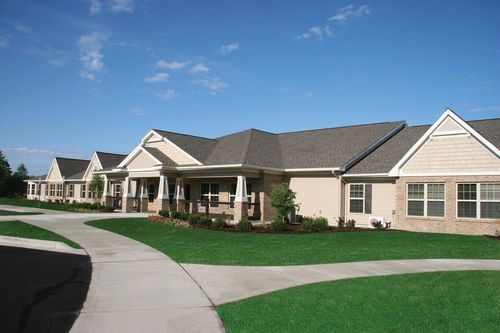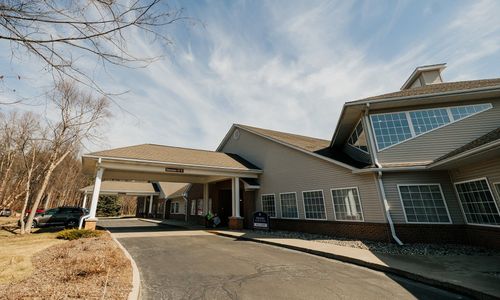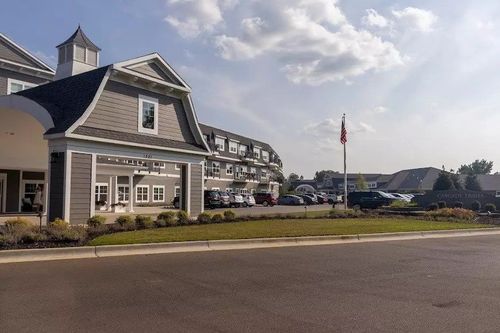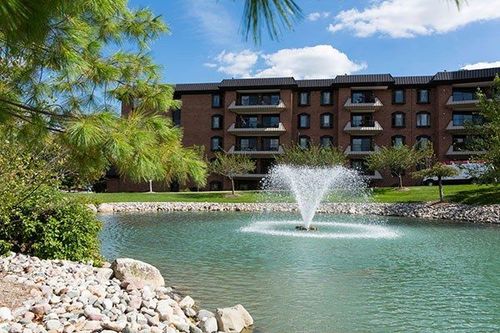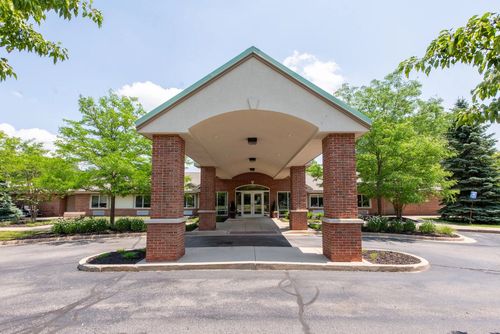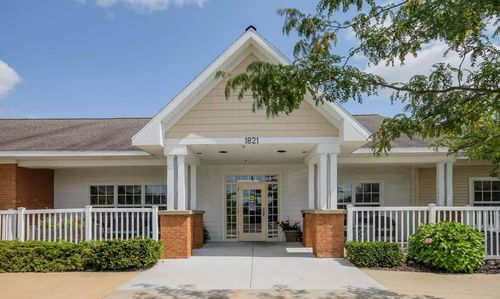
Hastings holds the county's secured dementia support at Woodlawn Meadows Assisted Living, a few minutes from Corewell Health Pennock Hospital, which is where most local families first hear a diagnosis named and where the referral to a neurologist in Grand Rapids or Kalamazoo gets written.
Because that address also runs assisted living, the county's step from general help into secured support happens under one roof rather than across a county line. For a resident whose orientation is already unsteady, moving down a hallway instead of across a map is not a small detail. It is often the difference between a settled first month and a hard one.
The First Month, and How Families Stay in It
The transition is the part worth planning, and a well-run move sets a care conference at about thirty days and quarterly after that, agrees how the family will hear about a fall or a medication change, and settles the small questions that turn out to matter: which hours a spouse should visit, which belongings from home help, whether meals go better with company or without.
Dementia-trained care is a specific thing rather than a marketing line. Caregivers redirect instead of correcting, the day runs on fixed hours so nobody is asked to remember a schedule, sessions stay short, and doors are secured so a resident looking for a familiar exit finds staff rather than a parking lot. Overnight coverage is the question families forget, and awake staffing is not the same as staff who can be woken.
What It Costs When No Local Building Takes Medicaid
Woodlawn Meadows Assisted Living publishes a starting rate of $4,300 a month, and that figure is the entry point for daily assistance rather than the price of secured dementia support. Memory care runs above it, typically by several hundred dollars a month, because the staffing ratio is deeper, caregivers carry dementia training and the secured design costs more to operate.
No Barry County community participates in Medicaid at present, which front-loads the planning arithmetic. Michigan's route for this kind of care is the MI Choice Waiver, which buys personal-care hours in a licensed residential setting for residents assessed at nursing-facility level need, and it is worth understanding even where it is not currently in play, because dementia is a long condition and finances shift over years. Households should map the private-pay runway against how long care is realistically needed, and do it while there is still a choice about how the money gets used.
Demand Rises With the County's Age
One Barry County resident in five is now past 65, and the share keeps climbing as the townships and the villages age together. Dementia risk rises steeply with age, so a county aging this way generates steady demand for secured rooms even though the population is not growing fast.
Secured capacity, meanwhile, is a fraction of the county's overall senior living capacity and it does not expand on demand. Rooms open when a resident moves on rather than when a builder finishes, which is why families who make the call at diagnosis rather than at the point of exhaustion tend to have a choice of timing.
Why Families Keep a Parent in Hastings
Visits are the reason, and dementia changes their arithmetic. A spouse who can be at the building in ten minutes visits daily, a spouse facing a ninety-minute round trip visits weekly and then less, and daily presence is one of the few things that reliably steadies a resident through the middle stages.
Distance handles the rest, since Grand Rapids and Kalamazoo each sit about forty-five minutes out for neurology and specialist appointments, so a resident reaches the specialist without living next door to one, and adult children driving from either direction can manage an evening visit and still get home. Familiar faces help too, since a caregiver from the same small county often shares the resident's landmarks, church and vocabulary.
Where an Advisor Makes the Difference
Three questions decide the next month, and all three have answers someone covering the county can give today: whether a secured room is genuinely open, how the building handles a resident whose needs move past what the assisted living side can hold, and what a written quote looks like at the memory care level rather than at the entry rate.
Sequencing is the harder work, because diagnosis timing, the private-pay runway, the point at which home care stops being enough, and the way a hospital stay at Pennock reshapes a plan all belong in one conversation rather than four. When the picture is still forming and nothing has been decided, it helps to talk it through with someone who already knows the county's one secured address.
The Barry County directory continues to grow as we evaluate providers for quality and alignment in 2026. Start the conversation about memory care in Barry County, or look through the buildings we cover at your own pace.