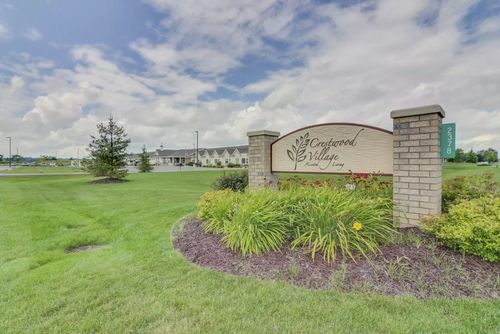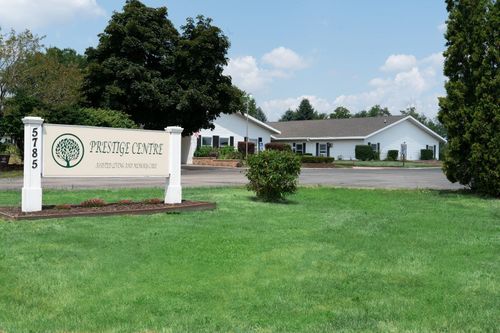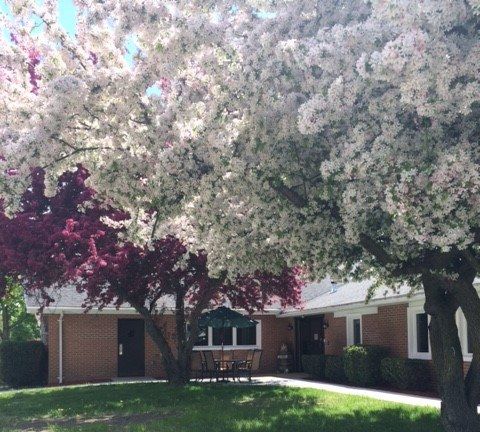

Memory care in Clare County is priced as a step up inside buildings that already provide assisted living rather than as a separate destination. Niche Aging Clare I and Pioneer Golden Estates C both carry secured dementia support above their entry rates, and both sit in the town of Clare.
For a family, that arrangement quietly removes the worst version of this decision. A resident who moves in while still managing most of the day does not have to pack a room and learn a new set of faces when dementia progresses, and the staff who know how that person takes their coffee are the same staff who will be there later.
Afternoons, Routines, and What Secured Means
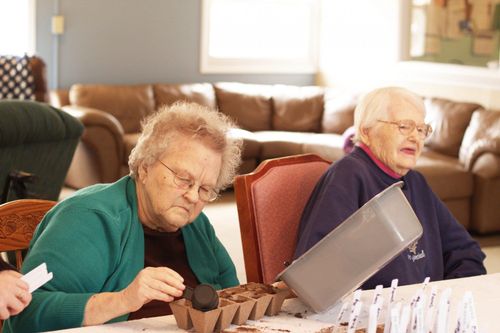
Late afternoon is the part of the day families ask about least and should ask about most. Restlessness that arrives around dusk is one of dementia's most predictable patterns, and how a building handles it, with light, with movement, with a task somebody can succeed at, tells you more about the staff than any tour of a bedroom will.
Secured, in practice, means doors that alarm or lock rather than a locked ward, so a resident who goes looking for a familiar exit meets a caregiver instead of a parking lot. The other pieces are a day on fixed hours, meals paced slowly with help at the table, caregivers trained to redirect rather than argue, and staff genuinely awake overnight rather than sleeping on call. Ask about that last one directly, because the difference is invisible on a daytime visit and it is what matters at three in the morning.
Pricing a Level That Moves
Pioneer Golden Estates C posts an entry rate of $4,090 a month and Niche Aging Clare I posts $4,800, and both figures buy assisted living rather than secured care. Dementia support adds a few hundred dollars a month on top, since a secured setting needs more caregivers on the floor and training that ordinary assisted living does not require.
Because dementia progresses, the number worth asking about is not this year's rate but next year's. Request written care-level pricing from both buildings, find out what triggers a move between levels and how much notice a family gets, and treat the gap between levels as money that has to exist later. Neither address participates in Medicaid, so this is a private-pay road for its whole length, and mapping how many years the household's resources cover at the higher level is a first-week task rather than a someday one.
Demand in an Ageing County
Secured rooms are a subset of an already small field, and that subset does not grow when demand does. Both Clare buildings serve the town, the surrounding townships and families arriving down the US-127 corridor, and rooms come free through turnover rather than through anything being built.
That pressure meets one of Michigan's oldest county populations, exactly the age structure that produces steady dementia demand a decade out. The families who start looking when a diagnosis lands, rather than when caring at home has become impossible, are consistently the ones who get to choose which setting their parent enters.
Why Families Keep Dementia Care in Clare
The medical path stays local, with diagnosis and ongoing care running through a family physician in town and MyMichigan Medical Center Clare, specialist appointments about thirty-five minutes east in Midland, and none of that changing when a resident moves into a secured setting a few streets away.
Visiting is the stronger argument, because dementia rewards short frequent visits far more than long occasional ones, and a spouse or a daughter who lives in Clare or Farwell can drop in after work in a way that nobody sustains across an hour of highway. A small town helps in a subtler way too, because caregivers who grew up here often share a resident's landmarks and vocabulary, and that shared ground is worth a great deal when words start to go.
Choosing Between Two Secured Settings
The right question is not which building is better but which suits this particular person, and answering it needs information that changes weekly: whether a secured room is open at either address, what a quote comes to at the memory care level rather than the entry rate, and how each has handled residents whose dementia advanced further than expected.
Those answers exist locally and cost nothing to ask for, as does the harder conversation about how long private funds last in a county with no Medicaid-participating building. If a diagnosis has arrived and the next step is unclear, a short conversation is usually enough to put both settings in order and show what the timeline really looks like.
Our directory for Clare County continues to grow as we evaluate providers for quality and alignment in 2026. Reach out for a conversation about memory care in Clare County, or browse the communities we have vetted at your own pace.