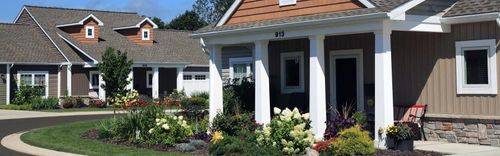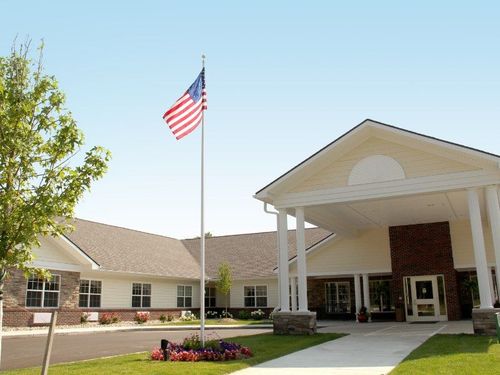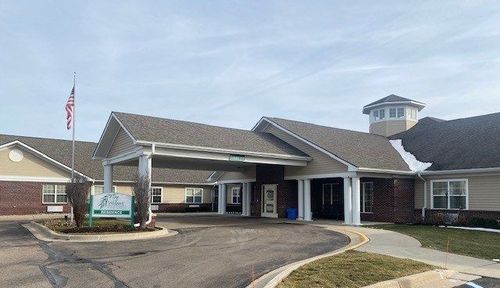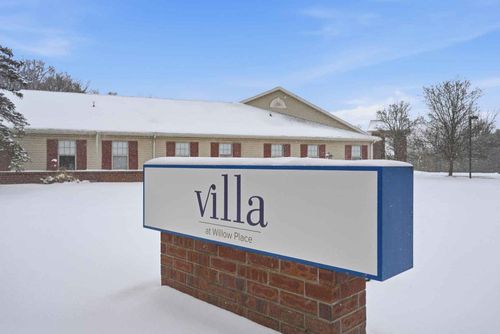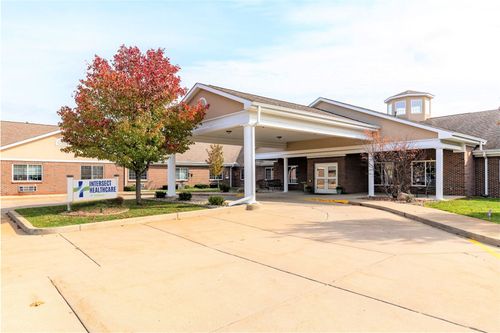

Skilled nursing in Jackson County sits on a health campus rather than in a freestanding nursing home. Mission Point Health Campus of Jackson on Robinson Road runs licensed nursing alongside assisted living and secured memory care on the same site, which means a resident can arrive for rehabilitation straight from hospital, or step up to skilled nursing from elsewhere in the building, without the address changing.
That model matters more than it sounds. Most people who end up needing licensed nursing never planned for it, and the gap between arriving somewhere entirely new and moving along a corridor the family already knows shows up in how the first fortnight goes.
What a Rehabilitation Stay Actually Looks Like
The short-stay side runs on weekday therapy hours and a discharge date. A resident recovering from a hip replacement, a stroke or a bad pneumonia typically works one to three hours a day across physical, occupational and speech therapy, in a gym with parallel bars, exercise tables and a mock kitchen for practicing the ordinary tasks that get someone home safely. Most of these stays run two to five weeks.
Wrapped around that is the clinical layer: nursing cover on every shift of the week, a prescriber doing rounds, and a medication regime handed over to trained staff, intravenous courses included. The long-stay side of the same building is quieter and slower, holding residents whose conditions need that clinical layer permanently. Ask which of the two populations a bed is being offered from, because they run on different clocks.
Stepping Up Inside a Building You Already Know
One thing families on a campus like this one get wrong is assuming that moving from assisted living into skilled nursing on the same site keeps the funding arrangement intact. It does not. Medicare only pays toward a rehabilitation stay after a qualifying inpatient hospital admission of three nights, and a step-up from the assisted living side without that hospital stay is private pay from day one.
The campus's published assisted living figure, $3,800 a month, is therefore no guide at all to what the skilled tier costs, which sits far above it and reflects licensed nursing rather than hospitality. One of the county's skilled settings participates in Medicaid, which is the route most long stays eventually run through once private assets are spent down. Getting clear on which pathway applies, and when, is the single most valuable piece of preparation a family can do here.
Demand Set by a Discharge Desk
What drives skilled nursing volume in this county is not its population but its hospital. Henry Ford Jackson Hospital is the only acute care hospital in Jackson County, carrying a Level II trauma verification, a Primary Stroke Center designation and a sixty-bed emergency department, and its catchment reaches well past the county line.
That produces a particular rhythm. Beds turn over on discharge cycles rather than seasonally, availability can change within a day, and families from the smaller counties around Jackson compete for the same rooms. A referral that looked secure on Tuesday can be gone by Thursday.
Why Proximity to the Hospital Earns Its Keep
Skilled nursing residents go back to hospital more often than any other group in senior living. Infections, cardiac events, falls and medication problems are routine rather than exceptional, and the distance between a nursing bed and an emergency department shapes how each of those episodes ends.
Having the county's skilled nursing a short run from a Level II trauma center with a stroke program and a catheterization lab is worth more than any feature of a building. It means a resident is assessed quickly, treated locally and returned to a familiar bed with staff who already know their baseline, rather than being stabilized somewhere unfamiliar and coming back a stranger.
When the Clock Belongs to Somebody Else
Skilled nursing decisions are made on a timetable a family did not choose. A discharge planner wants an answer in a day or two. What decides it is whether a bed exists at the required clinical level, whether this building is staffed for the particular problems the resident brings, and how many Medicare days remain against the stay anyone realistically expects.
The financial question follows immediately behind and is easier answered early. What the private rate does to a household's assets, when a Medicaid application needs to start, and what documentation it will want are all things that can be worked out while a resident is still in hospital rather than at day ninety. None of it costs a family anything. When a discharge date is already written on a whiteboard, a short conversation turns a list of names into a decision.
Our Jackson County directory keeps expanding as we evaluate providers for quality and alignment in 2026. Start the conversation about skilled nursing in Jackson County, or look through the buildings we cover at your own pace.