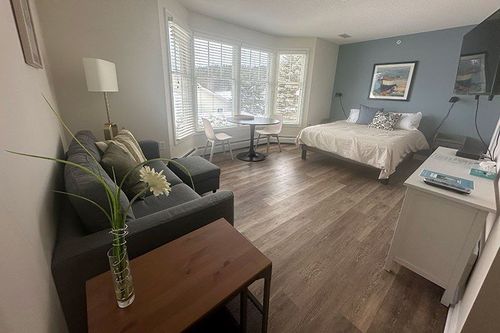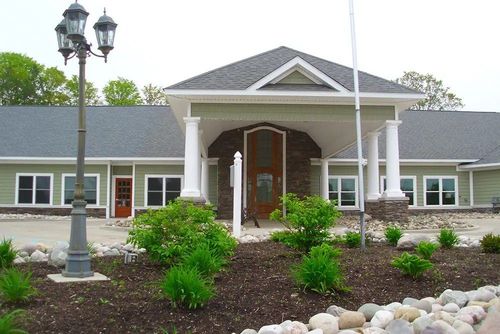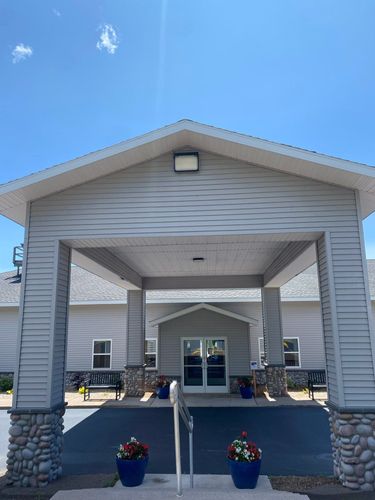
St. Ignace changes size twice a year: summer fills it with people crossing to Mackinac Island, winter empties it again, and Straits Area Senior Living Community, the county's assisted living building, keeps twenty residents through both. That seasonal rhythm is the backdrop to everything about senior living here, including the question a family should ask first.
Mackinac County holds fewer than eleven thousand residents and close to three in ten of them have passed sixty-five, which is among the highest shares in Michigan. One building serves all of it, so the useful work is not comparison but understanding what that building is actually like.
Staffing in a Seasonal Town
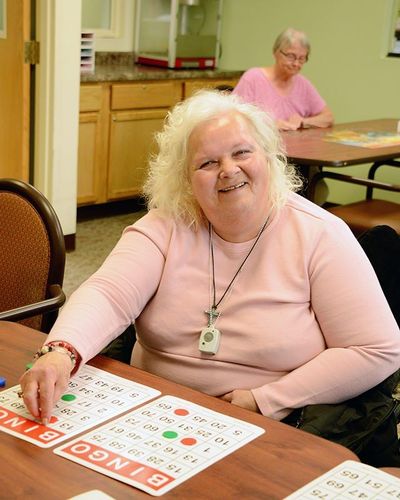
The services here are what assisted living provides anywhere: help with dressing, washing and getting about safely, medications administered and logged, meals, laundry and cleaning, an activity calendar, and rides to appointments, with hands-on care rated on arrival and charged above the room.
What is worth probing in a resort town is who provides it in February. Seasonal economies pull labour toward summer work, and the buildings that do well through a northern winter are the ones with caregivers who live here year-round rather than a roster that thins after Labor Day. Ask how many of the current team have been in post more than two years, and what the arrangement is when somebody cannot get in during a storm. In a twenty-bed building the answer to those two questions shapes daily life more than any service on a list.
What $3,500 Buys and What Sits Above It
The published starting figure is $3,500 a month, covering the room, meals, housekeeping and laundry, the activity calendar and transport. Personal care is rated when a resident moves in and billed as a tier on top, so anyone needing steady hands-on help will land above that number rather than at it.
With no Medicaid participation locally, this runs on private money throughout. Retirement incomes across the eastern Upper Peninsula tend to be modest, which makes the length of the runway the governing question rather than the affordability of the first year, and answering it properly means asking for the written schedule of what each care tier adds. An insurance policy taken out decades ago, or the veterans' Aid and Attendance pension, is often what buys the extra years, and neither is arranged in a hurry.
An Old County on a Very Small Base
Roughly 3,300 people over sixty-five live in Mackinac County, the result of many decades of retirement to the Straits rather than of anything unusual about how people age here.
Measured against twenty beds, that ratio explains why timing decides so much. A household already known to the building, whether from an earlier visit or through a neighbour living there, is in a different position from one telephoning cold, and in a county this small that difference is not about favouritism but simply about who hears first.
More on One Campus Than the County Size Suggests
What surprises people is the depth of healthcare in a place this small. Mackinac Straits Health System runs a fifteen-bed critical access hospital carrying a Level IV trauma designation, and on the same St. Ignace campus sit a rural health clinic, an oncology clinic, an outpatient surgical centre, a tribal health clinic, a pharmacy, an emergency room, a walk-in clinic and physical therapy, staffed by forty-six providers including twenty-one visiting specialists. An affiliation with Munson Healthcare widens what can be arranged without travelling.
The campus also holds a forty-eight-bed long-term care facility, which matters more to a family than it sounds. It means a county of eleven thousand people has a full ladder of care inside its own borders, so a resident whose needs eventually outgrow twenty beds of assisted living is not automatically facing a move across the bridge and away from everyone who visits them.
Reading the Only Building Properly
With one address at this level, an advisor covering Mackinac County contributes scrutiny rather than a shortlist. Whether a room is genuinely open, what a realistic care rating adds to the base rate, how stable the team has been through recent winters, and how the building handled the last resident whose needs rose sharply are the things that determine whether a move works, and none appear in print.
There is also the harder question of whether assisted living is the right level for a particular person right now, which lands better from someone impartial than from a son or daughter. Arriving too soon and arriving too late both create problems that are difficult to undo. Getting a straight answer on that costs nothing, and half an hour to talk it through beforehand generally makes the first visit far more useful.
The Mackinac County directory continues to grow as we evaluate providers for quality and alignment in 2026. Reach out for a conversation about assisted living in Mackinac County, or look through the communities we have vetted at your own pace.