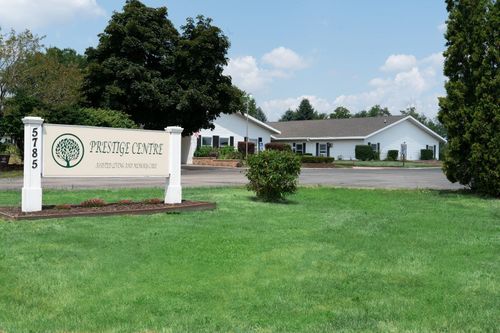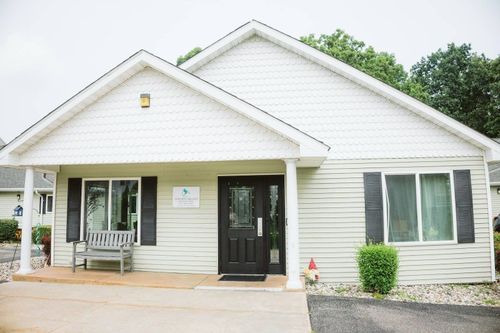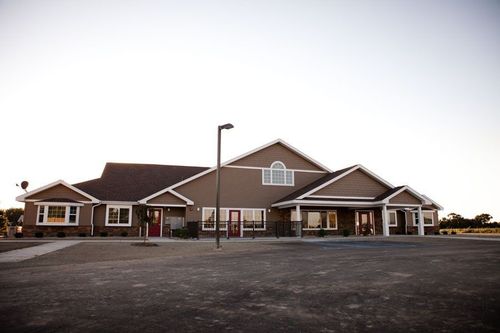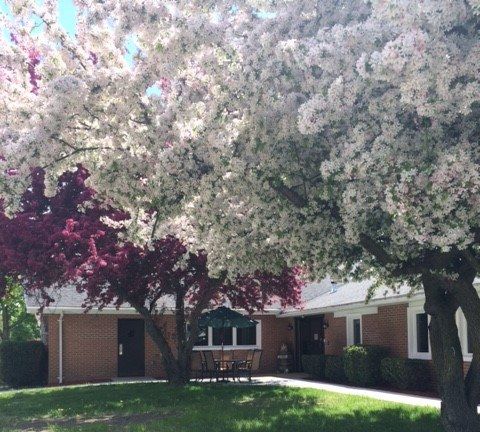
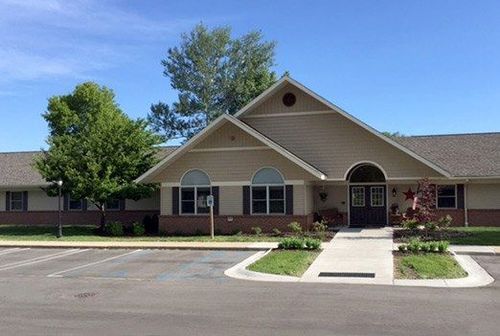
Distance does more damage in memory care than at any other level, which makes the shape of the county's secured options the first thing worth understanding. One of the two secured settings is in Midland itself and the other, Coleman Fields Assisted Living, sits well out in the county's north-west corner, and the gap between them is the difference between dropping in after work and setting aside a morning.
For somebody living with dementia that is not a convenience question. Short, frequent visits do considerably more good than long ones spaced weeks apart, so the address a family can genuinely reach on a Wednesday evening tends to be the address that produces the better year.
What Changes When the Doors Lock
A secured setting is not an assisted living building with a keypad added. The day is built to repeat, since a routine somebody does not have to remember is what keeps the hard moments rare. Staff work by steering a conversation elsewhere rather than arguing with it, plates go back to the kitchen with someone noticing how much came off them, and the rota assumes people will be up at hours nobody planned for.
Evenings are where the differences show, and they are the part families forget to ask about. Late afternoon is when distress most often surfaces, when a resident starts looking for a car that was sold or a house that was left, and a building that handles five o'clock well will hold somebody for years. Ask what the evening looks like, who is on then, and what happens when a resident wants to leave. One of these addresses also welcomes pets, which is worth knowing when a dog is among the few things still recognised.
The Number Nobody Quotes First
The published rates in this county, $4,200 and $4,800 a month, are assisted living figures. Secured care prices above them, everywhere in Michigan, and a household that budgets from the advertised number is budgeting for the wrong tier. Ask for the secured rate at the outset, not the entry one.
Both of these addresses carry assisted living alongside their secured tier, which turns that premium into a foreseeable cost rather than a surprise. Find out what triggers a move from one level to the other, who makes that call, and exactly what it adds each month, because a resident arriving at the assisted tier with a diagnosis in hand will very likely make that move. Medicaid is not accepted for memory care in the county, so this is private money from start to finish.
Where the Secured Rooms Actually Are
Against a senior population of roughly 18,000, the county's secured capacity is a good deal smaller than its assisted living capacity, because not every local address carries a secured tier at all. The pool of people who will eventually need one grows every year.
That mismatch is why availability here behaves the way it does. Nothing is published, a room opens when another resident's situation changes, and the households that hear about it were already talking to the building. Secured rooms also turn over more slowly than assisted ones, since residents who move in tend to stay.
Familiar Doctors and Familiar Faces
Continuity does more work in dementia than in any other condition, because a resident who cannot hold a new name can still recognise a face that turns up every day. That argues for the building a family can keep visiting rather than the one that photographs best.
The medical side reinforces it, since a resident who needs the hospital goes minutes down the road and comes back to the same room, the same caregivers and the same routine, rather than returning disoriented to somewhere unfamiliar. For somebody with dementia, that unbroken thread is not a nicety; it is most of what makes a placement work.
Choosing Between Two, Carefully
With a short list and a real geographic split, the comparison rests on things no listing carries: which address has a secured room now, how each assessment reads a particular set of needs, what evening staffing genuinely looks like, and how each has handled a resident whose dementia progressed.
The second question is the one families ask too late. What each building can support in the later stages, when it would say a resident has outgrown it, and what the secured premium adds are things far better established before a move than during one. All of it is quicker to talk it through than to research, and doing it early is what keeps the choice open.
We keep expanding our Midland County coverage as we evaluate providers for quality and alignment in 2026. Start the conversation about memory care in Midland County, or scan the buildings we cover at your own pace.