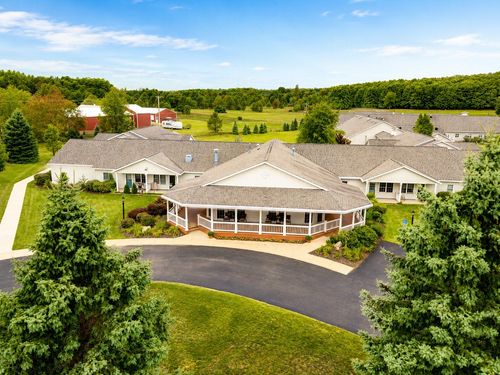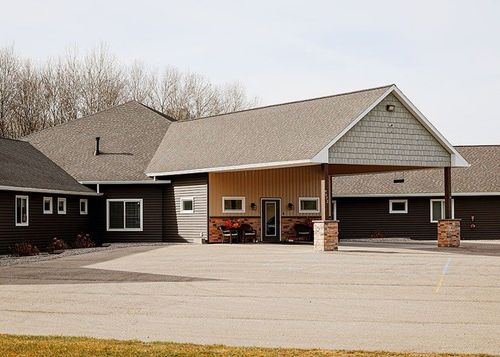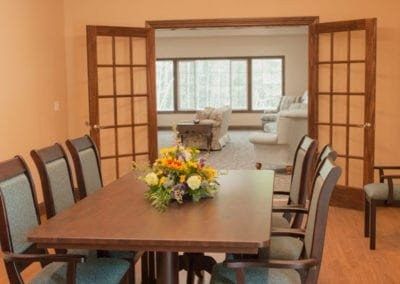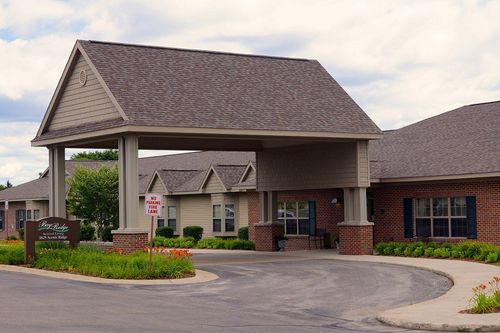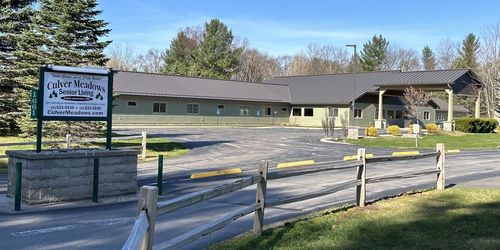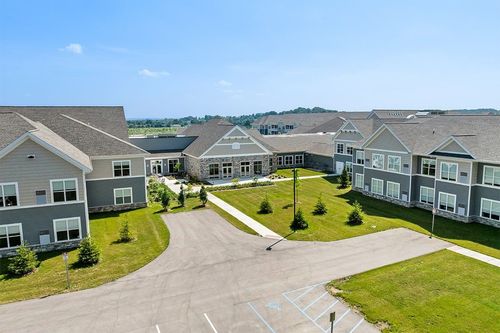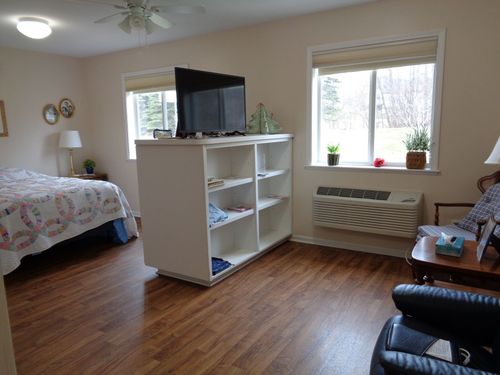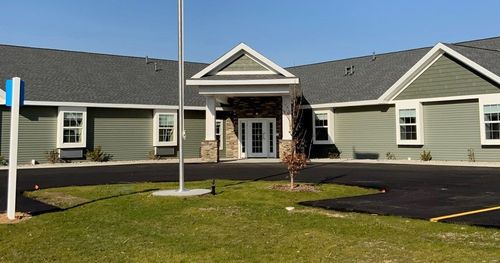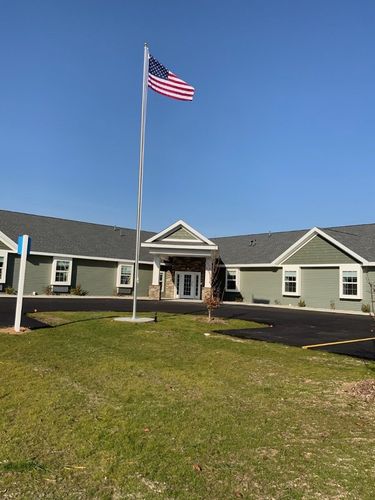
Missaukee County has no hospital inside its borders, and its secured dementia care is a single setting in Lake City: Maple Ridge Living Center, which also provides the county's assisted living. Those two facts define the search here more than anything about the building itself.
What they mean in practice is that a family is not choosing among options. They are deciding whether the setting available fits the person who needs it, and arranging the medical side around a hospital fourteen miles away in Cadillac rather than one down the road.
The Case for a Small Secured Setting
Dementia care depends on being known, and a resident who cannot retrieve a name still recognises a face, a voice and the rhythm of a person's approach. That recognition is what turns a strange morning into an ordinary one, so how long the caregivers stay counts for more here than any feature of the building.
A small setting is well suited to that, since the same few people cover most shifts, habits get learned rather than written down, and the day runs on repetition: meals at the same hours in the same room, medications from someone already familiar, activities kept short enough that finishing them is realistic. Exterior doors stay secured with staff present overnight, so a resident awake at four in the morning finds a person rather than a locked door. What deserves a direct question is what happens on a hard evening, since a small team has fewer people to draw on when one resident needs concentrated attention for hours.
What the Secured Tier Costs Without a Waiver
The published starting figure at Maple Ridge Living Center is $3,400 a month, and dementia care is charged above whichever care level a resident is placed at. That makes the published number the beginning of the arithmetic rather than its conclusion, and the figure a household actually has to plan against is the secured rate at a realistic care level.
By Michigan standards a base rate in that region is genuinely low, which shifts the conversation from whether care is affordable at all toward how many years the money will hold. Medicaid is not available in this county, so that runway is entirely private, and the honest way to measure it is against the secured rate rather than the entry one.
A Small County That Looks Outward for Medicine
Around 3,300 of Missaukee County's 15,200 residents are past sixty-five, better than one in five and above the state figure, in a county small enough that a single secured setting is what the population supports.
The absence of a local hospital shapes the rest. Munson Healthcare Cadillac Hospital, a forty-nine-bed hospital offering diagnostic, emergency, surgical, cardiac and cancer services, sits fourteen miles from Lake City on M-55, about twenty minutes, and it is where most medical appointments and any urgent night lead. Twenty minutes is short enough to be a routine part of life here rather than a hardship, but it is worth knowing before a move rather than after.
Why Local Matters More With Dementia, Not Less
Visiting is the argument, and it is a stronger one in dementia care than at any other level. Frequency does more than duration, since twenty minutes at a good hour achieves what a long afternoon at a bad one cannot, and that pattern only survives when the drive is genuinely short.
It is also how a family stays informed, because someone dropping in several times a week sees what a phone call never shows: that a resident is easier before lunch than after, or that a new medication has taken the edge off them. Those small observations are what a care review is built from. For households in Lake City, McBain or the surrounding townships, staying in the county keeps that possible through a Michigan winter as well as a Michigan summer.
Assessing a Single Setting Properly
Where a county has one secured setting, the useful work is scrutiny rather than comparison. Whether space is genuinely free, what the secured rate reaches once a care level is applied, how stable the staff have been, and what the team did the last time a resident became distressed in the evening: those are the questions that decide whether a move works, and none appear in print.
The question that matters most is where the setting's limit lies, and it should be asked before a move rather than in the middle of one. Every such setting has a threshold it cannot safely cross, and knowing where that sits in advance is the difference between planning and hoping. Getting those answers costs a household nothing, and half an hour to talk it through beforehand is worth more than a first visit made blind.
Our directory for Missaukee County continues to grow as we evaluate providers for quality and alignment in 2026. Start the conversation about memory care in Missaukee County, or look through the buildings we cover at your own pace.