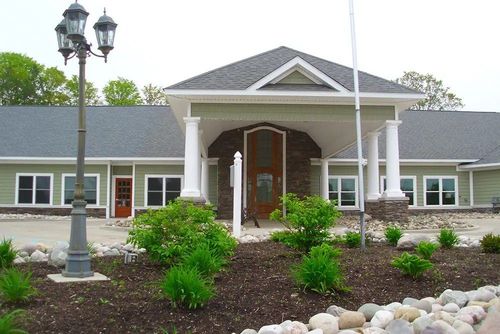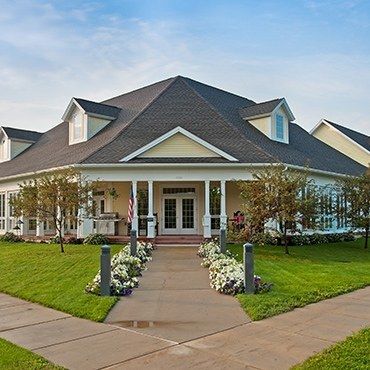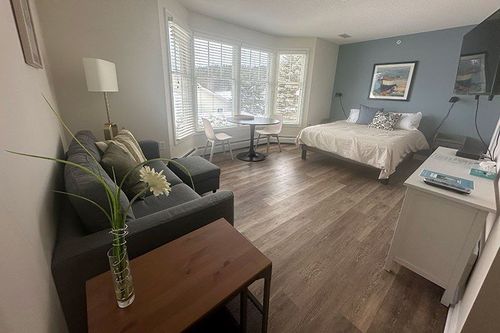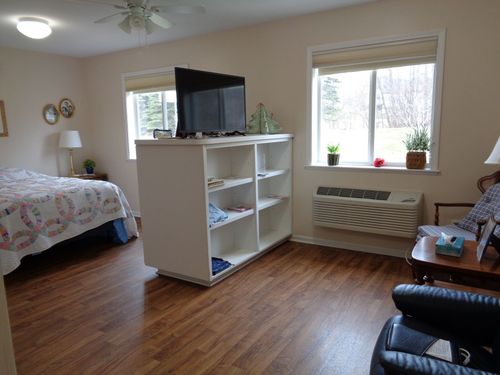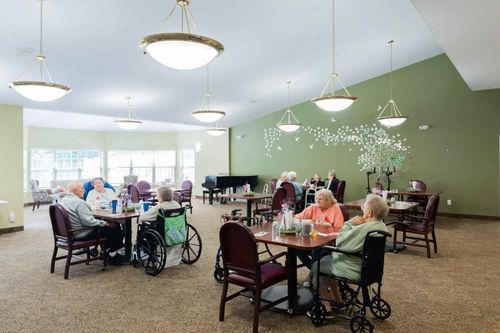
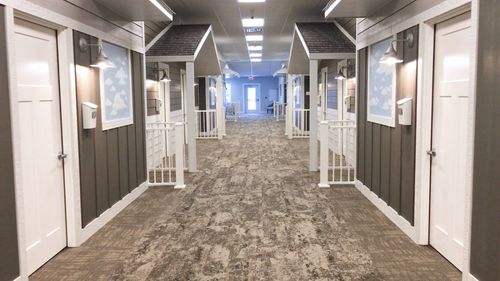
Two of Gaylord's senior living buildings carry a secured area for residents living with dementia: Aspen Ridge Retirement Village and The Porches Of Gaylord. Both pair that secured care with assisted living under one roof, so for a household already settled in either, a change in cognition does not necessarily mean a change of address.
For everyone else it means a short list and a decision that turns on temperament rather than logistics. The buildings are minutes apart in the same town, which removes the geography question entirely and leaves only the harder one about which environment a particular person would settle into.
Recognition, Routine, and Who Is on the Floor
Secured dementia care works on familiarity more than on anything a brochure can photograph. A resident who has lost a name still recognises a face and a tone of voice, and that recognition is what stops an ordinary morning from turning frightening, which is why caregiver turnover carries more weight at this level than at any other.
Both Gaylord settings build the day around repetition: the same rooms at the same hours, medications handed out by people a resident has seen before, and activity blocks kept short enough that finishing one is realistic. Exterior doors are secured and staffed overnight, so someone awake at three in the morning meets a person rather than a locked door. The practical difference comes down to how busy each feels and how many staff are on the floor at difficult hours, visible only by standing in each secured area at a bad time of day rather than a good one.
The Step Above the Assisted Living Rate
Base rates at the two buildings are $3,775 and $4,300 a month, with the secured tier charged on top of whichever one a resident starts from. Neither published figure is a monthly total, then, and the figure that matters is what the secured area costs once a care level has been assigned.
Neither building participates in Medicaid, which makes the size of that step the central planning question rather than an afterthought. A budget assembled around the base rate tends to fail at exactly the wrong moment, roughly eighteen months in, when assessed needs have deepened and the monthly figure has moved with them. Households expecting to spend down should price the top of the ladder before choosing, not after, and should establish early whether a long-term care policy or a veteran's Aid and Attendance benefit is available to them.
Secured Rooms Open From the Inside
Both of these secured areas sit inside buildings that also run assisted living, which changes how a room becomes available. Space here rarely appears on an open market; it opens when a resident already living in the building moves into it, or when someone's stay ends, and that flow is internal rather than advertised.
Gaylord also draws from further afield than its own county. Munson Healthcare Otsego Memorial Hospital serves a spread of small communities including Atlanta, Lewiston, Vanderbilt, Indian River and Waters, and families from those places look at the same two secured areas, so demand is broader than Otsego County's own numbers suggest.
Visiting Often Is the Point
Dementia visiting rewards frequency over duration, since twenty minutes at a good hour does more than an afternoon at a bad one. That pattern only holds when the drive is short enough to be unremarkable, which in a single-town county it is for anyone living in or near Gaylord.
Frequency is also what keeps a family informed, because a relative dropping in several times a week notices what a monthly call never will: that a resident is brighter in the mornings now, or that a medication change has flattened them. Those observations are what a care conference is actually built from. In a northern county the winter version of this matters too: a fifteen-minute drive stays viable in February in a way that an hour on a snowy road does not.
What Local Knowledge Is Worth Here
With only two secured areas in the county, an advisor covering Gaylord is not producing a shortlist so much as reading two buildings honestly: which has space now, what the secured rate comes to at a realistic care level in each, and what each has done in the past when a resident's needs went beyond what it was able to hold.
That last point deserves weight, because a county with two secured options has no third to fall back on, and knowing in advance how far each building can go is the difference between a plan and a hope. It is a short set of questions, and half an hour to talk it through first usually saves a household from touring in the worst possible week.
We keep expanding our Otsego County coverage as we evaluate providers for quality and alignment in 2026. Start the conversation about memory care in Otsego County, or look through the buildings we cover at your own pace.