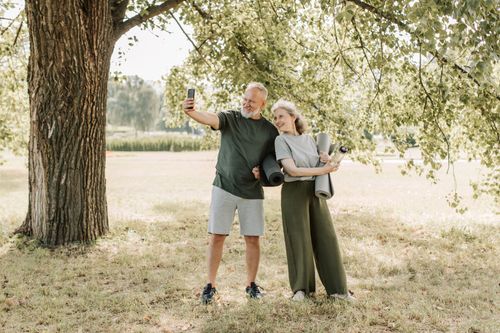
It is easy to tour a senior living community, admire the lobby and the dining room, and never step outside. That is a mistake, because the patios, gardens, and walking paths often do more for residents' health than anything indoors. Outdoor spaces matter in senior living because time outside strengthens bones through sunlight and vitamin D, improves balance and heart health through walking, lowers stress and lifts mood, supports better sleep, and draws residents together, which is why a community's gardens and paths deserve as much attention as its interior.
This article explains what time outdoors does for older adults, what a genuinely usable outdoor space includes, and how to make sure residents actually get to enjoy it.
How Time Outdoors Helps the Body
The physical case for getting outside is strong and specific. Sunlight prompts the body to make vitamin D, and just ten to thirty minutes of sun a few times a week supports the calcium absorption that keeps bones strong and lowers fracture risk.
Walking outdoors adds its own benefits, improving circulation, balance, and cardiovascular health while building the leg strength that prevents falls. Exposure to natural daylight also helps regulate the sleep-wake cycle, so residents who spend time outside often sleep better at night. The National Institute on Aging encourages regular physical activity for exactly these reasons, and a community with good outdoor space makes it far easier. Our guide to aging in place touches on staying active and mobile.
What Nature Does for Mood and Stress
The mental benefits are just as real, if harder to see. Time in green space is consistently linked to lower stress, better mood, and reduced rates of depression in older adults.
Part of this is biological: being among trees and gardens lowers levels of the stress hormone cortisol, which when chronically elevated contributes to high blood pressure and other problems. Part of it is simpler, the plain pleasure of fresh air, sunshine, and something pleasant to look at. For someone whose world has narrowed with age, a garden to sit in or a path to walk restores a sense of normal life that four walls cannot.
Talk to a Local Advisor
Free help comparing communities and current pricing in your area. No cost, no pressure.
Outdoor Spaces Bring People Together
Beyond the individual, outdoor areas are some of the best places for residents to connect. A bench in the sun, a shared garden, or a walking route turns into a natural gathering spot.
Community gardening in particular fosters teamwork and friendship, giving residents a shared project and a reason to be outside together. Patios and courtyards invite the casual conversations that build belonging and push back against the isolation that creeps into later life. A lively outdoor space is often a sign of a lively community.
What Good Outdoor Spaces Look Like
Not every patch of grass serves residents well. A handful of features separate a usable, health-promoting space from one that looks nice but sits empty.
Safe, level walking paths: Smooth, even surfaces with no trip hazards, ideally with handrails on any slopes. Plenty of seating and shade: Benches and shaded spots so residents can rest and avoid overheating. Easy access from indoors: Doors and routes that let residents get outside without help or hassle. Raised garden beds: Planters at a comfortable height so people can garden without bending or kneeling. Sensory plantings: Flowers, herbs, and greenery that engage sight, smell, and touch. Accessibility for all: Paths and features usable by people with walkers and wheelchairs.
A space designed with these in mind invites residents out; one that ignores them keeps people indoors no matter how pretty it is.
Making Sure Residents Actually Use Them
A beautiful courtyard helps no one if it stays locked or forgotten. The real question is whether daily life pulls residents outside, and that depends on access and encouragement as much as design.
Look for unlocked, easy access during the day, outdoor activities and exercise classes held in good weather, and staff who routinely bring or invite residents outside rather than waiting for them to ask. Gardening clubs, walking groups, and meals on the patio all turn an outdoor space from scenery into part of the routine. Ask a community not just what it has outside, but how often residents are actually out there.
Prefer to talk it through? A local advisor can answer your questions and compare current pricing, free.
(385) 200-2175Questions to Ask a Community
A few questions on a tour reveal how much a community values its outdoor space. Step outside and look while you ask.
Can residents get outside easily and safely on their own?: Confirm accessible, unlocked access during the day. How often are activities held outdoors?: Look for regular outdoor classes, gardening, and patio events. Are the paths and seating usable for walkers and wheelchairs?: Accessibility decides who actually benefits. Is there a resident garden?: A working garden signals an active, engaged community. How do staff encourage time outside?: The best communities make it part of the daily rhythm.
Practical Next Steps
- Always tour the outdoor areas, not just the building, and notice whether they feel cared for and used.
- Check that paths are level and safe and that there is ample seating and shade.
- Ask how residents access the outdoors and how often outdoor activities happen.
- Look for accessible features like raised garden beds and wheelchair-friendly paths.
- Visit in good weather if you can, and see how many residents are actually outside.
When to Talk to a Local Advisor
Outdoor space is one of the easiest features to overlook and one of the most valuable to a resident's health and happiness. A local senior advisor knows which senior living communities offer genuinely usable, well-loved outdoor areas and can match a person to one that fits how they like to spend their days. The service is free to families.
For related reading, see our guides to aging in place and senior wellness. Guidance on physical activity and healthy aging is available from the National Institute on Aging.
This article is informational only and is not medical advice. Sun exposure and activity needs differ from person to person. Consult a physician about safe sun exposure, vitamin D, and exercise.