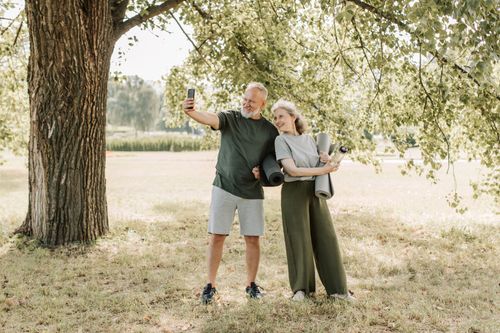
When families tour senior living, they often focus on the apartment and the dining room and skip the activity calendar on the wall. That calendar may matter more to a person's health than almost anything else in the building. The senior activities that keep residents active and social combine physical movement, group connection, and personal purpose: exercise and walking classes, games and clubs, shared meals and outings, and creative or learning programs, which together reduce loneliness, lower fall risk, support mood, and help protect thinking skills.
This article explains why activity and connection matter so much in later life, the kinds of programs worth looking for, and how to judge whether a community's calendar is real or just for show.
Why Activity and Connection Matter So Much
Isolation is not just unpleasant for older adults; it measurably harms health. Loneliness is linked to higher rates of depression, cognitive decline, and even earlier death, and the risk climbs when someone loses the daily contact that work, driving, and friends once provided.
The flip side is encouraging: research finds that social, physical, and learning programs for older adults improve mental and physical health, lift mood, and reduce loneliness, and that frequent social engagement is associated with a lower risk of cognitive decline. Combining movement with company appears especially powerful, which is exactly what a good community calendar delivers. Our guide to senior wellness covers the broader picture of staying healthy in later life.
Physical Activities Worth Looking For
Movement is the foundation, and the strongest programs make it easy and social rather than a solitary chore. The CDC recommends that older adults aim for about 150 minutes of moderate activity a week plus muscle-strengthening and balance work, and a good community builds that into daily life.
Group exercise and chair fitness: Classes scaled to different abilities, including seated options for those who cannot stand for long. Walking groups: Regular walks indoors or in secure outdoor space that pair light exercise with conversation. Strength and balance work: Programs that build the leg strength and stability that prevent falls. Dance, tai chi, or yoga: Enjoyable movement that improves balance and mood at once.
Physical activity programs have been shown to improve strength, walking, and balance and to reduce falls, so this part of the calendar protects independence directly.
Talk to a Local Advisor
Free help comparing communities and current pricing in your area. No cost, no pressure.
Social and Group Activities
Connection is the second pillar, and it is where a community either comes alive or feels like a waiting room. Shared activity turns neighbors into friends and gives the week a rhythm.
Look for games and card clubs, book and discussion groups, shared meals and happy hours, holiday celebrations, outings to restaurants and events, and volunteer projects that give residents a way to contribute. Group activities reduce loneliness by creating a sense of belonging, and a person with a wider social circle tends to stay more active in every other way too. The point is not to fill every hour but to make sure no one has to be alone unless they choose to be.
Creative, Learning, and Purposeful Programs
The third pillar feeds the mind and the sense of self. People do not stop wanting to learn, create, and matter just because they have moved into a community.
Arts and crafts, music and singing, gardening, lifelong-learning classes, faith services, and hobby groups all give residents something to look forward to and a reason to get up. Purpose matters as much as fun: tending a garden bed, mentoring, or leading a club restores a sense of capability that aging and a move can chip away at. A calendar rich in these options signals a community that sees residents as whole people, not patients to be managed.
Matching Activities to the Person
A long calendar means little if it does not fit the individual. The right program for an outgoing former teacher looks nothing like the right one for a quiet gardener, and a good community works with both.
Staff should learn each resident's history and interests and gently invite participation rather than pressure it. Someone who prefers a small craft group or a one-on-one walk should have those options, not only large events. For a person with memory loss or limited mobility, activities need to be adapted so they can still take part and feel successful. The measure of a program is whether it reaches the reluctant resident, not just the social butterflies.
Prefer to talk it through? A local advisor can answer your questions and compare current pricing, free.
(385) 200-2175What a Strong Activity Program Looks Like
A few markers separate a genuine engagement program from a calendar printed to impress visitors. They are easy to check on a tour.
Variety and daily options: Something happening most hours, across physical, social, creative, and learning categories. Evenings and weekends: A calendar that does not go dark after 4 p.m. or on Saturdays. Personalization: Staff who know residents by name and tailor invitations to their interests. Transportation and outings: Regular trips beyond the building, not just in-house events. Adapted options: Activities adjusted for memory loss, low vision, or limited mobility so everyone can join.
Practical Next Steps
- Ask to see a full month's activity calendar, not a sample day, and look for variety across categories.
- Visit during an activity and watch how many residents take part and how engaged they seem.
- Ask how staff learn residents' interests and how they include quieter or less mobile people.
- Check for evening, weekend, and off-site options, since isolation often peaks in those gaps.
- Talk to a few residents about what they actually do each day, which tells you more than any brochure.
When to Talk to a Local Advisor
An activity calendar is one of the clearest windows into a community's culture, and it is worth weighing as heavily as the apartment or the dining room. A local senior advisor knows which senior living communities have genuinely engaging programs and can match a person to one that fits their interests and energy. The service is free to families.
For related reading, see our guides to senior wellness and senior living amenities. Physical-activity guidance for older adults is available from the CDC.
This article is informational only and is not medical advice. Activity needs and abilities differ from person to person. Consult a physician before a person begins a new exercise program.