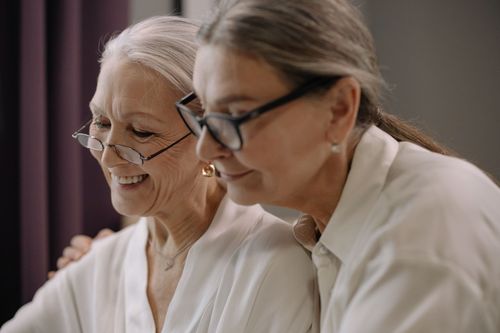
After decades together, the fear that a move to senior living means being separated weighs heavily on couples, especially when one partner needs more help than the other. Couples with different care needs can usually stay together in senior living, either sharing one apartment while each partner receives their own level of care, or living in different care levels on the same campus so they remain close. Understanding these options removes one of the most painful worries families face and often keeps a couple under the same roof far longer than they expected.
Can Couples With Different Care Needs Stay Together?
Yes, in most cases they can. Senior living communities increasingly support couples whose needs differ, so one partner can receive assisted living or memory care while the other needs little or no help, without forcing the couple apart.
The arrangement works because care and housing are priced separately. A couple shares a living space, and each person is assessed and supported according to their own needs, which means two very different levels of care can happen under one roof.
For couples, that flexibility is everything. It lets a husband and wife who have lived together for fifty years continue sharing daily life, even as one of them comes to need more support than the other.
Option One: Sharing One Apartment
The most common arrangement is for a couple to share a single apartment in an assisted living community while each receives their own care. It keeps daily life as close to normal as possible.
In this setup, both partners live in the same one-bedroom or two-bedroom apartment, and care staff provide each person the help they need. One spouse might receive daily help with bathing and medication while the other simply enjoys the community's meals and activities.
This works well when both partners are safe living together and neither needs a secured memory care setting. It preserves the couple's routine and companionship while quietly adding support for the partner who needs it.
Talk to a Local Advisor
Free help comparing communities and current pricing in your area. No cost, no pressure.
Option Two: Same Campus, Different Care Levels
When one partner needs a level of care the other does not, such as secured memory care, many couples choose a community that offers different care levels on one campus. They stay close even when they cannot share a unit.
A continuing-care retirement community is built for exactly this, offering independent living, assisted living, memory care, and skilled nursing on a single campus. A couple can live in different settings that fit each person while remaining steps apart, sharing meals, visits, and daily life.
Other communities pair assisted living and memory care on the same property. When one spouse needs the security and specialized support of memory care, the other can live nearby in assisted living, preserving daily contact even as the care diverges.
Why Keeping a Couple Together Matters
Staying together is not only about comfort; it has real effects on health and wellbeing. The push to keep couples together reflects how much that bond protects both partners.
Long-married couples often function as each other's first caregivers, and separating them can deepen loneliness, speed decline, and worsen depression for both. Familiar companionship provides a sense of security that no program fully replaces, especially for a partner with dementia who finds comfort in a spouse's presence.
There is a practical side too. A healthier spouse can offer reassurance, share meals, and provide the kind of small daily support that eases the partner with greater needs. Communities that keep couples close are protecting not just a relationship but the wellbeing of two people at once.
How Costs Work for Couples
Pricing for couples follows a simple logic once it is broken down, and understanding it helps a family plan. The cost has two parts: housing and care.
A couple typically pays for their shared apartment, often at a double-occupancy rate that adds a second-person fee, and then for each partner's individual care on top of that. So a couple sharing an apartment pays one housing charge plus two separate care charges scaled to each person's needs.
Shared housing: One apartment rate plus a second-person fee, usually a few hundred dollars a month. Individual care: Each partner is billed for their own level of care, from none to full daily support. Potential savings: Sharing housing and bundled services can cost less than funding two separate care setups.
When partners live in different care levels on a campus, each pays for their own apartment and care, which costs more than sharing but keeps them close.
What to Ask a Community About Couples
Not every community handles couples the same way, so a few direct questions reveal which ones fit. Asking upfront prevents a painful surprise later.
Care flexibility: Can each partner receive a different level of care while sharing an apartment? Future changes: What happens if one partner's needs grow and they require memory care or skilled nursing? Staying close: If a couple must live in different care levels, how near can they be and how easy are visits? Couples pricing: How are housing and care billed, and is there a second-person rate?
A community that answers these clearly, and has experience keeping couples together, is far more likely to handle the road ahead with care.
Prefer to talk it through? A local advisor can answer your questions and compare current pricing, free.
(385) 200-2175When Living Together Is No Longer Safe
Sometimes a couple cannot safely share a space, and recognizing that moment is an act of love, not failure. Certain situations call for partners to live in separate care settings.
When one partner has advanced dementia and may wander, become confused at night, or need around-the-clock supervision, a secured memory care setting often becomes the safest place for them and a relief for the well spouse. Living nearby on the same campus lets the couple stay connected while each gets appropriate care. The Alzheimer's Association offers guidance for families navigating this transition.
Easing this change matters as much as making it. Frequent visits, shared meals, and choosing a community that actively supports couples all help a husband and wife stay emotionally close even when they no longer share a room.
When to Talk to a Local Advisor
Keeping a couple together while meeting two different sets of needs takes a community that is set up for it, and a local guide can help find the right fit. A senior advisor knows which assisted living and memory care communities across Utah accommodate couples and how each handles diverging care needs. For families weighing the next level of support, the guide to memory care versus assisted living is a useful next read, and AARP covers long-term care options for couples. Reaching out for local guidance costs nothing and can keep a couple together through the changes ahead.
This article is informational only and is not medical, legal, or financial advice. Community policies and pricing for couples vary. Confirm specifics with each community before making decisions.