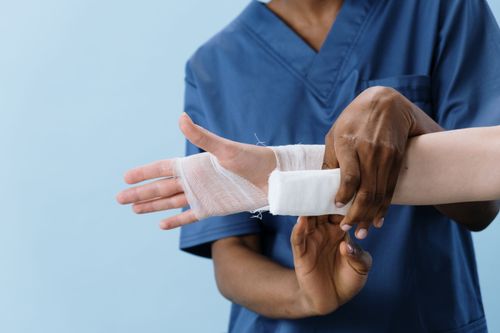
Wound care is one of the areas where assisted living's limits surprise families the most. A community that handles daily life beautifully may not be allowed to manage a serious wound at all. Wound care in assisted living is limited by what state rules and staff licensing permit, so communities can handle prevention and simple dressings, often with help from a visiting nurse, but complex or advanced wounds usually require home health, a community with licensed nurses, or skilled nursing.
This guide explains what wounds seniors face, what assisted living can and cannot do, when a wound forces a higher level of care, and what to ask.
The Wounds Older Adults Face
Several kinds of wounds are common in later life, and they differ in how serious and how hard to treat they are.
Pressure injuries: Also called bedsores, caused by prolonged pressure, and dangerous as they deepen. Diabetic ulcers: Slow-healing wounds, often on the feet, that can become severe. Skin tears and bruises: Common with fragile aging skin and frequent in falls. Surgical wounds: Incisions recovering after a procedure, needing clean dressing changes.
Catching and treating these early is what keeps a minor wound from becoming a medical emergency. Our guide to chronic condition management touches on the conditions behind many of them.
Why Assisted Living Has Limits
This is the part families miss: assisted living is a non-medical or limited-medical setting in most states, so what staff may do for a wound is restricted by regulation and licensing.
Rules vary by state, but many limit assisted living staff to basic, stable wound care and bar them from managing advanced wounds. The reasoning is that complex wounds need skilled nursing judgment. So a community is not being unhelpful when it says it cannot manage a deep wound; it may be legally prohibited from doing so. Confirming a community's scope up front prevents a forced move later.
Talk to a Local Advisor
Free help comparing communities and current pricing in your area. No cost, no pressure.
What Assisted Living Can Usually Do
Within those limits, a good assisted living community still plays an important role in wound care. Prevention and monitoring are often where it matters most.
Prevention: Repositioning, skin checks, good nutrition, and pressure-relieving mattresses to stop wounds before they start. Basic dressing changes: Simple, stable wounds, often under a nurse's direction. Coordinating home health: Arranging a visiting wound-care nurse to handle what community staff cannot. Monitoring and reporting: Watching wounds and escalating quickly if they worsen.
A community that prevents pressure injuries and brings in home health for the rest is doing wound care right.
When a Wound Forces a Higher Level of Care
Some wounds simply cannot be managed in assisted living, and recognizing that line protects the person. Advanced pressure injuries and complex wounds usually need skilled nursing.
A deep pressure injury that reaches muscle or bone, a non-healing diabetic ulcer, or a wound with infection typically requires the licensed nursing and treatments of a skilled nursing facility or intensive home health. Trying to manage such a wound in a setting not equipped for it risks serious complications. Ask any community what wound severity it can handle and at what point a resident would need to move.
The Role of Home Health
Home health is the bridge that lets many assisted living residents stay put through a wound. A visiting nurse can provide skilled wound care in the community that the community's own staff cannot.
This arrangement, ordered by a doctor and often covered by Medicare for a limited time, lets a resident receive professional wound treatment without moving to a nursing facility. Ask whether a community routinely coordinates home health for wound care and how that works, because it can be the difference between staying and relocating.
Prevention Is the Real Goal
The best wound care is the wound that never forms, and prevention is squarely within what assisted living can and should do. For pressure injuries especially, attentive daily care stops most of them.
Repositioning a person who cannot move often, daily skin inspections, good nutrition and hydration, and pressure-relieving cushions and mattresses are the core of prevention. Keeping skin clean and dry, addressing incontinence promptly, and getting a person moving all help. When evaluating a community for someone at risk, ask how it prevents pressure injuries, not just how it treats them, because a community strong on prevention will see far fewer serious wounds in the first place.
How Quickly Wounds Can Turn Serious
Older skin is fragile and heals slowly, so a small wound can deteriorate fast. That is why monitoring and quick escalation matter as much as the dressing itself.
A reddened area can become an open pressure injury within days if pressure is not relieved, and a minor diabetic foot wound can progress to a serious infection before anyone notices. Staff who inspect skin regularly and act at the first sign of trouble prevent most of these escalations. Ask how often staff check at-risk skin and how fast they involve a nurse or doctor when a wound appears or worsens.
Prefer to talk it through? A local advisor can answer your questions and compare current pricing, free.
(385) 200-2175What This Care Costs
Cost depends on the setting and the help required. Assisted living runs around $6,200 a month nationally before added care, and skilled nursing for complex wounds costs more.
Medicare may cover medically necessary home health wound care and skilled nursing for a limited period, but not the room, board, or long-term care of an assisted living community. That ongoing care is paid privately or through Medicaid for those who qualify.
Practical Next Steps
- Ask the community what level of wound care its staff is licensed to provide in your state.
- Confirm whether it has a nurse on staff or coordinates a visiting wound-care nurse.
- Ask about its pressure-injury prevention program, repositioning, skin checks, and mattresses.
- Find out at what wound severity a resident would need to move to skilled nursing.
- Confirm how quickly staff escalate a wound that is not healing.
When to Talk to a Local Advisor
Whether a community can manage a particular wound, or will need a visiting nurse or a move, is a detail families rarely think to ask until it is urgent. A local senior advisor knows which senior living communities have nurses, coordinate home health, and can handle wound needs. The service is free to families.
For related background, see our guide to chronic condition management. Information on skin health and aging is available from the National Institute on Aging.
This article is informational only and is not medical advice. Wound-care rules vary by state and community, and needs vary by individual. Consult the person's physician and confirm a community's scope before deciding.