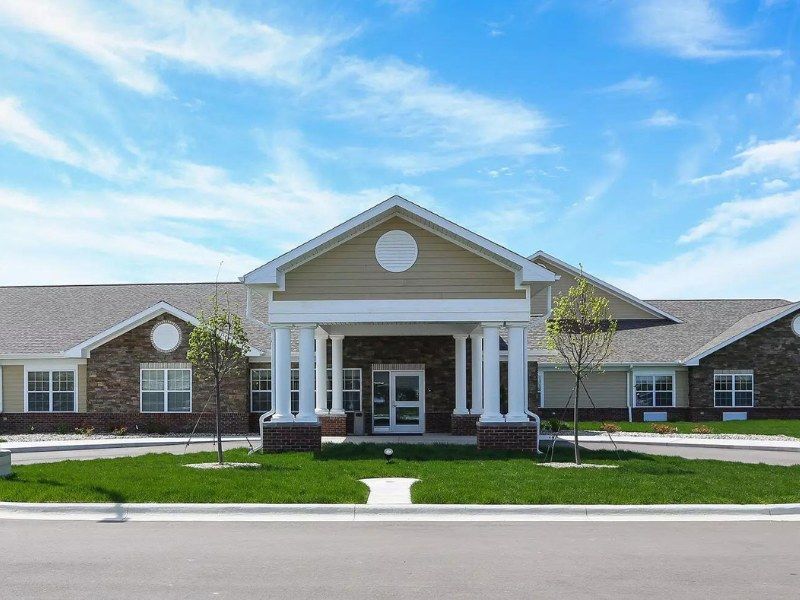
Orchard Grove Health Campus in Romeo is a continuing care retirement community offering independent living, assisted living, memory care, and skilled nursing across 55 total beds.
- Continuum of care
- Small community
- Medicaid accepted
Why Families Choose Orchard Grove Health Campus
- Offers a full continuum of care including independent living and skilled nursing
- Small campus setting featuring a total of fifty five beds
- Dedicated memory care environment with approximately sixteen designated beds
- Short term respite stays are available for temporary support needs
- Medicaid is accepted as a payment option for eligible residents
About Orchard Grove Health Campus
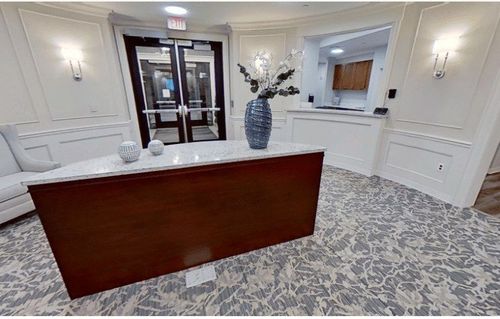
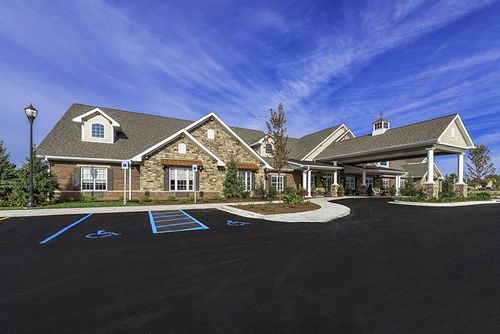
Fifty-five beds is a small footprint for a continuing care retirement community, and that is the defining fact of Orchard Grove Health Campus in Romeo. The campus brings independent living, assisted living, and memory care together on one connected site. Communities that cover multiple levels of care usually run several times this size. At Orchard Grove, the whole campus stays close enough that the dining room faces, the caregivers in the hallway, and the route to the front door remain familiar even when a resident's level of support changes.
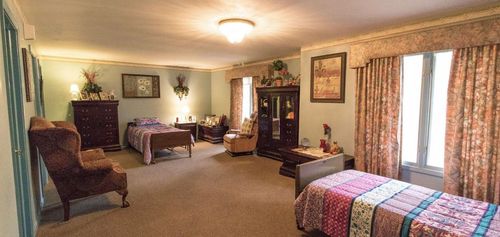
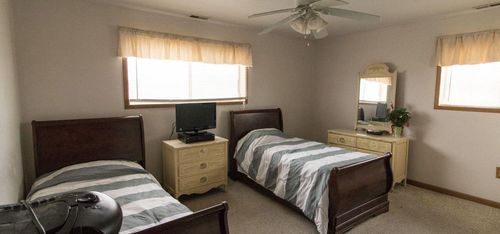
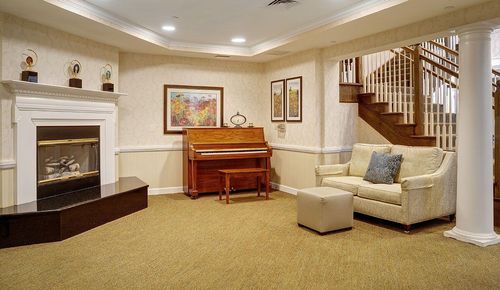
Independent living residents keep the fullest calendars and the loosest schedules. The campus takes over home maintenance, housekeeping, and cooking, which frees the day for whatever a resident would rather be doing. Some mornings start with coffee and conversation in a common area, while others begin with a slow breakfast and the newspaper. Private residences give residents space to furnish and arrange as their own, and shared areas sit close by whenever company sounds better than quiet.
Assisted living adds a layer of practical help without taking the day out of the resident's hands. Caregivers assist with bathing, dressing, grooming, and medication routines, timed to each person's habits rather than a fixed institutional clock. A resident who has always risen early gets morning help early, and one who lingers over breakfast is not hurried through it. The support bends around the person, and the rest of the day, with its meals, activities, and visits with neighbors, goes on much as it does anywhere else on campus.
The memory care neighborhood is deliberately the smallest part of the campus, with approximately 16 beds. Days there follow a steadier rhythm than in the other neighborhoods, because predictability itself is a form of comfort for residents living with memory loss. Meals arrive at consistent times, familiar staff handle the same routines, and the environment is arranged with cues that help residents orient themselves through the day.
Caregivers pace each activity to what a person can do on that particular day, leaning into remaining strengths rather than cataloging what has become difficult. Because every level of care the campus offers is delivered on the same connected site, a resident whose needs grow does not have to leave the community, learn a new building, or start over with unfamiliar caregivers. Couples whose needs diverge can remain in the same community rather than settling into separate addresses across town.
That continuity is the quiet advantage of the continuing care model, and at this scale a change in care level feels less like a transfer between institutions and more like a move down the hall. Dining is the campus's most reliable gathering point. Meals are prepared with attention to dietary needs and personal preferences, and the dining room gives the day its anchor points at morning, midday, and evening.
Staff quietly assist residents who need a steadying hand or gentle cueing at the table, so mealtime stays social rather than stressful for everyone seated. New residents often find their footing here first, since a shared table turns strangers into neighbors faster than any welcome packet could. Two practical facts widen the campus's reach. Orchard Grove offers respite stays, short term residencies that give a family caregiver time to rest or travel while their loved one is cared for in a fully staffed setting.
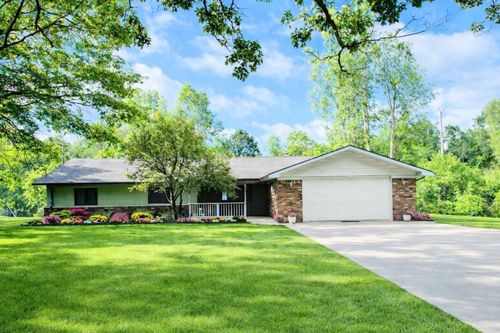
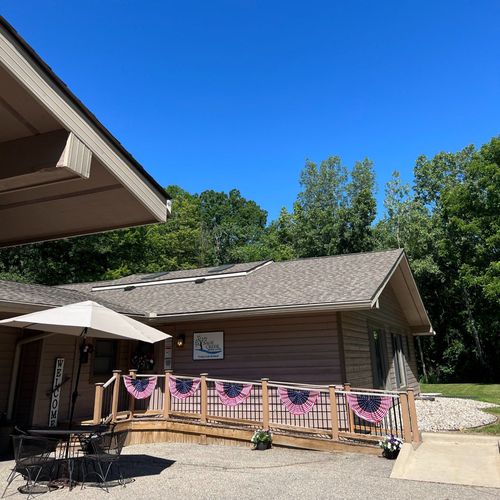
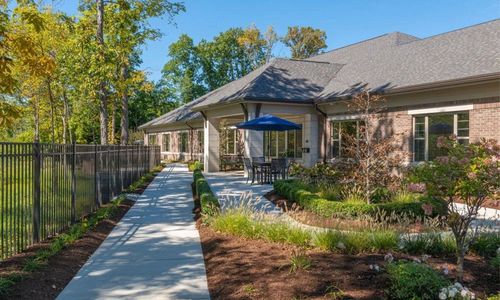
The campus also accepts Medicaid for qualifying residents, which keeps the door open for families whose finances shift over the course of a long stay. All of this sits in Romeo, a quiet community whose small town character suits the campus's own scale. Landscaped grounds and outdoor spaces give residents fresh air and a view of the changing seasons without leaving the property. Family visits fold easily into daily life, whether that means joining a meal, sitting outside on a pleasant afternoon, or heading out together for a local errand.
For residents, Orchard Grove Health Campus offers something increasingly rare in senior living: one address that can carry a person from an independent apartment through every later chapter, surrounded the whole way by people who already know their name.
Environment
Set within Romeo, this intimate continuing care retirement community features 55 total beds, creating a manageable and grounded residential environment.
Services
Offers independent living, assisted living, memory care with about 16 beds, skilled nursing, respite stays, and accepts Medicaid.
Resident Experience
Daily life balances personal autonomy with structured support, shared dining experiences, and predictable routines tailored across care tiers.
Rates and availability current as of 2026. Contact your local advisor for the latest figures.
Advisor Insight on
Orchard Grove Health Campus
A continuing care model here helps families plan for changing health needs without the stress of relocating to an entirely new organization.
Amenities & Services
Reviews from Google
My mom is currently in this facility and I’m very thankful that she is here, the staff is very nice. The director Nirmal is an amazing person. You can tell he’s very caring and he does a fantastic job at that facility. Often times you can see him walking around talking to…
Really happy with the Independent living facility for my grandparents, who moved in last August. They were very accommodating in adding a door between their two apartments, and the amenities are great. The food is really good, and the activities they offer are plenty and…
This facility has treated my Grandfather so poorly that I wouldn’t wish it upon my worst enemies family and my Grandfather has only been there for a few days. A nurse asked him if he wanted to take a shower (at 10:00PM!!!) and he was going to sleep, mind you he had no idea that…
I really appreciate the monthly family brunches at this nursing home—they’re such a thoughtful touch. The food is genuinely delicious, and the chef clearly puts care and creativity into each meal. It’s a warm, welcoming way to spend time with our loved ones, and it means a lot.…
Orchard Grove Independent Living is a Beautiful, nice, and clean facility. Very friendly and helpful staff. The IL activities director is a star at his job, the residents love him. You’re very lucky to have such an amazing employee. I highly recommend orchard grove independent…


Reviews provided by Google. See all on Google Maps
Compare Orchard Grove Health Campus with Nearby Communities
Use this comparison to evaluate pricing, care availability, and key differences between similar communities in Romeo, MI.
| Compared | Orchard Grove Health CampusRomeo, MI 4.0 (53) | Angelica's PlaceRomeo, MI· 1.5 mi 4.0 (23) | Vista Springs Washington Place - Spring CoveWashington, MI· 3.2 mi 4.7 (114) |
|---|---|---|---|
Starting price | $5350/mo | $3700/mo | $4680/mo |
Care types | Independent Living, Assisted Living, Memory Care, Skilled Nursing | Assisted Living, Memory Care | Assisted Living, Memory Care |
Total beds | 55 | 15 | 20 |
Memory care beds | 16 | — | — |
Medicaid | Accepted | Not accepted | Not accepted |
Pet friendly | Yes | No | Yes |
Housing type | CCRC | Residential | Community |
| View this community | View this community |
Orchard Grove Health Campus
Romeo, MI
- Starting price
- $5350/mo
- Care types
- Independent Living, Assisted Living, Memory Care, Skilled Nursing
- Total beds
- 55
- Memory care beds
- 16
- Medicaid
- Accepted
- Pet friendly
- Yes
- Housing type
- CCRC
Angelica's Place
Romeo, MI· 1.5 mi
- Starting price
- $3700/mo
- Care types
- Assisted Living, Memory Care
- Total beds
- 15
- Medicaid
- Not accepted
- Pet friendly
- No
- Housing type
- Residential
Vista Springs Washington Place - Spring Cove
Washington, MI· 3.2 mi
- Starting price
- $4680/mo
- Care types
- Assisted Living, Memory Care
- Total beds
- 20
- Medicaid
- Not accepted
- Pet friendly
- Yes
- Housing type
- Community
Location
71150 Orchard Crossing Ln, Romeo, MI 48065
Get DirectionsNearby Essentials
- Hospital:Local medical support and regional hospital access are situated within a convenient driving distance from the campus to handle routine appointments or urgent healthcare needs.
- Dining:A variety of local restaurants, cafes, and family dining options are located nearby in the surrounding area for residents and visiting family members.
- Shopping:Convenient access to local grocery stores, pharmacies, and everyday retail shops supports routine errands close to the community.
The campus is set in a quiet, accessible neighborhood that balances local convenience with a comfortable residential atmosphere.
Nearby Communities

Frequently Asked Questions
What care types are available at Orchard Grove Health Campus?
Orchard Grove Health Campus provides Independent Living, Assisted Living, and Memory Care options. Because this setting operates as a continuing care retirement community, individuals can transition between different levels of support as their requirements change over time.
How large is Orchard Grove Health Campus?
This community features a total capacity of 55 beds across the campus. Within that total, the specialized memory care neighborhood accommodates approximately 16 beds to maintain a focused and supportive environment for those experiencing memory loss.
Is Medicaid accepted at this community?
Yes, Medicaid is accepted at Orchard Grove Health Campus. Families utilizing Medicaid should coordinate directly with the administrative team to understand how coverage applies to specific residential options and care plans.
Are short term or respite stays available?
Respite stays are offered at Orchard Grove Health Campus. This service allows individuals to stay at the community for a temporary duration, providing relief for primary caregivers or offering a supported transitional period following a hospital stay.
Are pets allowed to live at Orchard Grove Health Campus?
Families hoping to bring a pet should verify current pet policies directly with the staff at Orchard Grove Health Campus, including any guidelines on pet size, type, and care responsibilities, before moving in.
How is pricing handled for the different care types?
Specific monthly rates for Independent Living, Assisted Living, and Memory Care are not published as fixed figures, as costs vary depending on individual care needs and apartment choices. Families should contact the admissions office directly for detailed current pricing information.
Free tools
Still researching?
Two free tools built for families like yours.
What level of care does your loved one need?
A 10-question quiz tailored by senior-living advisors. Get a personalized care-level recommendation, a monthly budget for your zip code, and a shortlist of matching communities near you — instantly.
Take the AssessmentHow much does senior care cost?
Compare assisted living, memory care, independent living, nursing homes, and in-home care — calibrated to your zip code. See what's included, how it's paid, and what 10–20 years of care will cost.
Compare Costs