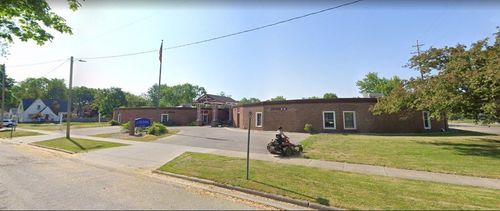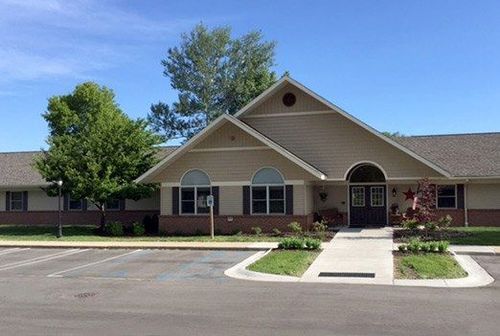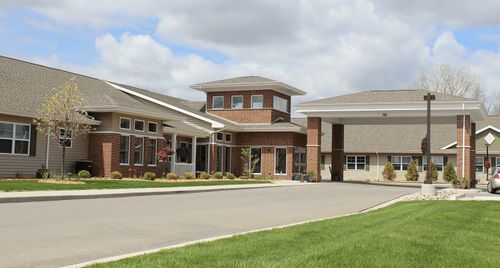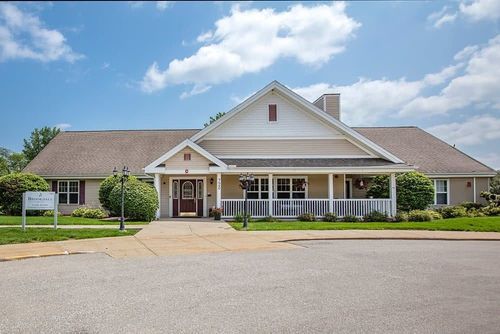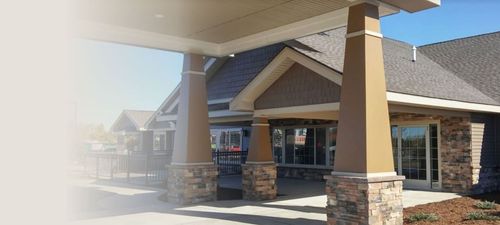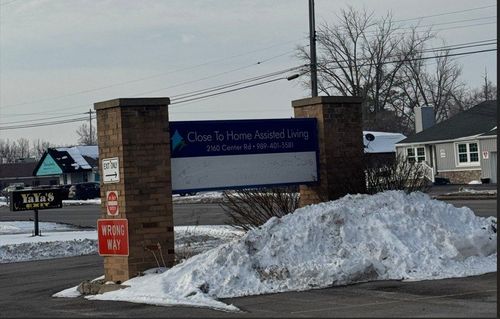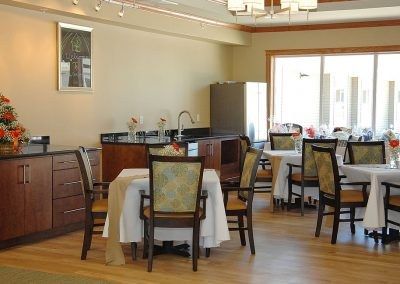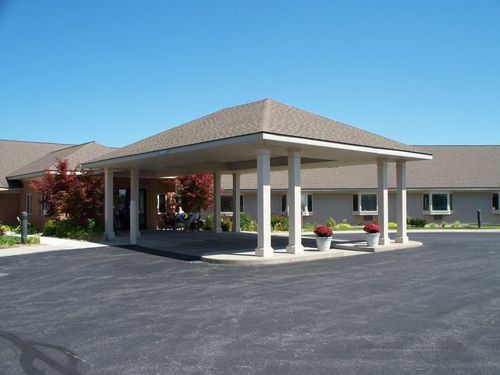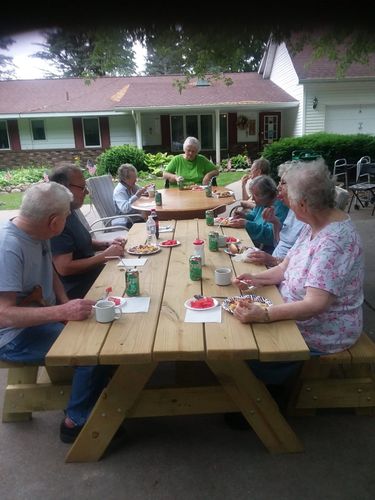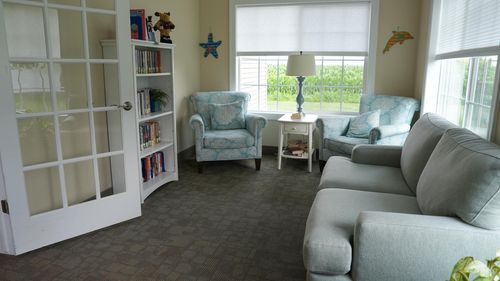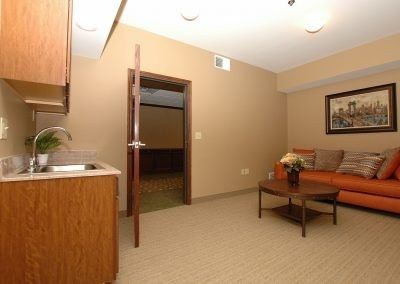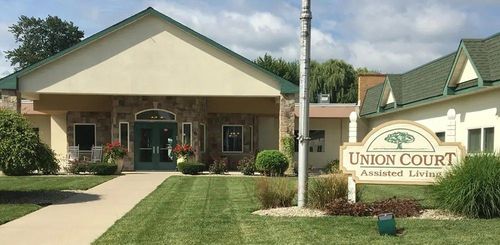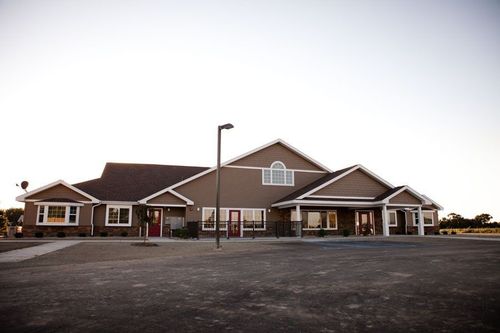
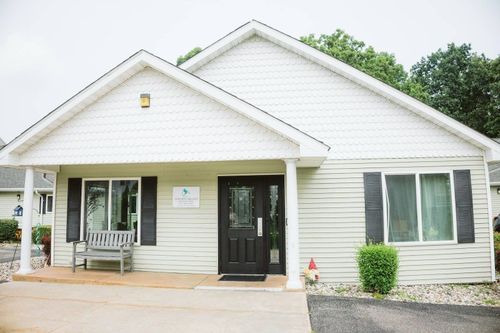
Auburn keeps its dementia care inside buildings that also do general daily care, and the whole of the town's secured capacity would fit comfortably inside one floor of a city building. Auburn Fields Assisted Living and Auburn Heights Senior Care are the 2 addresses holding a dementia licence here, one a purpose-built community and the other a residential house.
The small scale is the point rather than a shortcoming. A town this size between Bay City and Midland keeps dementia care local, so a resident stays inside the few miles they already know while the clinical support they need comes from a hospital a short drive off.
What a Secured Room Buys at This Scale
The measure that matters most in a small secured setting is how many transitions a day contains. A resident here walks a short and unchanging route to meals, sees the same handful of staff between morning and night, and is never asked to relearn a corridor or work out which of sixty faces belongs to the person helping them dress. For someone easily overwhelmed, that steadiness does more than any feature of a building.
The two addresses go about that differently, since a purpose-built community carries more structure through the day and more staff on a shift, while a residential house runs closer to an ordinary household and suits a resident who has never been comfortable in an institutional setting. Neither takes short respite stays, which is worth knowing early, because it means a household cannot trial the fit and has to get its questions answered before a move rather than after one.
Why a Secured Rate Sits Higher
Neither Auburn address works from a published figure; each quotes after assessing what a resident actually needs across a day. What drives a secured rate upward is staffing per resident and the cover held through the night, not floor space, which is why a small building does not price dementia care cheaply just because it is small.
That makes the useful question at a tour a staffing one rather than a price one: how many people are on through the evening, how many are awake overnight, and what happens on the day a resident refuses to be helped. Neither address participates in Medicaid, and the MI Choice waiver attaches its money to a person's assessed needs rather than to the building they live in, so an Auburn stay is privately funded. An arrival fee is charged once, and with no short stays on offer there is no trial rate to compare.
A Bay County Town With Its Own Small Supply
Bay County carries a heavier share of residents past sixty-five than most of Michigan, and Auburn's rooms are a genuinely local option within that rather than the county's main supply.
The consequence is narrow availability rather than a narrow choice of care. With secured rooms counted in single figures at each address, a household that starts looking months ahead is in a different position from one starting the week it becomes urgent, and in a town this size that difference is usually decisive.
Why Families Keep a Parent in Auburn
Auburn sits close enough to Bay City and Midland to borrow from both without belonging to either. A resident who moves into one of the local buildings keeps the clinic, the church and the roads they have used for decades, and visitors drop in on the way past rather than setting aside an afternoon for the trip.
The clinical backing runs through Bay City, where McLaren Bay Region has operated since 1908 and carries a Level III trauma designation alongside neuroscience, rehabilitation and cardiovascular care, with Covenant HealthCare in Saginaw beyond it as the region's Level II centre. For a resident living with dementia the part that matters is the ordinary end of that: a medication review or a change in behaviour gets seen without a long journey attached to it.
What a Local Advisor Brings to Auburn
Where nothing is published and capacity is small, current knowledge is the whole of the value. A Local Senior Advisor working Bay County knows which secured rooms are genuinely free this month, what each address has been quoting lately, and how quickly an assessment can be arranged when a household is working to a hospital timetable.
The advisor can also be straight about which setting suits, since a purpose-built community and a residential house ask quite different things of a resident, and that judgement is harder to make from a tour than most families expect. Getting it right first time matters more here, because neither address offers a trial stay to fall back on, so it is worth a short conversation before booking either visit.
Our directory for Auburn continues to grow as we evaluate providers for quality and alignment in 2026. Reach out for a conversation about memory care in Auburn, or look through the communities we have vetted at your own pace.