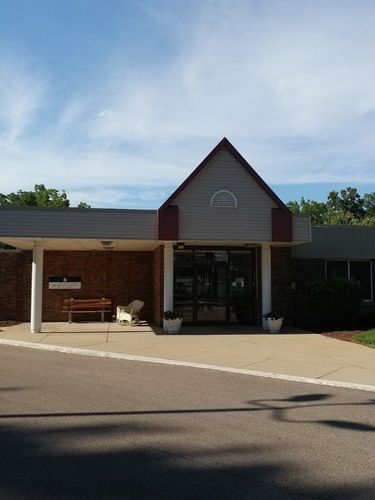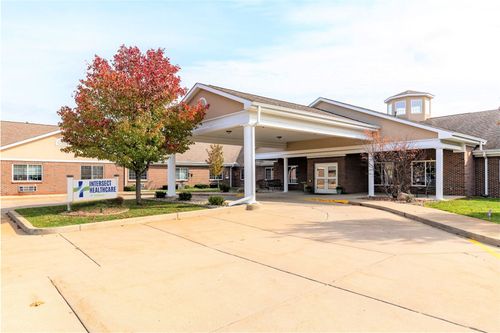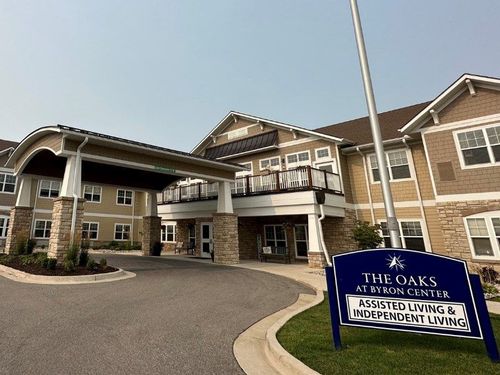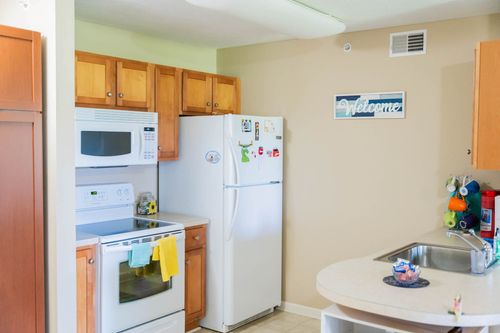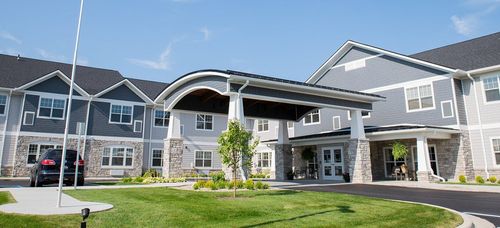

One Battle Creek address works with public funding, True Care Living, where the published starting figure is $3,500 a month. That number is low against most of what Calhoun County shows for care of this kind, and it raises a question that deserves a careful answer rather than an optimistic one, namely what public money in Michigan actually buys, and what it leaves a household to find. Getting that split clear at the outset is the difference between a plan that holds together over several years and one that comes apart in the third.
What the Money Buys, and What It Does Not
Michigan runs two quite different systems and families routinely use one word for both. A nursing home is funded by Medicaid itself, where a resident who satisfies a clinical test and a financial one has their care and their accommodation both covered, because that setting is treated as an institution.
Assisted living works another way entirely, through the MI Choice Waiver. What that programme pays for is the caregiving, the help with washing, dressing, medication and supervision delivered inside a licensed home. The housing element is not part of the bargain and continues to be paid by the resident out of a monthly pension and Social Security, with a small allowance retained for personal spending. Independent living has no path into either system, since public money follows an established need for care and an apartment without one gives it nothing to fund. The address must also be enrolled in the programme, which is why so few appear on a page like this.
Reading the Battle Creek Figure
The $3,500 monthly rate describes a resident paying their own way. For someone approved under the waiver the shape of the bill changes rather than the total disappearing, because the caregiving portion moves to the programme while the housing portion stays.
Qualifying involves two assessments that proceed independently of one another. One examines income and countable assets against the published limits, and looks back over property and money transferred within recent years, which catches families who moved assets to a relative without advice. The other establishes whether the applicant would otherwise require a nursing facility, since providing an alternative to one is the waiver's whole purpose. Neither result is worth anything without the other, and Michigan caps how many people may be enrolled at once, so clearing both hurdles and finding a funded place are separate achievements.
Where the Time Goes in Calhoun County
With a single participating address locally, planning is a matter of sequence rather than selection. An application takes weeks to work through, and beginning one in the fortnight after a hospital admission is how a manageable situation turns frantic.
Households that start while a parent is still coping at home are the ones with options left when a decision has to be made. That means gathering financial records early, understanding what the clinical assessment will look for, and knowing whether the local address holds funded places at all or operates them as a fixed number. None of that requires a crisis to justify it, and all of it takes longer than anyone expects.
What a Local Advisor Brings to Battle Creek
An advisor covering Calhoun County can establish whether a funded place is currently open or spoken for, how this building handles a resident who arrives paying privately and later applies, and what waits have genuinely looked like in the area recently rather than in the abstract.
The same advisor can order the two assessments against a household's own timetable so that neither is left waiting on the other, and can be honest about what happens if the timing does not work out. Where public funding is likely to feature in a Battle Creek plan, the earlier a family can reach out, the more manoeuvring room they keep.
We keep expanding our Battle Creek coverage as we evaluate providers for quality and alignment in 2026. Start the conversation about medicaid in Battle Creek, or scan the buildings we cover at your own pace.