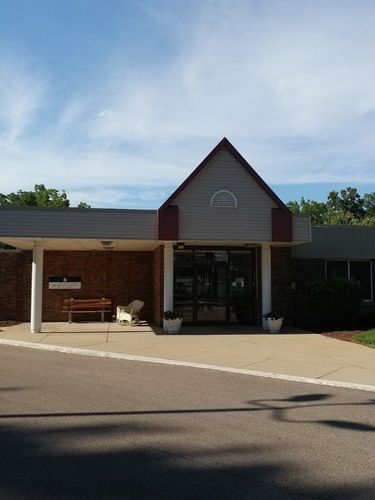

Centreville is a village of a few thousand people that happens to be the seat of St. Joseph County, and the Medicaid-accepting address there is a nursing facility rather than a residential setting: Fairview County Infirmary, listed at $8,500 a month. That distinction decides which Medicaid program is in play, because the two routes into long-term care funding in Michigan are genuinely different and are not interchangeable.
Rural counties in Michigan tend to be arranged this way. The nursing facility is the anchor, the hospitals are a drive away in Three Rivers and Sturgis, and the practical questions are about eligibility and timing rather than about which building to prefer.
The Two Medicaid Routes, and Which One Applies Here
Nursing facility Medicaid is the broader of the two. For someone who meets both the financial rules and the clinical standard for that level of care, the program pays for the stay itself, with the resident directing most of their monthly income to the facility as a patient-pay amount and Medicaid covering the balance. The $8,500 figure is a private-pay rate and is not what a Medicaid-funded resident's household would be handling.
The MI Choice Waiver is the other route, and it works on care rather than accommodation, funding help with washing, dressing, medications and supervision for someone living at home or in a licensed residential setting. It does not pay room and board, and enrollment in it is capped, so approval and a start date are separate events. Independent living sits outside Medicaid altogether, since the program funds care and independent living involves none.
What a St. Joseph County Family Should Expect Financially
Income and countable assets are tested on either route, and each involves a look-back running several years over property and money signed across to relatives. In a farming county that look-back matters more than it does in a city, because land, equipment and jointly held property complicate the picture in ways a bank balance does not, and unwinding a transfer after the fact is far harder than planning around it beforehand.
The other thing worth knowing early is what a spouse keeps. Where one partner enters a facility and the other remains at home, the rules allow the community spouse to retain a share of the couple's income and assets rather than being impoverished by the application. Families frequently assume the worst on this point and delay applying because of it, which costs them months for no reason.
Where the Timing Bites in Centreville
Applications are rarely instant, and a nursing facility will often admit a resident whose Medicaid application is still pending, on the strength of a complete file and a clean asset picture, with the family covering the interval. Whether a facility is willing to do that depends almost entirely on how convincing the file looks, which turns the quality of the paperwork into a practical matter rather than a bureaucratic one.
Acceptance and availability remain two separate questions here as well. A facility that participates in Medicaid may still have its funded beds occupied at any given moment, and that is a fact about how the funding works rather than a judgment on the building.
Getting the Paperwork Right in St. Joseph County
An advisor covering the county can set out what the assessment will be looking for, what a complete application file contains, whether a bed is currently free, and how the timing squares with a hospital discharge in Three Rivers or Sturgis. Those are three separate schedules and any of them can hold up the other two.
Medicaid planning only gets harder the longer it waits, so if it is likely to feature for a Centreville household, reach out before the assets and the timing become difficult to untangle.
We keep expanding our Centreville coverage as we evaluate providers for quality and alignment in 2026. Start the conversation about medicaid in Centreville, or look through the buildings we cover at your own pace.