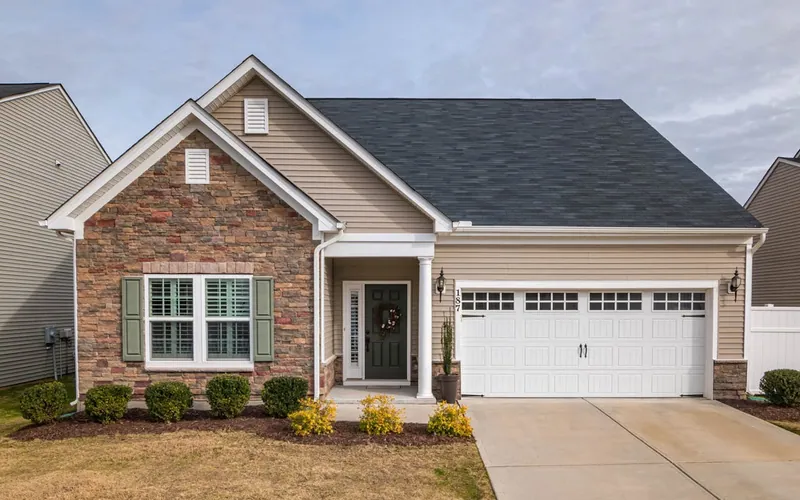
Small licensed homes do a disproportionate share of the work in the Upper Peninsula, for reasons of arithmetic rather than preference. A population the size of Delta County's cannot support a row of eighty-apartment buildings, so care here has always been delivered at household scale, in ordinary houses on ordinary streets, often by people who grew up in the same town as the residents. St. Jude's AFC Home is the licensed home-style setting in Escanaba, a few minutes from Ludington Street and the bay. For a family wanting a parent within visiting distance in a county where the alternatives sit an hour of highway away, that local presence is most of the argument.
What Life in a Licensed Home Looks Like
The state regulates settings of this size under its adult foster care rules, which is a different license from the one a larger building holds as a home for the aged, and the term turns up throughout local listings well before anyone says assisted living. What it describes is a household rather than an institution: bedrooms instead of apartments, one kitchen cooking for everybody, caregivers in the room rather than summoned to it.
The help is custodial: getting washed and dressed, staying steady on the way to the table, taking the right tablets at the right hour, clean clothes, a tidy room and somebody in the house all night. Clinical treatment falls outside what the state permits, so a resident needing daily nursing has passed the boundary. The counterweight should be stated plainly rather than glossed. A bigger building runs a fuller week and keeps more staff on duty at once, and where a resident wants exactly that, the bigger building is the better home rather than a fallback.
What Escanaba Charges
The monthly starting figure locally is $3,800, and a household should expect its own quote to sit somewhere either side of it. Rates in a house this size follow the resident rather than the address, because a resident who needs two people to transfer, or repeated attention through the night, takes up a far greater slice of a four-person rota than of a staff covering sixty apartments. A private bedroom also costs more than a shared one.
Most of the money is private, from income, savings, a pension or a property sale, occasionally with a long-term-care policy behind it whose schedule decides what it will meet. For those who qualify, Michigan contributes through two channels. MI Choice meets the services side of a licensed home while the housing share stays with the resident, drawn from monthly income. Separately, people living in licensed homes receive a state addition to their federal disability payment, aimed at exactly that share and arriving each month once eligibility is settled.
What to Pin Down First
Begin with the terms of the state approval this home holds, because they govern how long an arrangement can last and no visit will reveal them. Each Michigan license names the categories of resident need a home may serve, and the ceiling on how advanced a dementia it can continue to handle is written there. Putting the question at the outset is what spares a household a second relocation at precisely the point a resident has least capacity to absorb one, which in a county this size can also mean a move beyond visiting range.
After that the list is short, and every item on it is concrete. Which bedroom is actually free, and does anyone else sleep in it. Is the overnight caregiver awake on duty or asleep upstairs. Does a walker fit through the bathroom door without turning it into a maneuver. Then comes the question particular to this end of the state: how the house manages when the roads close, whether staff can reach it in a storm, and what the arrangement is when a scheduled caregiver cannot get in. That is routine planning on the peninsula rather than an alarming question, and a well-run home answers it without hesitating.
Lead Time on the Peninsula
A small licensed home is close to invisible from a browser. Nothing is advertised, no vacancy is ever posted, and the arrival or departure of one resident rewrites the situation entirely, which means whatever a household reads online about space may have stopped being true some weeks earlier.
An advisor covering the Upper Peninsula carries the current answer and raises the approval question early, so a household learns at the beginning what degree of need this house may serve and whether a bedroom has actually opened. Where the answer to either is no, the geography here means a household wants that months in advance rather than days, which is reason enough to talk it through before anything else gets arranged.
We keep expanding our Escanaba coverage as we evaluate providers for quality and alignment in 2026. Reach out for a conversation about residential care homes in Escanaba, or look through the communities we have vetted at your own pace.