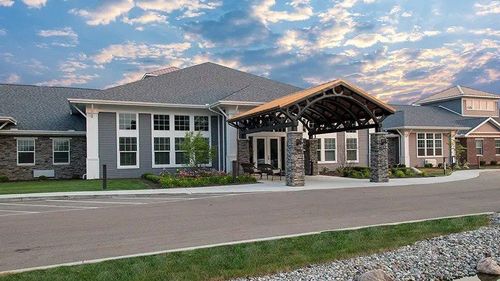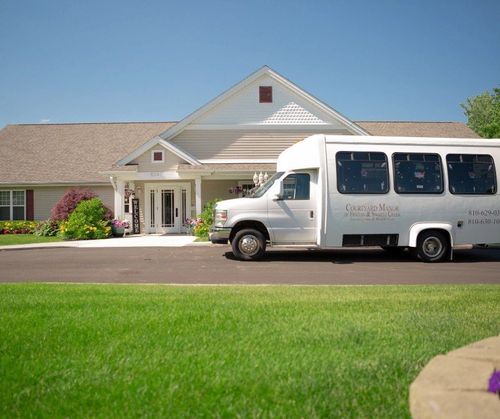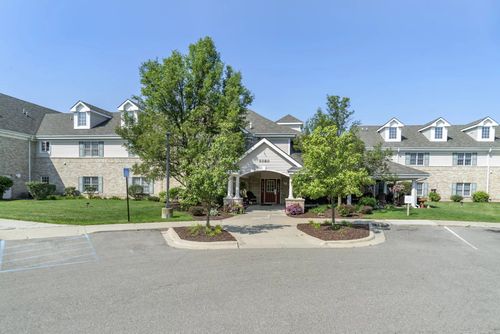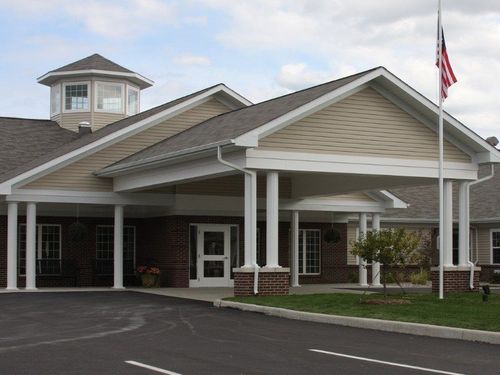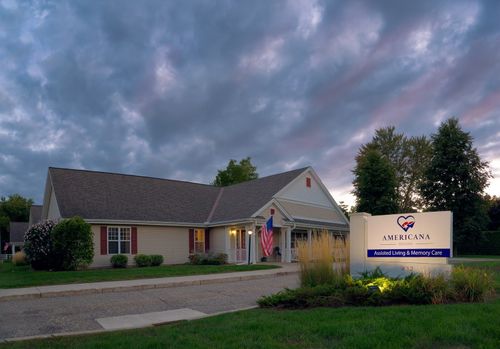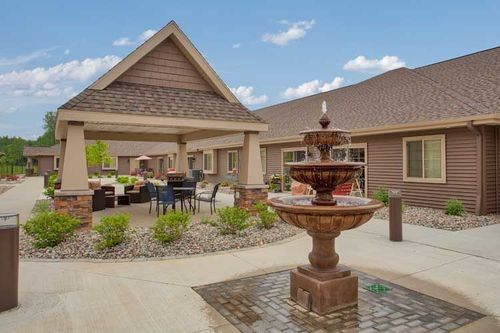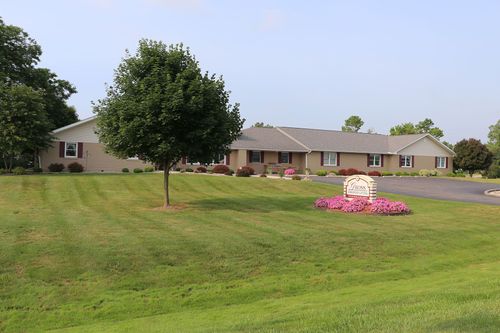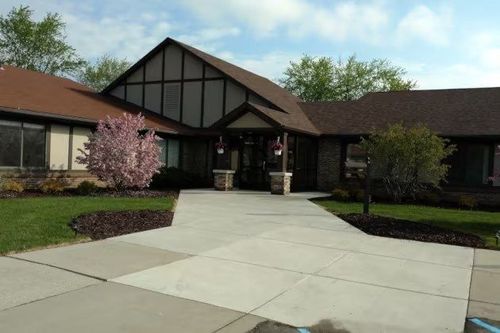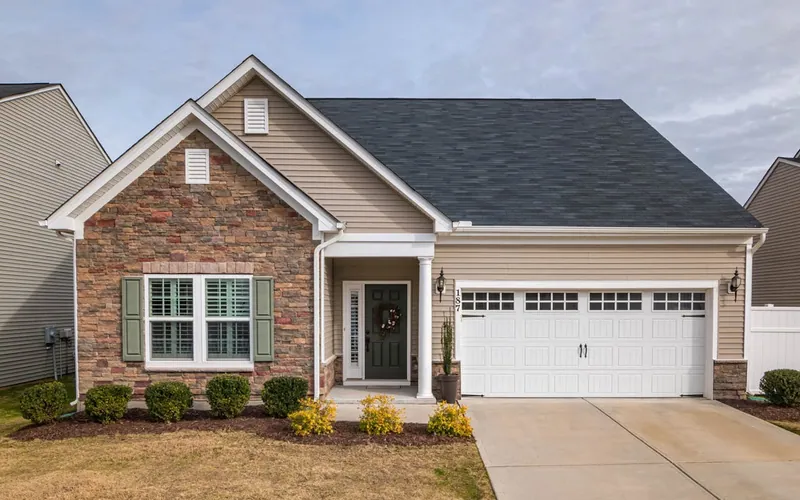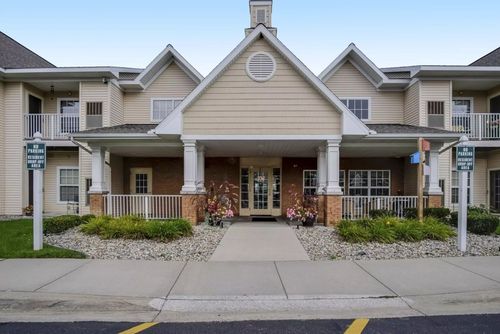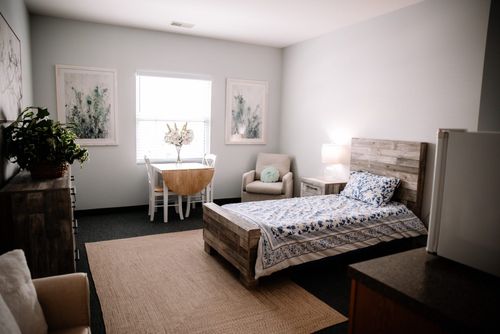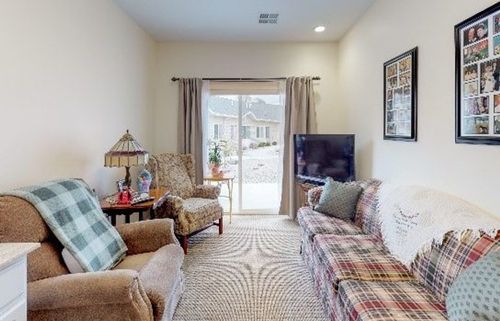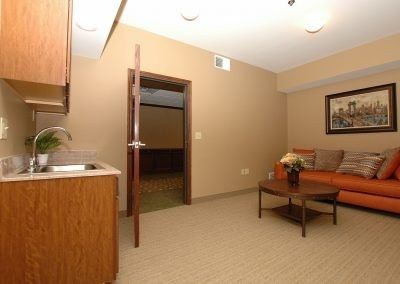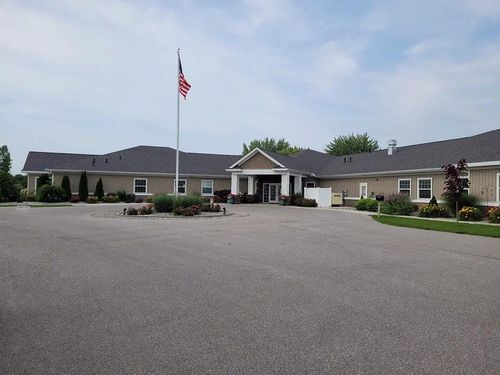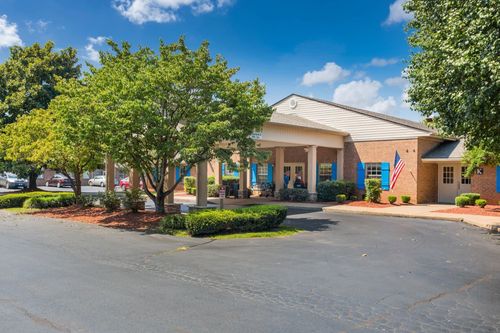

What separates Flint's two memory-care settings is not size but who else lives there. Charter Senior Living of Stepping Stone Falls holds its secured rooms inside a larger building where most residents do not have dementia, while JJS AFC is a small home in which every room is secured.
That distinction shapes more of a family's experience than any floor plan does. In the mixed building a resident keeps company with neighbors at several stages, and staff cross between the secured side and the rest of the day; in the all-secured home the rhythm assumes memory loss from the first hour.
Locked doors, awake nights, and a fixed order to the day
Both settings share the same baseline: doors that do not open for a resident drifting toward them, staff awake through the night, medications administered rather than reminded about, and help with bathing and dressing from people trained to work through refusal. The day runs to a fixed order, because a predictable sequence does more for someone with dementia than any single activity.
What changes between them is depth against quiet, because the larger community puts more caregivers on the floor and somewhere separate to walk a resident when the dining room gets loud, which counts on the afternoons when someone cannot settle. The small home offers the opposite, where one room holds nearly everyone and a meal feels like a household sitting down. One of the two also takes a resident's pet, which settles the question for more families than expected.
The step from daily help into a secured room
Published starting rates at the two Flint addresses are $3,500 and $4,100 a month in 2026, and neither is what a secured room costs, since memory care is quoted above each building's entry rate. The size of that step is the number to ask for first, and it varies between them by more than the entry rates do.
Staffing drives it rather than square footage: awake overnight coverage, a closer daytime ratio, and caregivers trained for dementia. Neither address participates in Medicaid, so private funds carry the monthly cost. Michigan's MI Choice waiver runs out of Valley Area Agency on Aging on East Fifth Street downtown, but a determination takes months while a Flint discharge takes days, and that mismatch is the practical problem here.
The county's population and its hospitals in one city
Genesee County counts roughly 80,000 residents past sixty-five, and Flint holds both the largest share of them and the county's hospitals. Hurley Medical Center is the region's Level I trauma center, McLaren Flint adds a 378-bed teaching hospital, and Henry Ford Genesys just south holds the inpatient rehabilitation unit where many residents spend the weeks before a move.
For memory care that concentration cuts in both directions at once. Assessments, neurology appointments and the rehabilitation stay that often precedes a move all happen inside the city, so nothing is arranged at a distance. But the local set spans fifteen residents to sixty-five across two addresses, so decisions get made on the hospital's clock rather than the family's.
Why families do not leave the city to find it
Households keep a memory-care move inside Flint because leaving costs the resident what dementia leaves intact longest, which is familiarity. The church, the street names and the accent of the person carrying the tray stay recognizable in a way a building forty minutes out would not.
Visitors matter as much as the resident here, since a niece working downtown can come at lunch and a neighbor of thirty years can stop in without making a trip of it. In memory care that frequency is the relationship, because a visit is remembered as a feeling long after its details are gone.
How a local advisor helps in Flint
With two memory-care addresses in the city, the work is not narrowing a list. It is answering whether the one with a room this month suits this resident, which turns on whether the person is still sociable or easily overwhelmed, and how far each address goes as dementia advances before asking for a move.
Timing is the other half, and in the county's hospital city it dominates. Discharges from Hurley Medical Center and McLaren Flint move quickly, the waiver route does not, and neither address takes Medicaid, so the funding picture must be honest from the first call. Talk it through before a discharge planner names a date, and the decision stops being a scramble.
Our directory for Flint continues to grow as we evaluate providers for quality and alignment in 2026. Reach out for a conversation about memory care in Flint, or browse the communities we have vetted at your own pace.