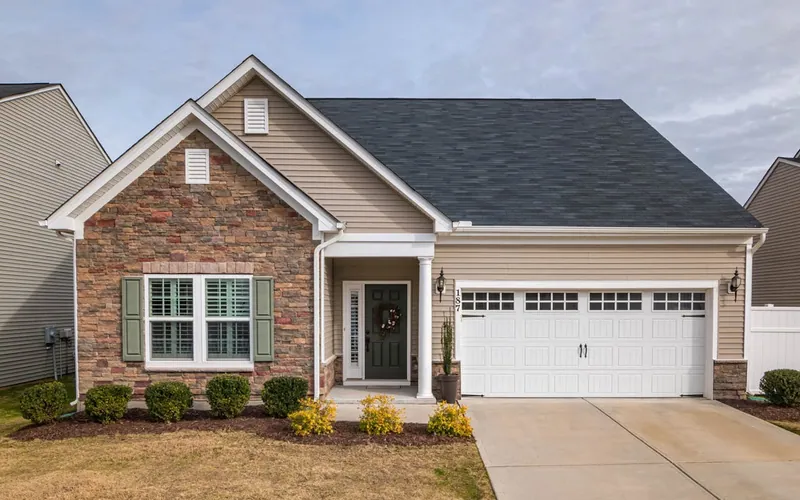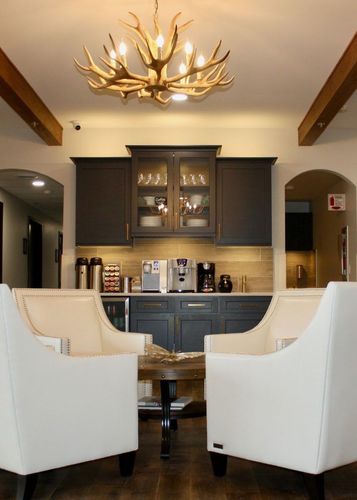
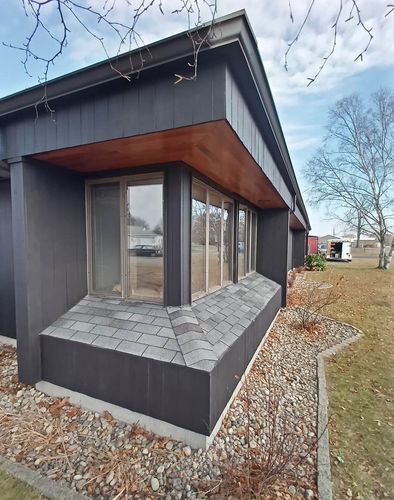
Dementia care in Gladstone happens inside a house rather than behind a set of doors at the end of a corridor. Murrays Country View and Transition Assisted Living are both residential-scale buildings that run a secured side alongside an ordinary one, so a resident in memory care here eats in the same room as everyone else, hears the same kettle and sees the same handful of staff from breakfast to bedtime.
That scale is the whole argument for and against the town. It suits someone who unsettles in a crowd and it limits how many secured places exist at any one moment, which is why timing tends to decide the search here more often than preference does.
Care Inside a House Rather Than a Wing
The routine work of memory care is the same in Gladstone as anywhere: medications given rather than reminded, help with dressing and bathing at fixed points, meals on a schedule that does not move, controlled outside doors, and staff in the building through the night. What changes at residential scale is who does it, because there is no separate dementia department and the person bringing a cup of tea in the afternoon is the one who noticed a resident sleeping badly two nights running.
The Upper Peninsula's winter shapes the rest of it, because from November the day belongs to the building, and a resident who used to walk down toward the bay is indoors for months at a stretch, so the strength of the indoor routine matters more here than the size of the garden. It is a fair question to put to both addresses: what does a Tuesday in February actually look like.
What the Two Rates Actually Cover
Starting rates at the two Gladstone addresses sit at $3,195 and $4,210 a month in 2026, a wider gap than two buildings of similar size would suggest, and a secured room sits above whichever of those a family starts from. The step is priced separately because it buys different staffing, not different square footage, so the useful question is what each address includes at the secured level rather than which entry rate looks kinder.
Neither building takes Michigan's MI Choice waiver, the programme that pays for care services inside a licensed setting while the resident's income covers rent and meals. UPCAP, the commission that runs the waiver for all fifteen Upper Peninsula counties, has its office in Escanaba a few minutes down the shore, which makes the assessment easy to start and does nothing about the statewide cap on places. Dementia stays run for years, so the length of the private plan is the figure that governs everything else.
Who Needs a Secured Room Here
More than a quarter of Delta County is past sixty-five, against roughly one in five across Michigan, and the age curve keeps climbing because young households leave the peninsula and older ones stay. Dementia follows age more closely than almost any other condition, so the county generates more need for secured rooms than its population alone would predict.
What it does not generate is more rooms, and the secured places here are counted in single figures at each address, so an opening is an event and families who wait until the need is urgent generally wait again.
Why the Search Stays on This Side of the Bay
Winter distance is the practical argument, because a relative who can reach a building in ten minutes visits through January while one facing an hour of lake-effect snow visits when the roads allow, and the difference between weekly and daily contact shows up in how settled a resident is.
The medical fabric points the same way, since OSF St. Francis on Ludington Street in Escanaba is the county's critical access hospital and handles nearly everything that arises, with UP Health System in Marquette taking what it cannot, so a resident who moves into a Gladstone building keeps the same doctors, the same pharmacy and the same records they have used for decades.
What an Advisor Brings to the Bay Shore
A Local Senior Advisor working this stretch of coast knows which of the two addresses has a secured place genuinely free rather than promised, how each handles a resident whose needs move quickly, and which has kept people through the later stages instead of asking a family to look again. Staff continuity is what matters most in a small building, and no brochure reports it.
With a field this size the honest inputs settle it quickly: the assessment, what the household can carry each month for several years, and how far family can drive in February. Getting those three onto the table in a short conversation is usually worth more than a fortnight of ringing round.
We keep expanding our Gladstone coverage as we evaluate providers for quality and alignment in 2026. Reach out for a conversation about memory care in Gladstone, or browse the communities we have vetted at your own pace.