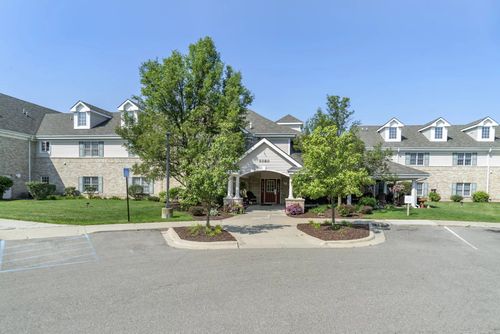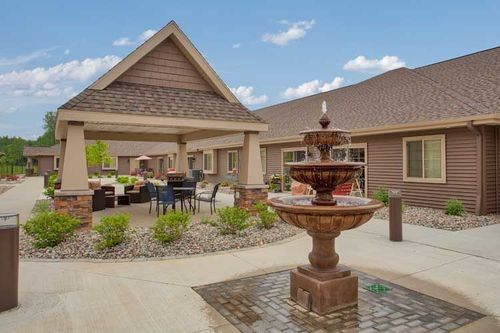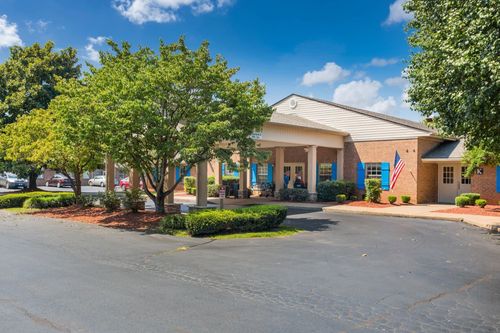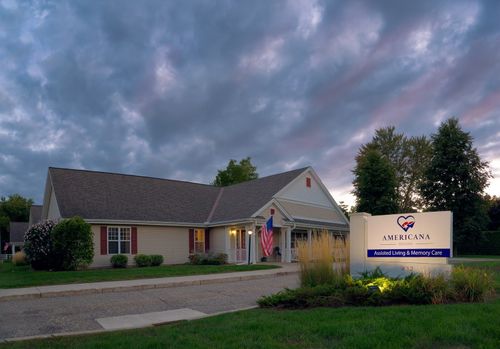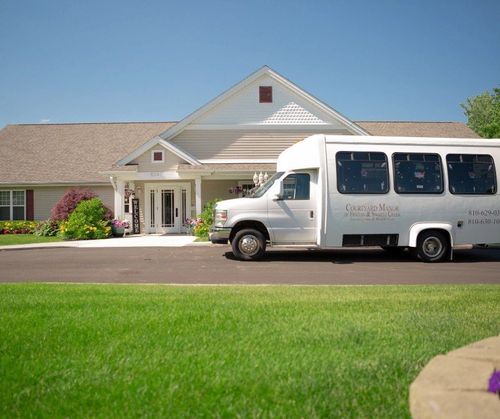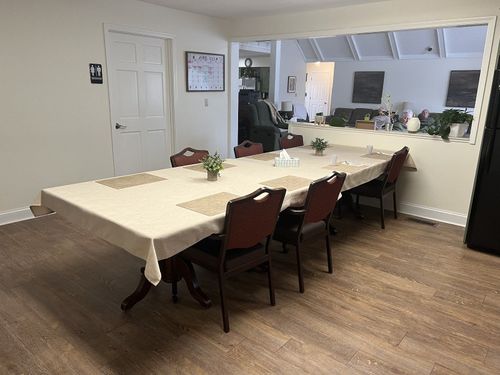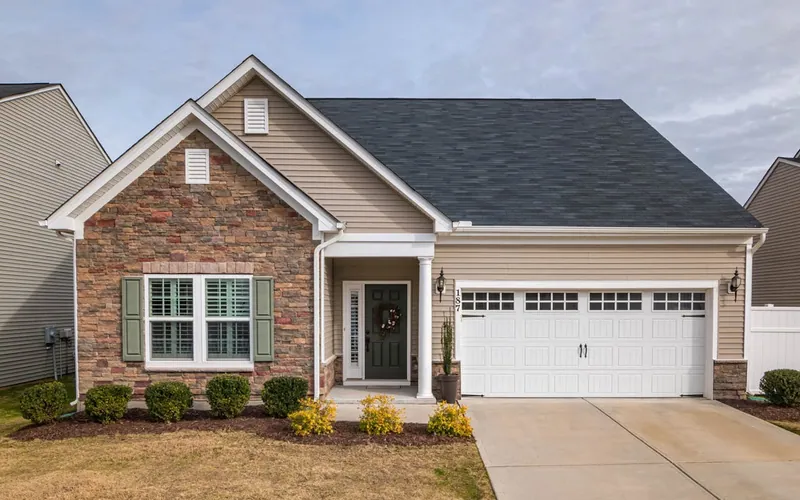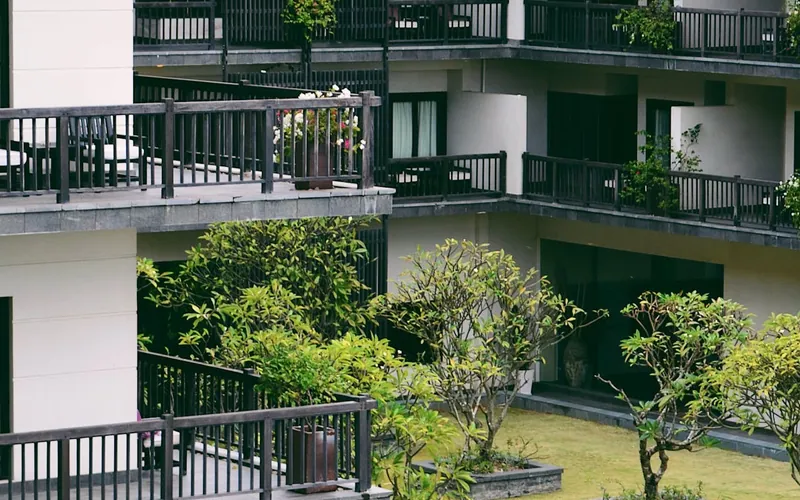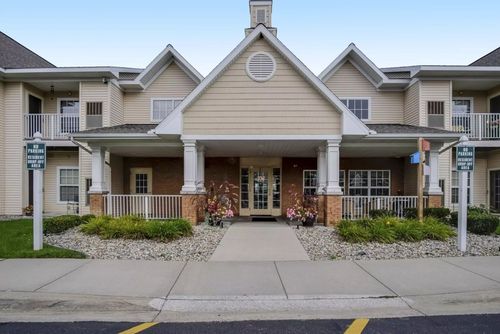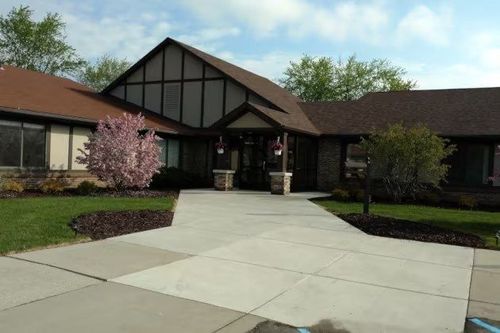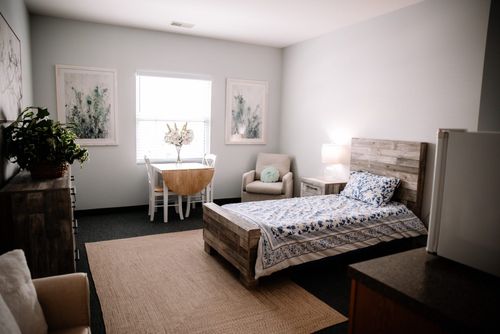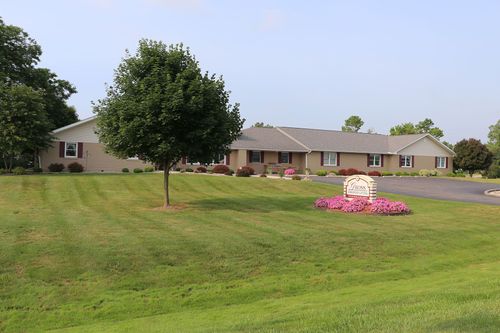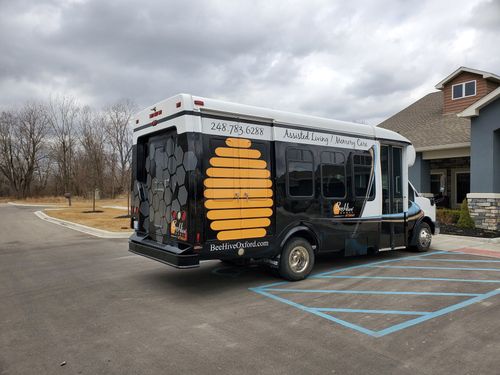
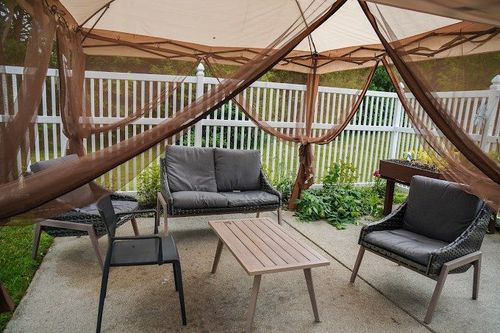
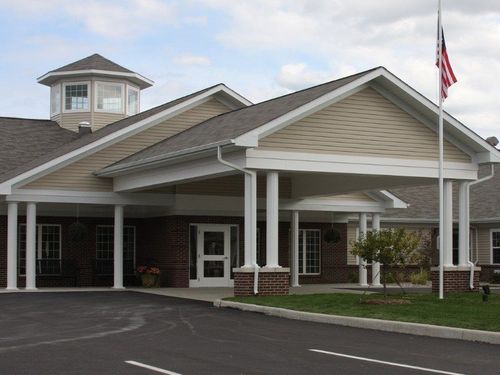
Most of Grand Blanc's memory care sits inside buildings that also provide assisted living, which means a family here is often choosing an address once rather than twice. A resident can begin in an apartment with light help and later move into the secured part of the same building, keeping the dining room, the staff, and the view from the window they already know.
That continuity is worth real money to somebody with dementia, because every relocation costs weeks of disorientation. Local capacity stretches from a twenty-resident home to a community of about sixty-eight across the 3 addresses, one of which participates in Medicaid while another takes respite guests when a household needs a bridge rather than a permanent room.
What Changes Behind the Secured Door
The move from the general part of a building into its secured part is smaller than families fear and larger than they expect. Physically it is a keypad, a shorter corridor, and an enclosed garden a resident can walk into without asking. Practically it is a different staffing pattern, with more caregivers for fewer residents and somebody awake and paying attention through the whole night rather than on call.
The program of the day narrows too, in a deliberate way. Fewer choices are offered because choice itself becomes tiring, meals and rest land at fixed hours, and activities are pitched at what a resident can still do well rather than at what they used to do. Done properly it reads less like restriction and more like relief, which is why residents who fought the idea often settle within two weeks.
Why the Quoted Figure Is Only a Starting Point
Published figures at the local addresses run from $3,589 to $4,200 a month in 2026, but memory care rarely works from a fixed rate card. What a household actually pays comes out of an assessment of how much support a resident needs at that moment, so two people behind the same secured door can be a long way apart, and the same person can be in a different place a year later.
One Grand Blanc address participates in Michigan's MI Choice waiver, which meets the cost of hands-on care and supervision for a resident assessed at nursing-facility level of need whose household clears a financial test, with rent and food remaining private in every case. Because the state runs a fixed number of funded places, the households who benefit are generally the ones who applied long before they needed to.
Rooms That Come Free on a Different Rhythm
Secured rooms behave unlike assisted living apartments when it comes to availability, and families are often caught out by it. Residents in memory care tend to stay until the very end or move to skilled nursing, so turnover is slower and less predictable than in the general part of a building.
The practical consequence in a market this size is that being assessed and ready matters more than being decisive. A household that has already toured, completed the paperwork, and settled its funding can take a room in the week it appears, while one starting from scratch will usually watch it go.
Familiar Ground Does Some of the Work
Dementia erodes new information faster than old, which is why staying in the town somebody already knows is not sentimentality but support. A resident who has driven Saginaw Street for forty years still recognizes it from a car window long after they have stopped recognizing a new address, and visitors who arrive without a plan tend to be the family who live ten minutes away.
Grand Blanc keeps both of those things possible, since adult children across Burton, Flint, and the townships south can be at a building inside a quarter of an hour, and a resident whose doctors already sit inside Henry Ford Genesys keeps every one of those relationships without a single change of paperwork.
Getting the Timing of the Move Right
The question an advisor is most useful on here is not which building but when, because moving into a secured setting too late is far more common than moving too early. A resident who arrives while they can still learn a corridor and recognize a caregiver settles in a way that somebody moved during a crisis rarely does.
Alongside that sits the practical detail: which address has a secured room genuinely coming free, how the Medicaid-participating building handles an application and how long it takes, whether a respite booking can hold a family over, and how each place manages a resident whose needs keep advancing. Households who reach out while there is still a choice to make almost always get a better answer than those who call once the choice has been made for them.
We keep expanding our Grand Blanc coverage as we evaluate providers for quality and alignment in 2026. Start the conversation about memory care in Grand Blanc, or scan the buildings we cover at your own pace.