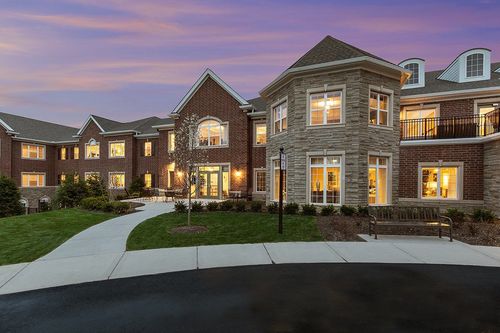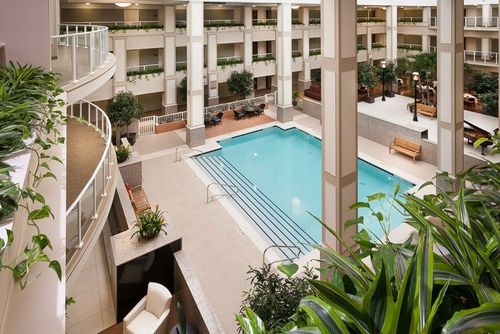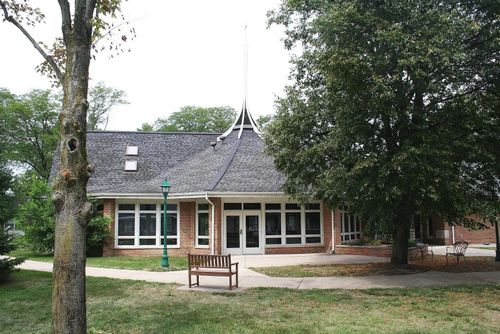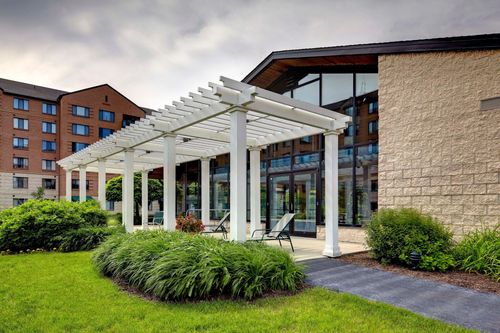
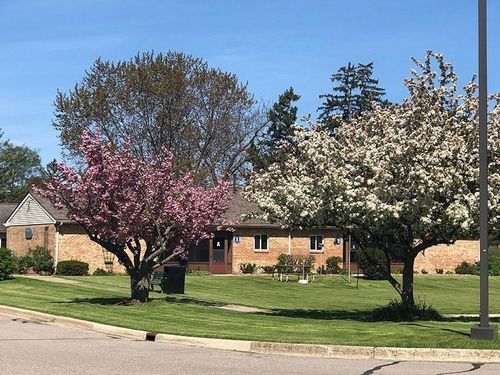
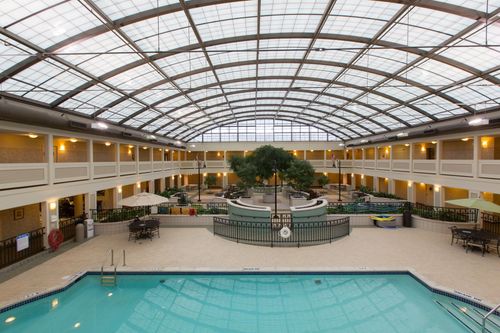
Macomb County is nearly nine hundred thousand people, and its skilled nursing is spread across three very different versions of it. Windemere Park Assisted Living I sits on Van Dyke Avenue in Warren at the dense southern end, The Village of East Harbor is on Kiely Drive in Chesterfield toward Anchor Bay, and Orchard Grove Health Campus is at Orchard Crossing Lane in Romeo, a village at the county's rural top. Warren to Romeo is most of the width of it.
That spread is the first real decision. In a county this size, choosing on availability alone can commit a family to forty minutes each way for a stay that runs years, and nobody works that out until the third week.
Fifty-Five to Eighty-Six Beds, and What Fills Them
The county's skilled buildings run between fifty-five and eighty-six beds, which is large enough to staff properly and small enough to stay legible. Inside each, two populations share a license. The short-stay side is built around therapy and a discharge date, running weekday hours with an eye on getting somebody home. The long-stay side holds residents whose conditions need licensed nursing indefinitely, and it moves at a slower pace.
The questions differ by which side is in play. For a rehabilitation stay, ask how many therapy hours a day are delivered rather than scheduled, and what the building's record is for getting residents home. For a long stay, ask overnight staffing ratios, how long the nursing team has been in post, and how often residents go back to hospital. Buildings identical on paper diverge sharply there.
The One Place This County Is Genuinely Better Off
A few of Macomb's skilled settings participate in Medicaid, and in this lane that is unusual. Most counties around Michigan manage one participating building or none, which turns the eventual transition from private pay into a relocation. Here a family has some room to choose a building that can carry a resident all the way through.
That matters because of how skilled nursing gets paid for. A stay beginning from a qualifying three-night hospital admission runs on Medicare, in full for twenty days and part-paid to day one hundred, then stops. What follows is private pay at a rate far above the assisted living side of these same buildings, whose published figures of $4,200 at Windemere Park Assisted Living I, $5,050 at The Village of East Harbor and $5,350 at Orchard Grove Health Campus describe a different product. Eventually most long stays reach Medicaid, and starting that application while Medicare days remain is what keeps a resident in the bed they are already in.
Two Trauma Centers and a Very Large Population
About 160,000 Macomb County residents are past 65, the largest senior population in this part of Michigan by a wide margin. The county also carries two Level II trauma centers, Henry Ford Macomb in Clinton Township and McLaren Macomb in Mount Clemens, which between them discharge continuously.
That volume cuts both ways. There is genuinely more capacity here than in a rural county, and a family is not waiting on one bed. But demand is proportionate, discharge planners work the same lists, and availability at any building can turn inside a day. Depth is not slack.
Choosing for the Years, Not the Week
A rehabilitation stay is short enough that a longer drive is tolerable. A long stay is not. Over years the visiting frequency is the relationship, and a long-stay resident often cannot report their own experience, so somebody present regularly is how a family notices weight loss, a pressure area, new confusion or a change in the feel of a wing.
That argues for weighting geography more heavily than families instinctively do once the stay looks likely to be long. A building twenty minutes from a daughter in Sterling Heights will be visited more often over three years than a slightly better-appointed one in Romeo, and in this county that difference is measured in visits per month rather than per year.
Three Buildings and a Discharge Date
With three addresses and a clock set by somebody else, the useful work is fast and narrow: which building has a bed at the required clinical level and by when, which is staffed for the particular problems the resident brings, which participates in Medicaid, and which sits where the family can actually get to.
None of those move at the same speed and none is published. The Medicaid question deserves settling before a bed is accepted rather than at day ninety, since it is the difference between a transition on paper and a move. It costs a family nothing, so when a discharge date is set, reach out and get all four answers in one call.
Our Macomb County directory keeps expanding as we evaluate providers for quality and alignment in 2026. Start the conversation about skilled nursing in Macomb County, or scan the buildings we cover at your own pace.