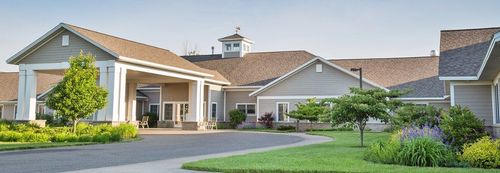
Marquette County, MI

Independent Living Communities in Marquette County

One independent living community in Marquette County, MI — with free, unbiased guidance from local advisors.

1
Community
1
CCRC
$3,200
Avg. Monthly Pricing

Explore Independent Living Communities in Marquette County

One independent living community to review, with free guidance from a local advisor.

View all communities in Marquette County

What to Expect From Independent Living in Marquette County

  • Setting mix: 1 ccrc in the matching set.
  • Inventory: 1 community in Marquette County for active-retirement living.
  • Price range: From $3,200/mo across the matching set.

Independent living in Marquette County comes attached to an unusual address. Mill Creek Memory Care Community in the city of Marquette carries an independent living tier inside a building organised around dementia care, and that pairing is worth understanding rather than dismissing, because it produces trade-offs a standalone apartment community never has to think about.

The upside is continuity, because someone who moves in while entirely independent is already living where assisted living and secured care happen, so a change in health years later need not mean a change of address, a new town, or a new set of faces at the door. The trade-off is that a building with a clinical centre of gravity feels different from one built purely around an active retirement, which is exactly what a tour is for.

What the Independent Tier Actually Covers

At this level a resident is buying housing with the work taken out rather than care. The apartment is maintained, meals are cooked, housekeeping and laundry are handled, and the snow that runs a Marquette winter is somebody else's job from November onward. Prescriptions, appointments, driving and the shape of the day stay entirely with the resident, and nobody checks in overnight.

The questions specific to this address are about separation. Ask where independent residents eat, whether the secured area has its own entrance and staff, how much of the weekly calendar is shared, and what the building does when an independent resident and a memory care resident want the same lounge. Those answers say more about daily life here than any brochure line about the tier itself.

Paying for a Tier Medicaid Does Not Reach

Independent living is housing, so no public program touches it. The MI Choice Waiver funds care services and this tier provides none, Medicare pays for medical treatment rather than rent, and long-term care insurance almost never begins paying at this level. What pays for it is retirement income, whatever a household has put by, and in most cases the price a house fetches.

The figure itself follows apartment size rather than a care assessment, which is a different pricing logic from every other tier and worth confirming line by line. Ask what utilities, parking, guest meals and a second occupant add, and ask what moving up a tier inside the same building would cost, because at this address that is a realistic future rather than a hypothetical one.

Who Is Actually Looking at This Tier

Independent living draws from the youngest end of the senior population, people still driving and still managing their own affairs, and Marquette County has about 14,200 residents past 65 to draw that from. The county reads younger than its rural neighbours, so the pool at this end is proportionally larger than the raw count suggests.

What pulls people in early here is maintenance rather than health. A roof that sheds a heavy snow load, a driveway that has to be cleared before anyone goes anywhere, and a furnace running hard for six months are the reasons a Marquette household starts looking while nothing at all is medically wrong.

Winters, the University, and the Reason People Move Early

The calculation in this county is unusually seasonal, since a house that is comfortable in September has become a set of chores by December, and the households that move at this tier are usually the ones who did the arithmetic on a February rather than waiting for a health event to make the decision for them.

Staying in Marquette also keeps a resident inside a town with more going on than its size suggests. Northern Michigan University runs a public cultural and lecture calendar, the hospital and the clinics are minutes away rather than across the peninsula, and lifelong friends stay within a short drive. Those are the anchors that make an early move feel like a gain rather than a concession.

Getting the Timing Right With Local Help

This is the tier where the decision is voluntary and therefore easy to postpone, and postponing it is what turns a planned move into an urgent one. A local advisor can set out what is available at this address, how the independent tier sits alongside the rest of the building day to day, and what a household needs settled in advance of an apartment opening.

The other half of the value is the long view. What a later move between tiers costs, what the building can support as needs change, and how a house sale is best timed against a move-in date are the questions that decide whether this is one move or several. A short conversation a year ahead is worth considerably more than the same conversation the week an apartment opens.

We keep expanding our Marquette County coverage as we evaluate providers for quality and alignment in 2026. Start the conversation about independent living in Marquette County, or look through the buildings we cover at your own pace.

Advisor Insight on
Independent Living in Marquette County

Independent living here sits inside a building whose centre of gravity is dementia care, which cuts both ways: a resident never has to move again as needs change, but daily life at the independent tier feels different from a purpose-built retirement community. How the tiers are separated day to day is the question that decides fit.

Frequently Asked Questions About Independent Living in Marquette County

What does independent living include in Marquette County?

At this tier a resident is buying maintained housing rather than care. The apartment upkeep, the meals, the housekeeping, the laundry and the snow clearing all move to the community, along with an activity calendar a resident can use or ignore. What stays with the resident is everything medical and personal: prescriptions, appointments, finances and the shape of the day, with nobody checking in overnight. That line matters: the moment daily washing, dressing or prescriptions need a hand on a routine basis, assisted living is the honest answer rather than this tier. The useful tour question is what happens on the day that changes, since at this address the next tier is down the corridor rather than across town.

What is it like living at the independent tier inside a memory care community?

It is a genuine trade-off rather than a drawback, and families should weigh both halves. The gain is that a resident who later needs assisted living or secured care can usually stay in the building they already know, with the same staff and the same visiting routine, which spares the disruption that a second move at eighty-five actually causes. The cost is atmosphere: a building whose centre of gravity is dementia care runs differently from one built purely around active retirement. Ask where independent residents eat, whether the secured area has separate staff and its own entrance, and how much of the weekly calendar is shared, then visit at a mealtime and judge for yourself.

Does Medicare or Medicaid pay for independent living in Michigan?

Neither one does, and the reason is structural rather than a matter of eligibility. Medicare covers medical treatment, hospital stays and short courses of skilled rehabilitation; it has never covered housing. Michigan Medicaid's MI Choice Waiver pays for care services delivered in licensed senior housing, and independent living by definition supplies no care services, so there is nothing for the waiver to attach to. Michigan Medicaid covers nursing home care separately, at a level of need far beyond this tier. In practice this tier is funded out of retirement income, accumulated savings and whatever a house sells for, which is why when to sell is usually a bigger planning question than the monthly rate itself.

When should a Marquette County household start looking at independent living?

Earlier than most people do, and usually for reasons that have nothing to do with health. In this county the trigger is typically the house: a roof carrying a heavy snow load, a driveway that has to be cleared before anyone can leave, a furnace running hard from October to April, and stairs that were fine a decade ago. Because apartments at this tier turn over slowly, residents who move in tend to stay for years, so a household that starts asking a year out keeps a real choice and one that starts in the same month usually does not. Moving while both halves of a couple are well is also far easier than doing it one at a time.

What should a home health nurse or social worker know before suggesting independent living here?

The ceiling is the thing to check first, because independent living includes no personal care and no oversight, so a client who needs regular help with bathing, dressing or prescriptions belongs at the assisted living tier, which this same Marquette building also carries. For clients who genuinely fit the independent tier, home health can continue seeing them in their apartment as it would in any private residence, and that continuity is often the deciding factor for a client reluctant to move. A local advisor can confirm what is currently available, how the building separates the tiers day to day, and how quickly a visit can be arranged around a client's schedule.

More Senior Living in Marquette County

Get Help Finding Independent Living in Marquette County

Our local advisors know every independent living community in Marquette County personally. Get free, unbiased recommendations tailored to your family's care needs, budget, and location preferences.

Free service · No obligation · We only recommend what's right for you