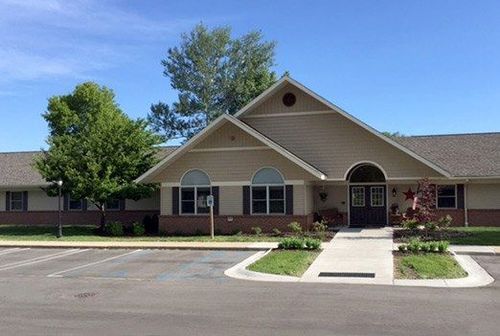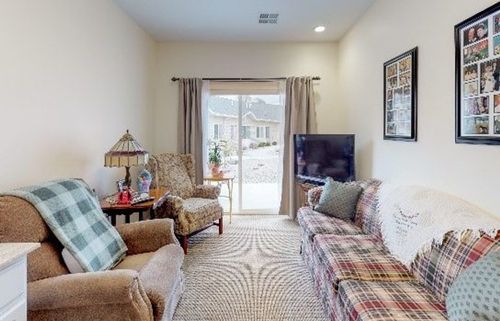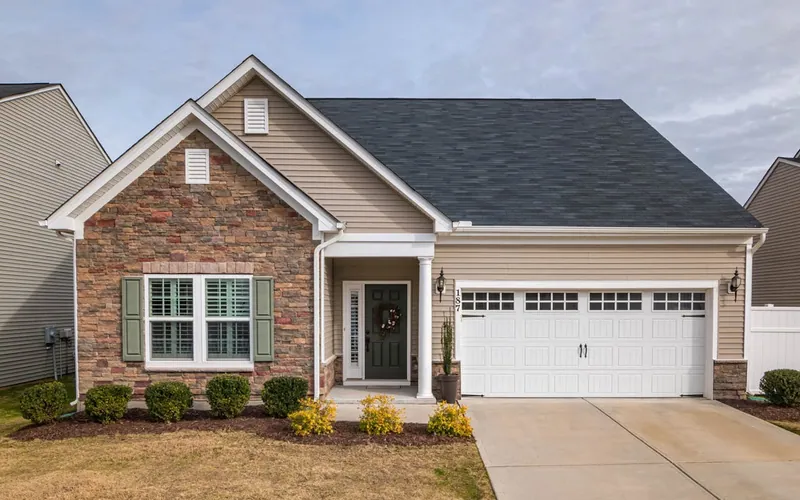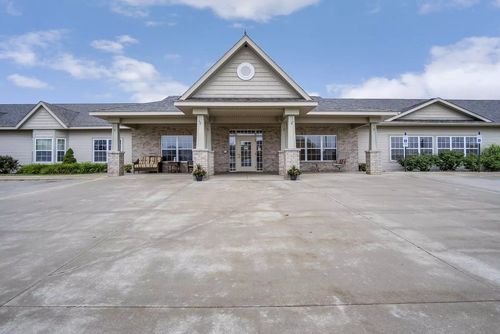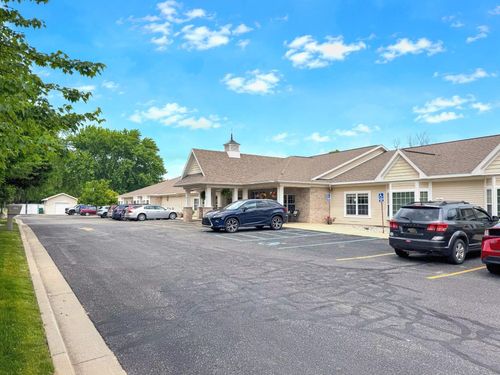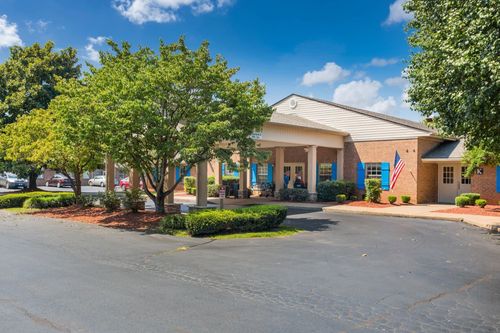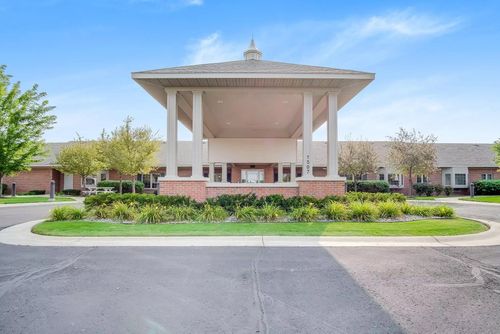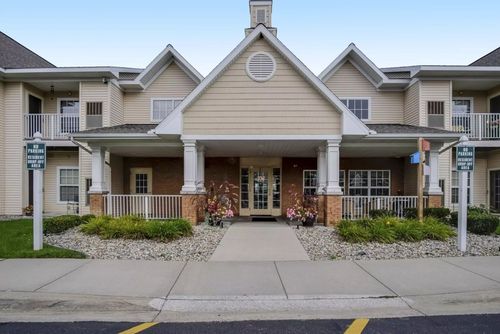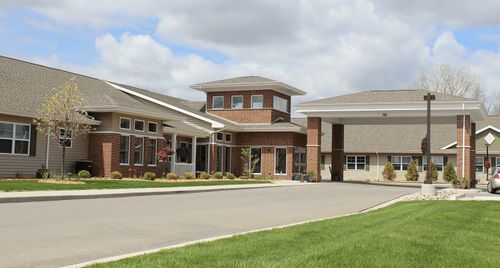
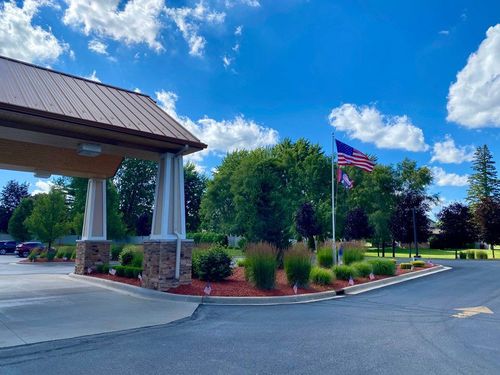
The two Saginaw addresses that welcome pets carry the same name: Traditions of Saginaw - Main and Traditions of Saginaw - West. Sharing a name does not mean sharing a pet policy, and sister buildings under one banner regularly differ on weight limits, on how many animals a resident may keep and on which parts of the building an animal may enter, because each is insured and staffed on its own terms.
Both are also substantial buildings, in the range of sixty to eighty-five residents, which shapes what living there with a dog actually involves. A pet in a large community is not simply a pet in a house with more people in it.
What Keeping a Pet in a Large Building Involves
The practical questions in a building this size are about distance and about other residents. How far is the nearest exit from the apartment, and is there a lift on that route at six in the morning. Is there grass on the property or is the nearest patch across a parking lot. Where does waste go, and who supplies the bags. None of these appear on a brochure and all of them decide whether a routine holds up in a Saginaw February.
The other residents in the building matter every bit as much. A large community includes people who are delighted by a dog in the hallway and people who are frightened of one, so buildings typically set rules about where animals may be, whether they travel in the lift alone with a handler, and how they behave in the dining room. Those rules are about running a shared building rather than about disliking animals, and a well-run community will state them plainly on a first visit.
The Costs of Bringing a Pet
Two charges usually sit on top of the monthly rate, which runs $4,500 at Traditions of Saginaw - Main and $4,901 at Traditions of Saginaw - West. The first is a one-time pet deposit, refundable in some buildings and not in others, and the second is a monthly fee charged per animal. Neither is regulated, so the two figures vary and both belong in the budget from the outset rather than appearing at signing.
Saginaw County separately requires an annual dog license, obtained from the county treasurer once a rabies vaccination is current. That is state law rather than a house rule, and a community will want to see the paperwork before the animal arrives, alongside vaccination records and sometimes a note from a vet about temperament.
Where a Saginaw Pet Policy Stops
Start with the animal rather than with the building. A cat or a small dog clears nearly every pet policy in the city, while a dog above the usual weight ceiling, which most often falls somewhere between twenty and forty pounds, cuts the field down immediately. Breed restrictions come from what a building's insurer will cover rather than from any judgment of the animal, and they change when the policy renews.
Care level narrows it further, and this is the part families are least prepared for. A community can welcome animals throughout its regular apartments and still not allow one inside a secured memory care setting, on grounds of resident safety and of whether a resident can reliably care for the animal themselves. Anyone whose situation may involve that move later should ask about it now rather than at the point of transfer.
Matching the Animal to the Right Saginaw Building
Because the two Traditions of Saginaw addresses are separate buildings, the useful question is never whether Traditions takes pets but which of the two will take this particular animal, on these dates, at what cost, and with what restrictions on where it may go. An advisor covering Saginaw County checks both against the actual dog or cat rather than against a general question.
If keeping the animal is the condition on which a Saginaw move stands or falls, reach out and the two buildings can be compared on exactly that basis first.
Our directory for Saginaw continues to grow as we evaluate providers for quality and alignment in 2026. Reach out for a conversation about pet friendly in Saginaw, or browse the communities we have vetted at your own pace.