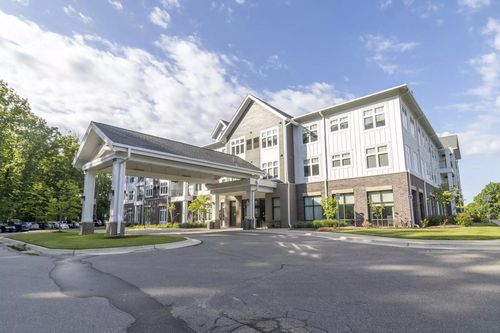
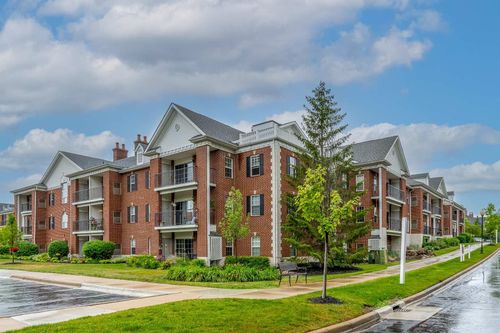
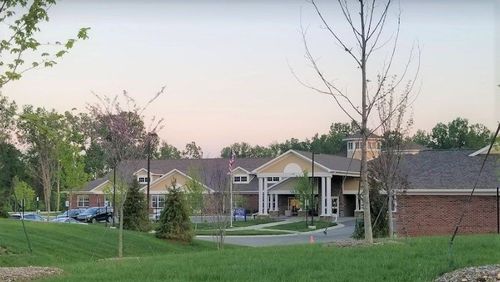
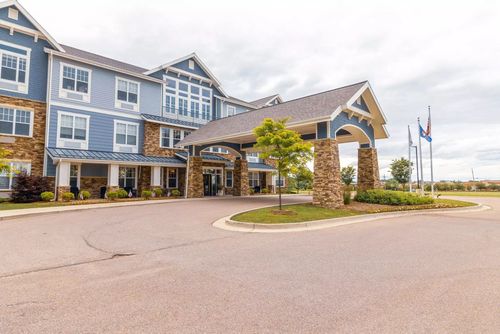
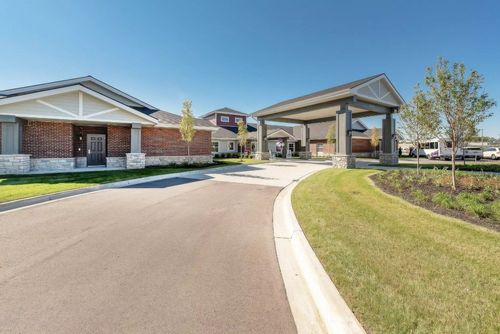
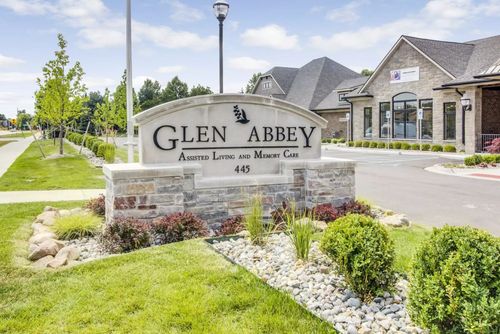
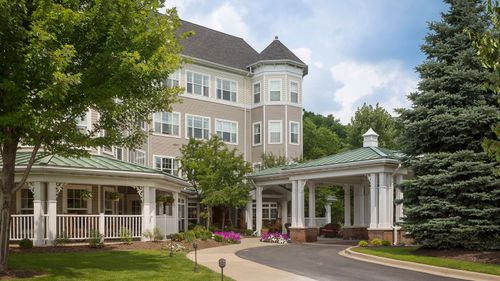
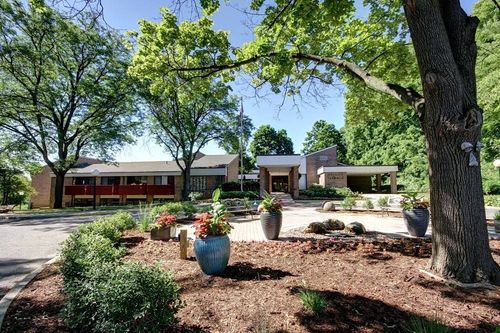
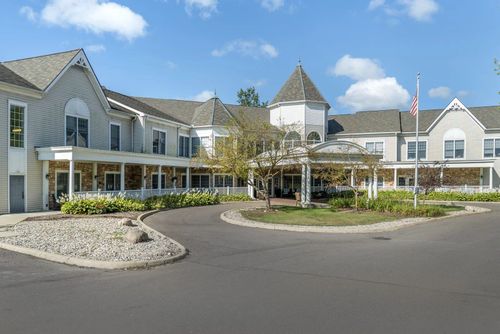
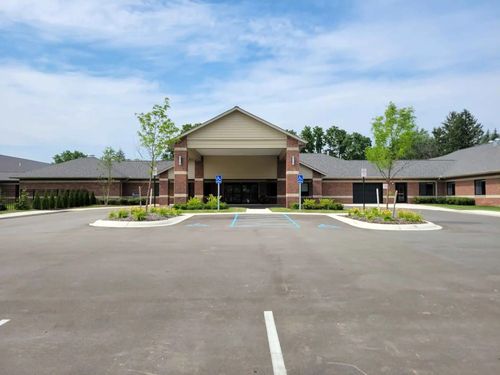
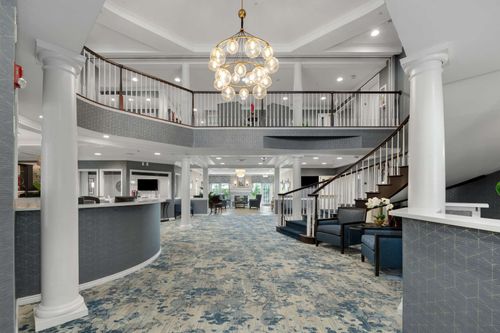
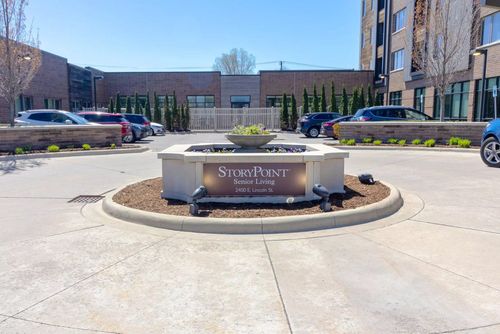
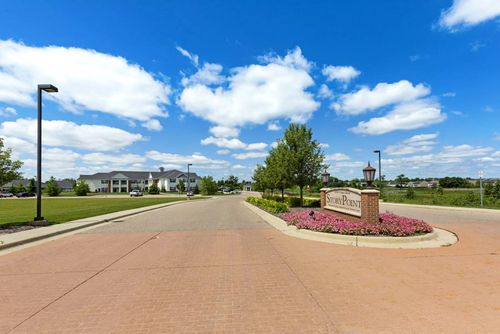
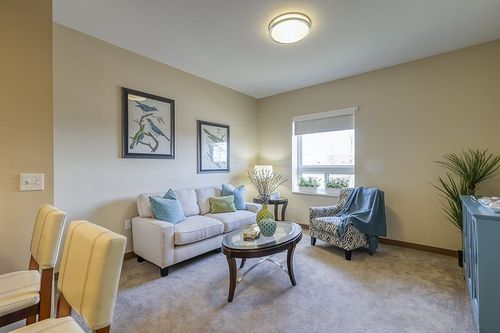
On most pet-friendly pages the question of whether an animal can move into memory care is a footnote. In South Lyon it is the entire subject, because Kinwell South Lyons on Ten Mile Road is a dedicated memory care community rather than a building with a secured wing attached, and it is the local address that accepts a resident's pet, at rates starting from $5,550 a month.
That combination is genuinely unusual and worth approaching carefully rather than optimistically. A community built around dementia care has reasons to be cautious about animals that an apartment building does not, and a household arriving with a cat and an expectation is likely to have a longer conversation than they anticipated. It is still a conversation worth having, since separating somebody from an animal they have had for a decade is its own kind of loss.
What a Secured Setting Weighs
Three things come up in every one of these conversations. Doors, because a secured building depends on them staying shut and a dog needing to go out is a standing reason to open one. Feeding, because a resident who no longer tracks their own meals will not track an animal's, and a well-meaning neighbor may fill the same bowl three times before lunch. And the other residents, some of whom will approach a strange dog without any sense of caution.
None of it amounts to a refusal in itself. The consequence is that staff carry more of an animal's daily care here than they would where a resident lives in an assisted living apartment, and a community has to satisfy itself it can absorb that alongside everything else. Cats generally clear these questions more easily than dogs, since they need no walking and stay largely in one room. A small, settled animal that ignores commotion is a far easier proposition than a young or reactive one.
What the Animal Adds Beside the Care Rate
The $5,550 starting figure follows from the level of dementia care a resident needs, and an animal changes none of that arithmetic. What appears separately is a deposit paid once when the pet arrives, refundable at some buildings and not at others, and commonly a modest monthly amount.
In a memory care setting that monthly charge frequently reflects genuine staff time rather than cleaning, so it is fair to ask what it covers and what the community will actually do: whether somebody feeds the animal on a schedule, whether walks happen at set times, and what the arrangement is at weekends. A dog trained to carry out particular tasks on account of a disability, or an animal documented as an assistance animal, sits outside these charges and outside the building's conditions on size and breed.
The Question Worth Settling First
Ask what happens as the resident declines further, because in a dedicated memory care community that trajectory is the expectation rather than a possibility. Establish who takes the animal during a hospital admission, who pays for veterinary care, and where the animal goes if the resident reaches a point of no longer recognizing it.
Those answers should be written down while everybody is well. Families who leave them for later tend to face them in a week when they have no attention to spare.
Putting the Animal to the Community
Whether a dedicated memory care community will take a particular animal is decided case by case, and the answer moves with the residents currently living there and the staffing behind them. It is not published, and last year's answer says little about this month's.
Someone covering western Oakland County can put the actual animal to the community and return with a definite answer, an honest refusal included. Where the pet is the reason a family keeps deferring a decision that has become necessary, a short conversation about the animal is the right place to begin.
Our directory for South Lyon continues to grow as we evaluate providers for quality and alignment in 2026. Start the conversation about pet friendly in South Lyon, or look through the buildings we cover at your own pace.