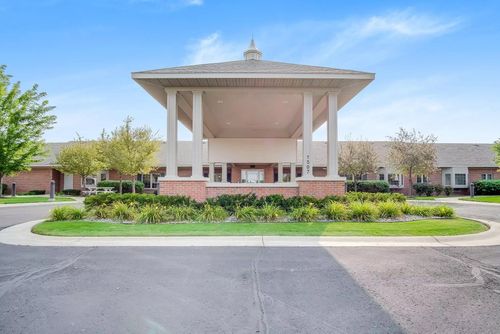
St Johns, MI

Pet-Friendly Senior Living in St Johns

One pet-friendly community in St Johns, MI — with free, unbiased guidance from local advisors.

1
Community
1
Pet Friendly
$4,150
Avg. Monthly Pricing

Explore Pet-Friendly Senior Living in St Johns

One pet-friendly community to review, with free guidance from a local advisor.

View all communities in St Johns

What to Expect From Pet-Friendly Senior Living in St Johns

  • Pets welcome: All 1 community welcomes pets.
  • Setting mix: 1 community in the matching set.
  • Price range: From $4,150/mo across the matching set.

Clinton County is farm country, and a good number of the older adults moving into senior housing around St Johns have kept animals their whole lives rather than acquired one for company late on. That shifts the shape of the conversation about animals, since the question is less whether a building tolerates a cat and more whether the terms it sets can accommodate somebody whose relationship with an animal has been a fixed feature of every day for decades. A small number of local addresses welcome pets, Grace Haven Assisted Living - Supportive Care among them, and the terms attached vary enough to be worth establishing one building at a time.

The Terms a Building Sets

Every community that accepts animals attaches conditions, and they cluster in the same places everywhere. A limit on how many animals occupy one apartment, an upper weight for dogs, sometimes a breed list required by the building's insurance carrier, a deposit collected at move-in, and an amount added to the monthly bill afterward. Proof of current vaccinations and of spaying or neutering is standard, and a short introduction between staff and the animal before approval is common enough to expect.

The requirement that determines whether an arrangement lasts is the one about daily responsibility. Feeding, walking, cleaning up, and getting to the veterinarian remain the resident's job, or the job of somebody named in advance who has agreed in writing to take over, including permanently if a hospital admission turns into something longer. In a rural county where the nearest adult child may farm forty minutes away, that name deserves a real conversation rather than an assumption.

What the Animal Adds to a St Johns Rate

A monthly figure of $4,150 attaches to the pet-welcoming listing here, and the animal is charged on top of it. A deposit changes hands once and whether any part of it returns depends on the individual agreement rather than on any Michigan rule. A recurring monthly amount then applies for as long as the animal is in residence, and across a stay of several years it comfortably outgrows whatever the deposit came to.

Outside the building nothing about keeping an animal changes. Food, litter, and routine veterinary care carry on, and Clinton County is well served by general practices while an after-hours emergency means driving toward Lansing. Michigan requires a county license for any dog over four months, granted against a current rabies certificate, with a multi-year term costing less than the same span of annual renewals. Pet deposits, monthly pet charges, and the weight and breed rules do not apply to a trained service dog or a documented assistance animal.

Narrowing the St Johns List

Put the animal's details into the first conversation rather than the third. Species, weight, and how many remove more buildings from consideration than location or price ever do, and where options are few, touring a building that was never going to take a seventy-pound farm dog wastes an afternoon nobody has to spare.

The second question is what the resident can still manage without help, and the answer moves over time rather than holding steady. Somebody walking their own dog around the village has the widest choice locally. Somebody needing staff or relatives to handle the walking has fewer workable options, while a move into a secured dementia setting produces a decision reached one case at a time, because a building has to consider whether the resident remains able to look after an animal at all, and how its presence affects everyone else living on that floor.

What a Local Advisor Brings to St Johns

Pet terms in a small market go quietly out of date. An insurance carrier changes and the weight ceiling follows it, a deposit stops being returnable, a building that permitted two animals settles on one, and nothing about any of it reaches a page a family would think to look at.

An advisor covering Clinton County keeps the version actually in force across the local communities and knows which terms have any flexibility in them. Where an animal is what keeps a St Johns decision on hold month after month, talk it through before any visits get arranged rather than after somebody is turned away at a front door.

We keep expanding our St Johns coverage as we evaluate providers for quality and alignment in 2026. Start the conversation about pet friendly in St Johns, or look through the buildings we cover at your own pace.
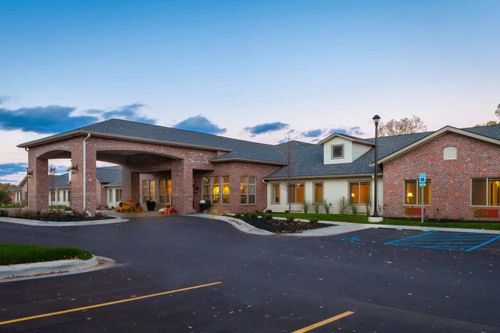
Advisor Insight on
Pet-Friendly in St Johns

Each building around Clinton County writes its own pet terms, and the weight ceiling is where a local search usually narrows, since an insurance carrier normally decides where that line falls. Daily responsibility stays with the resident or a person named in writing, which is a firm condition of approval.

Pet-Friendly Senior Living Near St Johns

Pet-Friendly communities within 25 miles of St Johns.

Frequently Asked Questions About Pet-Friendly Senior Living in St Johns

Does senior living in St Johns allow pets?

Part of it does, and those are the communities gathered here. Cats meet the fewest obstacles anywhere, since they stay indoors, need no walking, and seldom encounter a weight rule. A small dog is accommodated in most places as well, while a larger one depends entirely on where a particular building draws its line, and in a market with few options that line can be decisive. Caged birds and fish tanks are commonly permitted and often are not counted against a pet limit at all. Describing the actual animal by breed and weight in the first conversation produces a usable answer far quicker than asking in general terms.

What size dog is too large for a senior community?

There is no figure that applies across Clinton County, because each building sets its own ceiling and its insurance carrier usually shapes where that ceiling sits. Across senior living generally the common band runs somewhere between twenty and forty pounds, though some buildings go well beyond that and a handful set no number at all, judging each dog on its own merits. A working farm dog or anything in the retriever range therefore needs a direct answer before a visit is arranged, since discovering the limit at the end of a tour wastes the afternoon and raises hopes that were never going to be met.

What are the deposit and monthly pet charges?

Two separate amounts are standard and they behave differently from one another. The deposit is collected once at move-in, and whether any part of it comes back depends entirely on the wording of the agreement rather than on any state rule, so the term should never be read as implying refundable. The monthly charge stands apart, runs throughout the animal's residency, and across several years grows into the larger of the two despite looking the smaller when a lease is signed. Michigan law fixes neither amount, so each community sets its own, and both figures belong in writing beside the base rate.

Who looks after the animal if the resident cannot?

A person named in advance, and that arrangement is a condition of approval rather than a courtesy. Communities want a specific individual named, usually a relative, who has signed up to handle feeding, walking, and trips to the vet during an absence and to take the animal for good if the resident never recovers the ability to manage. Informal help through a short illness is common at many buildings, and some will arrange a paid walking service, but ownership never transfers to a community. In a rural county where relatives may live some distance off, that person is worth choosing deliberately and briefing honestly.

Do the pet rules apply to a service dog?

They do not, and the exemption is a legal one rather than a courtesy extended by the building. Housing law places a service animal outside the definition of a pet, so the pet deposit, the monthly pet charge, and the weight and breed conditions a community applies to pets all fall away. A service animal is a dog trained to perform defined tasks addressing a handler's disability. An assistance animal, frequently called an emotional support animal, meets a disability-related need without that task training and has likewise been kept outside pet policy, though federal guidance there has been shifting. Care of the animal and liability for damage remain with the resident.

More Senior Living in St Johns

Get Help Finding Pet-Friendly Senior Living in St Johns

Our local advisors know every pet-friendly community in St Johns personally. Get free, unbiased recommendations tailored to your family's care needs, budget, and location preferences.

Free service · No obligation · We only recommend what's right for you