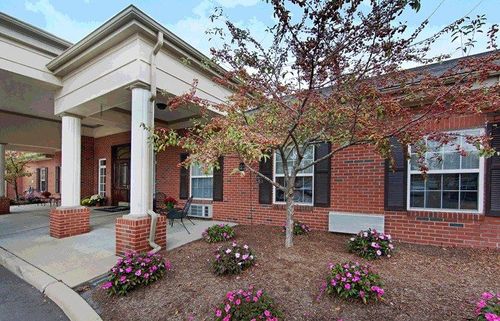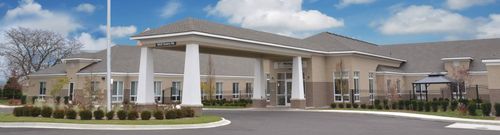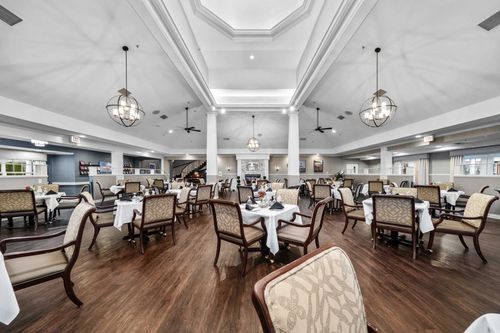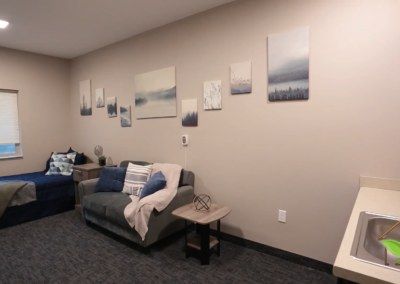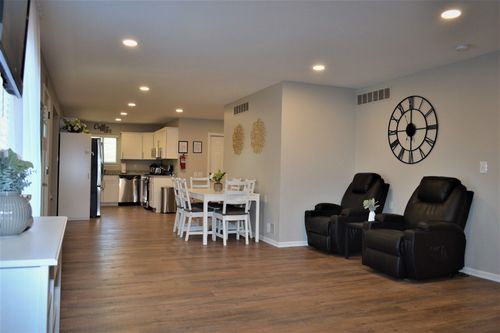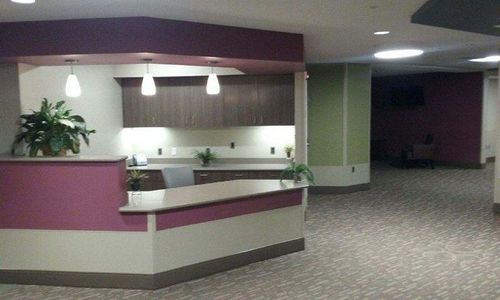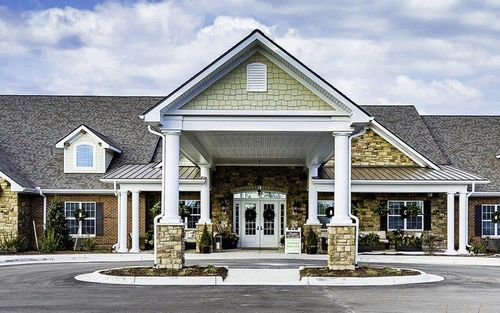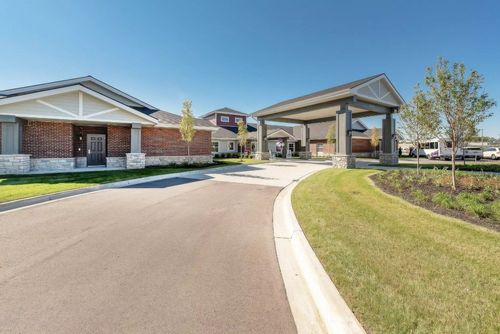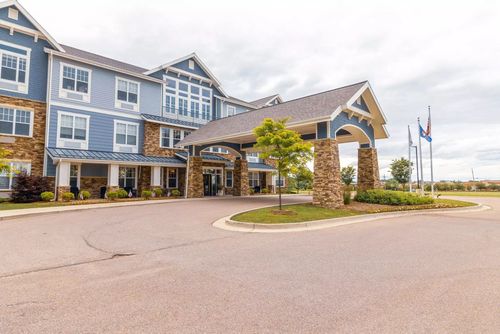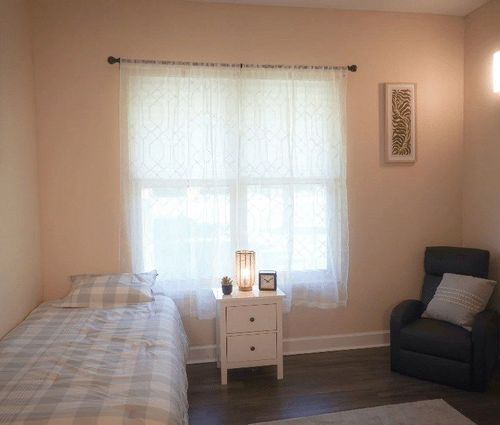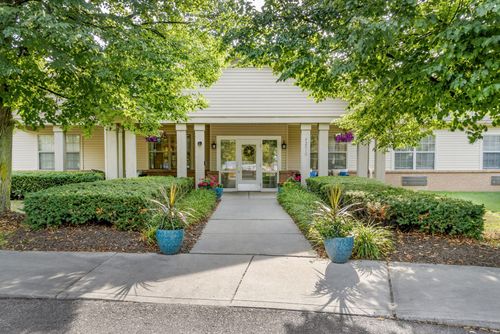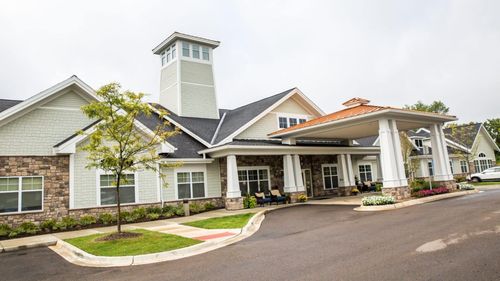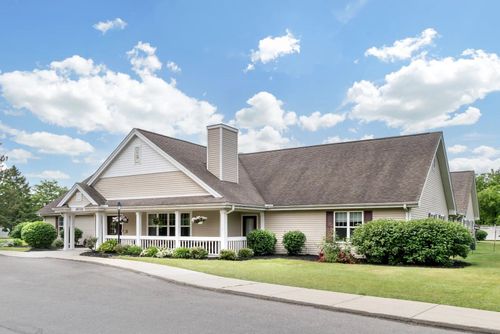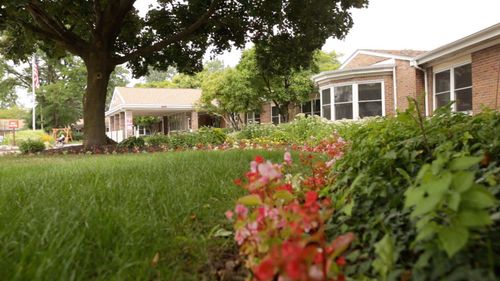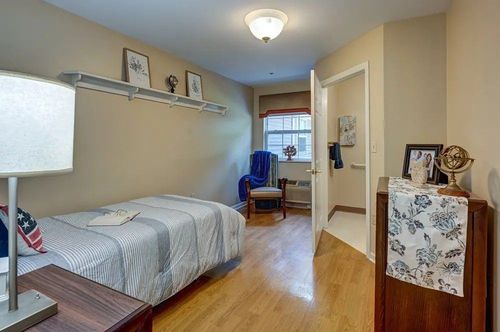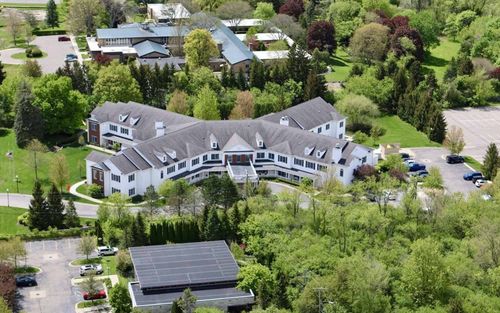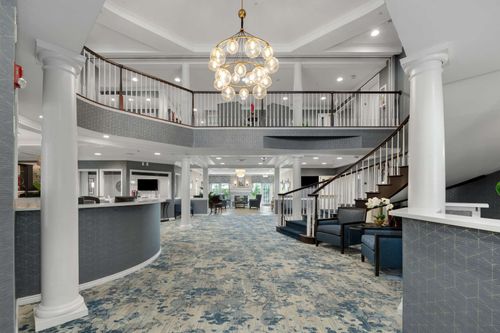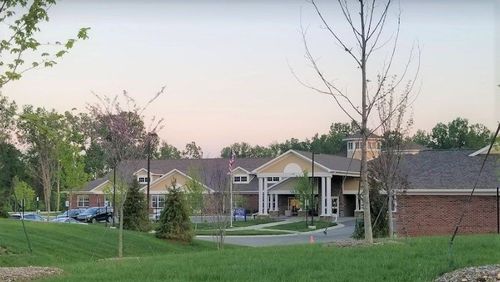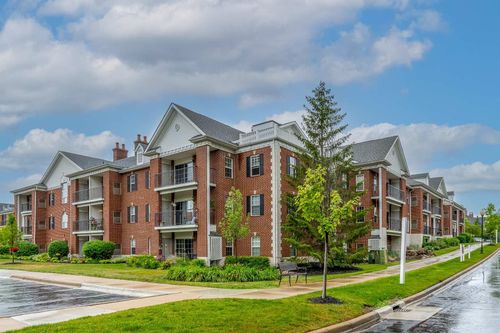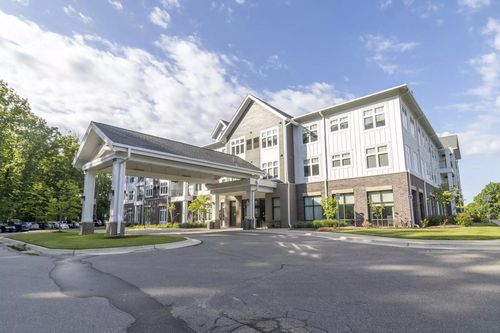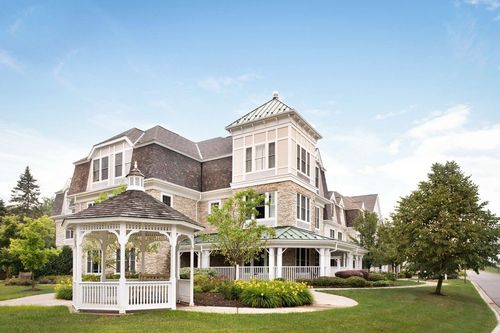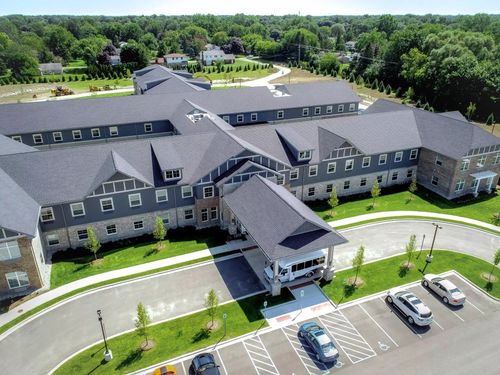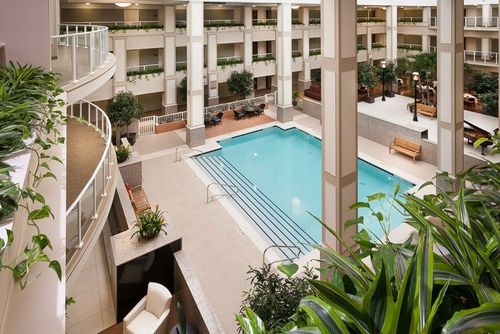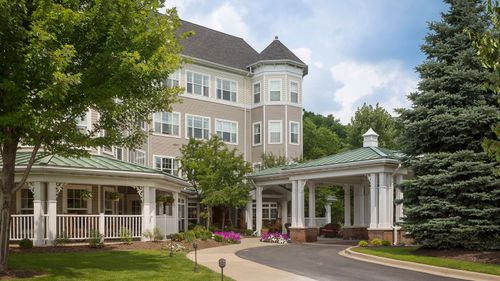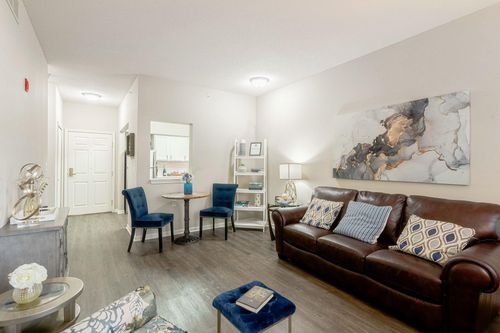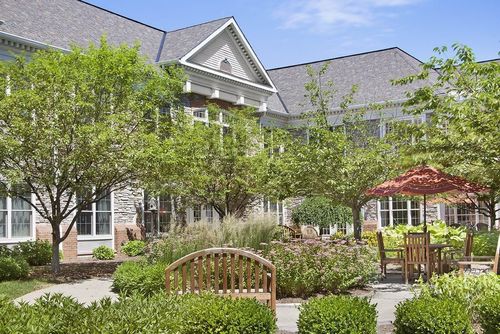
Twenty-four residents is a threshold rather than a number. Below it a secured setting runs on individual attention and improvisation; at that size it can sustain an actual programme, with groups small enough to be manageable and large enough to form. Hampton Manor of Taylor on Pardee Road, the 1 matching community, keeps a secured neighborhood of that scale inside a building of a hundred and two.
That is a different proposition from the small dementia houses that serve most Michigan towns, and it is the thing a family should be weighing here. The question is not whether a secured room exists but whether a resident does better inside a busier dementia community or in a quieter one.
What a Larger Secured Neighborhood Offers
The fundamentals hold at any size: dementia-trained caregivers taking on all the medication, help with washing and dressing on the resident's schedule rather than a round's, meals that take the time they take, doors that manage themselves, and staff awake through the night.
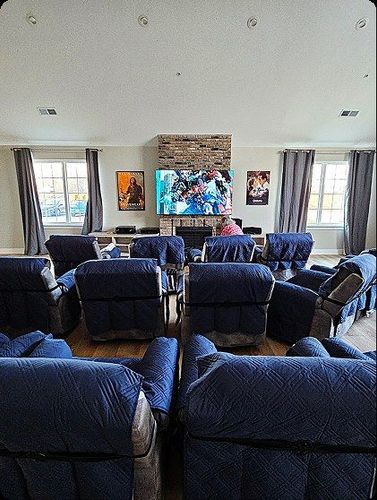
Scale adds things a handful of residents cannot generate. There are enough people for a music session that becomes a group rather than two people and a caregiver, enough staff across a shift that one resident having a difficult afternoon does not absorb the whole floor, and enough turnover of activity that a resident who is restless has somewhere to go. The trade is that a bigger secured neighborhood is a busier place, and a resident who is easily overwhelmed by noise and movement may find it harder rather than easier.
Reading the Ladder in One Building
The building publishes an entry rate of $4,200 a month in 2026, and secured care is priced above it. Because independent apartments, assisted living and the secured neighborhood all sit under one roof here, the steps between the levels are unusually easy to read, and a household planning several years out can get all of them on paper in a single conversation rather than piecing together three buildings' price lists.
That is worth doing early, because Medicaid is not accepted at this address, so the whole arrangement runs on private funds, and the useful exercise is working out how many years the plan covers at the level a resident is likely to reach rather than the level they are entering at. Michigan's public alternative pays toward care and not toward the residence, and reaching it means a means test plus an assessment at nursing-facility level.
One Building for an Inner Downriver City
Wayne County holds more residents past sixty-five than any county in Michigan, and Taylor sits in the inner Downriver ring where a large share of them live. The city concentrates its senior living in one building rather than spreading it across several, which is why a single secured neighborhood carries the local demand.
The practical upside is that a pool of this size turns over more predictably than a house of eight, so availability here is steadier than the count of addresses would suggest. The practical caution is that no short respite stays are offered, so there is no bridging option if the timing does not line up, which makes an early conversation worth more than it might appear.
A Hospital a Mile Away
For dementia care the distance to a hospital matters less than what that hospital carries, and Taylor does well on both counts. Corewell Health Taylor sits about a mile from the building with a neurotrauma unit, hyperbaric and wound care, orthopedic surgery and a dedicated behavioural health unit, the last of which is more relevant to dementia than any other item on that list.
Beyond it, Corewell Health Dearborn is eight miles north with a Level II trauma designation and stroke accreditation, Henry Ford Wyandotte covers the same distance east, and Level I capacity sits in Detroit. A resident who has used Downriver doctors for years keeps them, and the people visiting are driving roads they already know.
What a Local Advisor Brings to Taylor
In a one-building city the useful knowledge is less about comparison than about fit and timing. A Local Senior Advisor covering Downriver tracks how the secured neighborhood is running, what it takes on when a resident's nights get difficult, and how the building decides that someone is ready to move from assisted living into the secured side.
The money question is the other half, because a single building with three levels makes it unusually easy to model the whole arc and unusually tempting not to. Getting the later figures written down while a resident is still at the entry level is what keeps a plan honest. Families who reach out at that stage generally find the decisions easier when they arrive.
Our directory for Taylor continues to grow as we evaluate providers for quality and alignment in 2026. Start the conversation about memory care in Taylor, or scan the buildings we cover at your own pace.