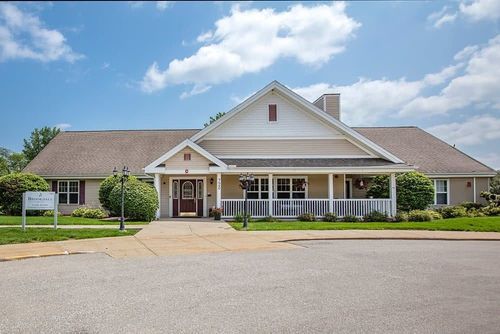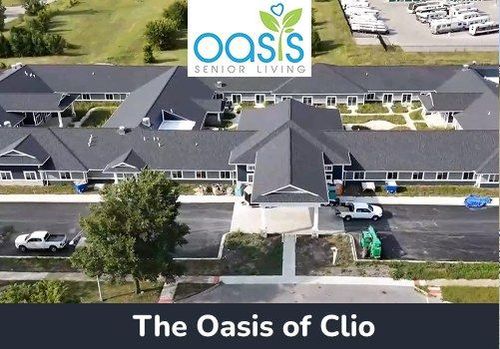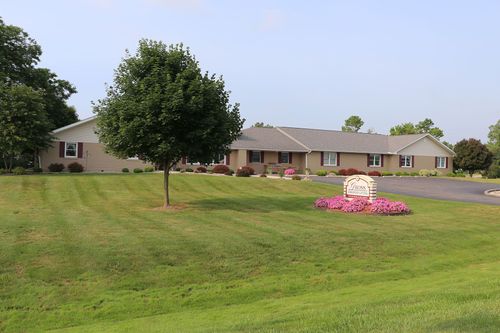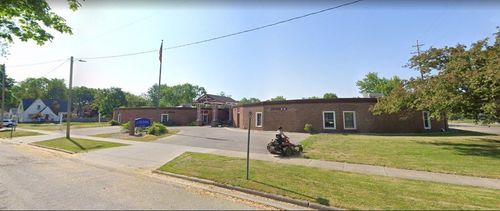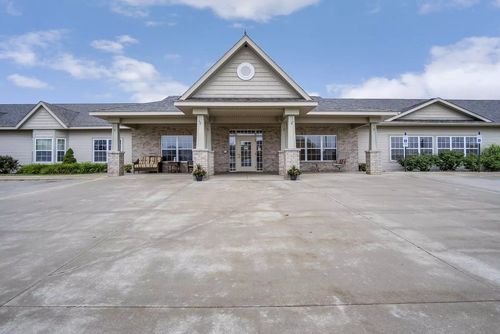
Sixteen miles of M-46 separate Tuscola County's two secured dementia settings. Heritage Hill Assisted Living is in Caro, the county seat, and Vassar Comfort Care II is south of it in Vassar, and each pairs its secured area with assisted living under the same roof.
They also differ sharply in size, at fifty-six beds and twenty, which for someone living with dementia matters more than the mileage does. A family here answers two questions at once: which end of the county, and which kind of environment.
Scale, and What It Does to a Difficult Evening
Secured care depends on being recognised, and someone who can no longer retrieve a name still knows a face, a voice and the way a familiar person comes into a room. That knowing is what keeps an unremarkable morning from turning frightening, so how long the caregivers stay outweighs anything on a features list.
Size shapes how that plays out in practice, and here the two sit far apart. Twenty beds keeps the noise low and the faces constant, which suits a resident easily overwhelmed, though a small team has limited reserves when two people need help at the same moment after dark. Fifty-six beds brings more activity, more structure and more hands available at exactly that hour, which suits someone who has always lived among company. Both models work; they work for different people, and the reliable way to tell is to stand in each secured area late in the afternoon rather than mid-morning.
What the Secured Tier Adds
Published base rates are $4,172 at Vassar Comfort Care II and $5,100 at Heritage Hill Assisted Living, with the secured area adding its own charge to whatever care level a resident is assigned. Neither figure describes a month, then, and what a household has to plan against is the secured cost once that rating exists.
With no Medicaid participation anywhere in the county, this is private money from the first month to the last. That makes the size of the step above the base rate the central question rather than a footnote, since budgets built on an entry figure tend to fail around eighteen months in, when needs have deepened and the total has moved with them. Ask each building to put its secured price on paper for the care level a resident would genuinely be assigned, not the lightest one. That is what turns two advertised numbers into a decision a household can actually make.
A Farming County With Two Small Hospitals
Around 11,600 of Tuscola County's 53,000 residents have passed sixty-five, better than one in five and above the Michigan share, with two secured settings between them. Dementia becomes more common with each year of that, so the pressure on both is real.
Rooms open from inside rather than onto a market, which is the practical thing to understand about timing. Each secured area sits within a building running assisted living too, so space appears when somebody already there moves across, or when a stay ends, and a household known to the building hears about it well before anyone telephoning cold.
Sixteen Miles, and What They Cost Over Years
The geography deserves more weight than families give it at first. Visiting somebody with dementia works in short, frequent doses, a rhythm that survives only when the journey is unremarkable. A relative in Vassar and a relative in Cass City will not find the same address workable, and across a stay measured in years that difference decides who actually turns up.
Medical care will not force the choice either way, which helps. Tuscola holds two critical access hospitals rather than one: McLaren Caro Region, a twenty-five-bed hospital serving the county since 1928 with emergency, surgical and rehabilitation services, and Hills & Dales General Hospital up in Cass City. Whichever end a resident settles in, everyday medicine stays close, so nobody is trading medical access against proximity to family.
Translating Between Unlike Options
With one twenty-bed and one fifty-six-bed secured area, an advisor covering Tuscola County is less a filter than an interpreter. The things that settle the outcome are what each costs at a rating a resident would genuinely receive, where space exists this month, whether the caregivers have been in post for years or months, and how each team behaved the last time somebody declined faster than expected.
The ceilings matter most, because with two secured areas and no third there is nowhere obvious to turn if one is reached. Each carries a boundary it cannot safely cross, and the two are not in the same place. Knowing both before choosing is the difference between planning and hoping, and half an hour to talk it through generally settles which end of the county to start from.
Our directory for Tuscola County continues to grow as we evaluate providers for quality and alignment in 2026. Start the conversation about memory care in Tuscola County, or scan the buildings we cover at your own pace.