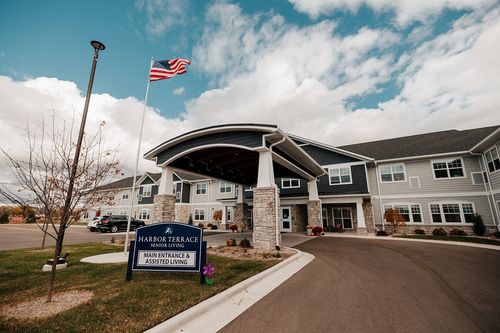

Households approaching Medicaid usually ask whether they will qualify. The question that turns out to matter more, once they do, is what the monthly arithmetic actually looks like afterward, because a waiver-funded placement does not work the way a private one does. Pine Ridge Assisted Living Fac is the West Olive address carrying Medicaid acceptance, sitting in the stretch of Ottawa County between the lakeshore and the Grand River, and a family that understands how the money moves each month before an application is filed is spared most of the shocks that arrive afterward.
How the Money Moves Under the Waiver
Michigan splits the bill into two halves that are funded separately. Through MI Choice the state pays the community for the care a resident receives: the hands-on help, the nursing oversight, the medication management. The accommodation, the meals and the utilities remain the resident's own responsibility and are met from their monthly income, which for most people means Social Security and any pension.
That second half is where the mechanics surprise people. A resident does not simply keep their income and pay a housing bill out of it; the great bulk of that income is directed toward the cost of care and lodging, with a modest personal needs allowance retained for the things nobody else pays for. Haircuts, clothing, a telephone, a newspaper, small gifts for grandchildren, over-the-counter items the community does not supply, all come out of that allowance and nothing else. It is a smaller sum than families anticipate, and building a realistic picture of it beforehand prevents a resident from discovering the constraint at the point they can least adapt.
What Applies Where
Coverage follows the care level, and the three routes diverge. Assisted living and memory care are reached through the waiver on the terms above. A nursing facility runs on traditional Medicaid instead, which is broader and absorbs the cost of living there alongside the clinical side. Nothing in Medicaid reaches independent living, at any income at all, and the reason is simply that every one of these programs turns on an assessed need for care where independent living presents none.
The published local figure is $3,800 a month, which is where a privately paying resident starts rather than what a waiver-funded one is billed. The two are constructed differently and comparing them directly misleads. Michigan also adds a payment on top of the federal disability income of anyone living in a licensed setting, aimed at the accommodation half of the bill, and it is worth counting into the arithmetic before a household concludes the numbers cannot be made to work.
What to Sort Out Before Applying
Three things run on separate clocks and none of them is quick. A financial determination examines income, what is owned and anything transferred or sold cheaply within the look-back window, and the slow part is almost always waiting on banks and pension administrators rather than on the state. A functional assessment has to be scheduled and carried out to establish that the level of need genuinely reaches the threshold. And waiver enrollment is capped and administered regionally, so clearing both still leaves the question of whether a place exists.
The community's own practice makes a fourth variable, independent of the other three. A building accepting Medicaid may carry only a handful of waiver-funded places, or may admit somebody privately and move them across afterward, and neither is a mark against anyone so much as an ordinary commercial decision. With one Medicaid-accepting address in West Olive, establishing which applies here is worth doing at the beginning rather than at the end.
Sorting the Order of Operations
Searching is not the work, since the address is already known. What cannot be seen from outside is whether a waiver-funded place is currently held, what the conversion practice amounts to, and at what stage of the regional process either question starts to matter.
An advisor working Ottawa County carries those answers, and will say plainly when the call a household actually needs is to an elder law attorney, which is the honest position wherever property or a sizeable gift appears anywhere in recent history. Getting the order right costs nothing and saves months, so it is worth taking the time to reach out before an application goes in rather than after it has stalled.
We keep expanding our West Olive coverage as we evaluate providers for quality and alignment in 2026. Reach out for a conversation about medicaid in West Olive, or look through the communities we have vetted at your own pace.