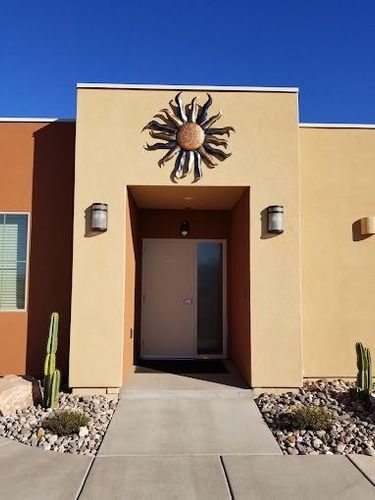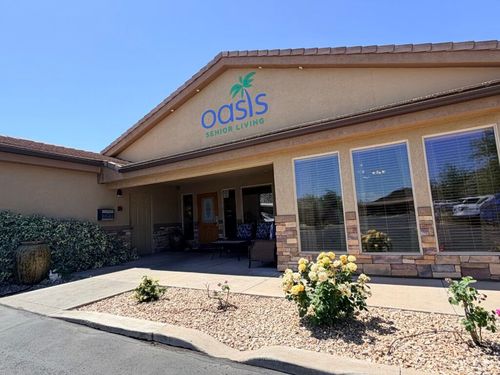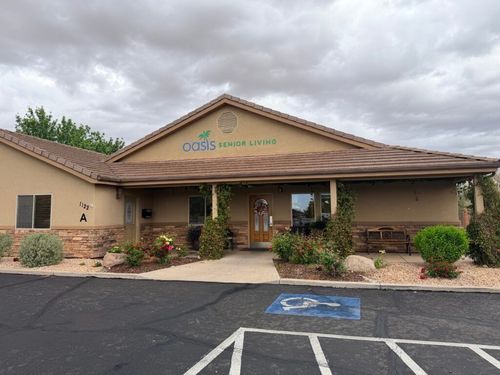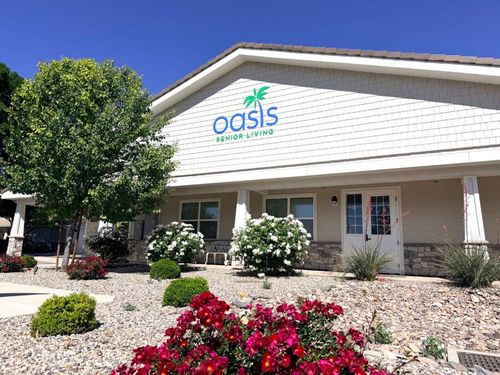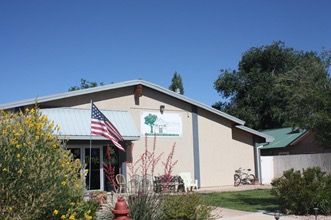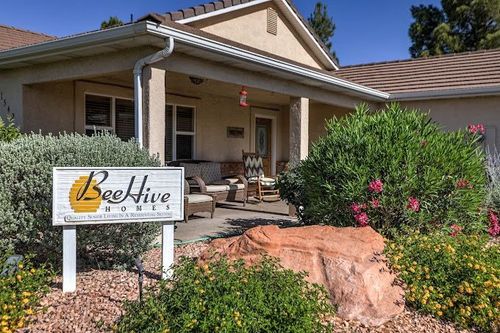
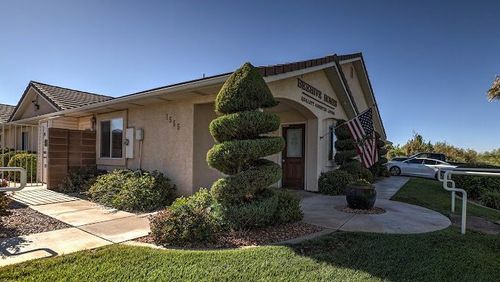
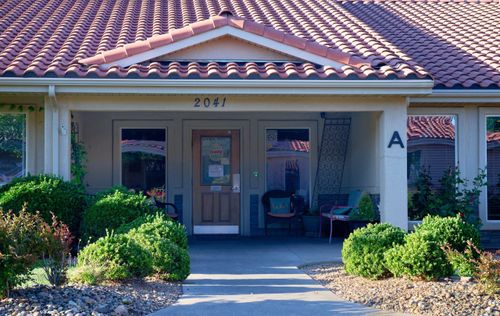
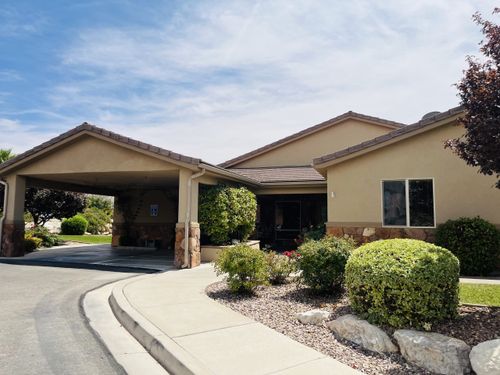

Small, home-style senior care is more common in St. George than anywhere else in southern Utah, and the city holds 6 of these houses spread across distinct neighborhoods. Rosecrest sits on 700 South near the historic downtown, the Oasis Senior Living houses run off Mesa Palms Drive in Bloomington and along River Road on the east side, and two Beehive Homes share the Sunset blocks of 1170 North out toward Snow Canyon. Each one is a regular single-family house holding nine to sixteen residents, the kind of setting families also call a board and care home, an adult family home, or simply a care home.
A St. George family usually looks at one of these homes when a resident wants a quieter, lower-ratio setting rather than the shared spaces and busy calendar of a large apartment-style community. Someone who is quiet, further along with dementia, or simply happier in a small group often settles well into a house with a handful of housemates and a caregiver who knows every name, and that smaller setting is what these homes are built to provide.
Inside a St. George Care Home: Size, Staff, and Daily Rhythm
Living in one of these homes means sharing a house with eight to fifteen other residents and a caregiver-to-resident ratio a large community cannot match, often one aide for every three or four people awake during the day. The day runs on a home rhythm rather than a schedule: three home-cooked meals around a shared table, help with bathing, dressing, grooming, medication reminders, and mobility, light housekeeping and laundry, and someone on site around the clock. There are no long corridors to navigate and no dining hall to find, which is the point for a resident who does better with less to track.
Most St. George homes provide assisted-living-level care, and several also take memory-care residents in the same small setting. Rosecrest on 700 South and the Oasis houses off Mesa Palms Drive list both assisted living and memory care, while Beehive Homes of St. George on 1170 North runs as a dedicated nine-resident memory care home with the secured, low-stimulation environment a person with dementia needs. The honest trade-off is real: a house this size offers fewer on-site activities, a smaller circle of housemates, and no on-site nurse, so a resident who wants a full activity calendar or who needs daily skilled nursing is better matched to a larger community, which St. George also has.
What a Small Home Costs in St. George
Private-pay rates at St. George's small homes run from roughly $4,200 to $5,000 a month, which puts most of them below the latest 2026 cost-of-care figures for assisted living statewide. A larger apartment-style community in St. George often lands in the same band or higher for comparable assisted living, so a small home here is frequently the more affordable option rather than a premium one, even with its low staff ratio.
What a family is actually quoted depends on the care level and the room, and a couple of homes advertise a low base rate that reflects a Medicaid-supported floor rather than the full private-pay cost. Rosecrest on 700 South and Temple View near the downtown temple both accept Medicaid for residents who qualify, which can change the math considerably for someone who has spent down to the program's limits. Across the other St. George homes the monthly rate is paid privately and covers room, board, three home-cooked meals, personal care, and around-the-clock supervision under one roof.
How Many Small Homes St. George Has
St. George has aged faster than most of Utah: about 22.7 percent of its residents are 65 or older, well above the national share near 16 percent, which is why the city supports 6 small homes when many Utah towns support one or none. Even so, these home-style settings are a minority of the local inventory, which is dominated by larger assisted-living and independent-living communities. Each house holds only nine to sixteen people, so a specific opening, especially a memory-care bed, can be scarce at any given moment even though the overall count looks healthy. Timing a move to an actual vacancy is the practical constraint, not whether St. George has small homes at all.
Why a Small Home Fits Some St. George Families
For the families who choose them, the draw is personal in a way a brochure rarely captures: a resident becomes a known person in a house of nine or twelve, not a room number on a hall. Caregivers who see the same few people every shift notice when someone eats less, sleeps poorly, or seems off, and that close attention is the heart of the small-home model. Meals come from a kitchen down the hall instead of a commercial servery, visiting family can drop into a living room rather than a lobby, and the quiet of a residential street like 700 South or Mesa Palms Drive feels closer to home than a parking-lot campus. It is not the right fit for everyone, and a more social resident may prefer the wider activity calendar and larger friend group of a big community, but for the person who wants calm and familiarity, a St. George care home delivers exactly that.
What a Local Advisor Knows About St. George Homes
Which of the St. George homes actually fits a given resident is not something an address and a bed count can show, because the difference between an assisted-living house and a secured memory care house like Beehive Homes of St. George comes down to the person's stage and needs. A local advisor tracks which of the six homes has an opening this month, which carries the Type II license for a resident who needs more help, and which sits in the neighborhood closest to the family doing the visiting.
We can tell you the day-to-day texture the addresses cannot convey: how the Oasis houses off Mesa Palms Drive run next to the Beehive Homes on 1170 North, and which one tends to hold a resident comfortably as dementia advances. Reach out when you want that read, or browse the homes we have reviewed at your own pace.