
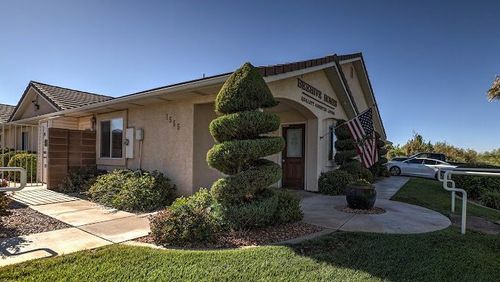



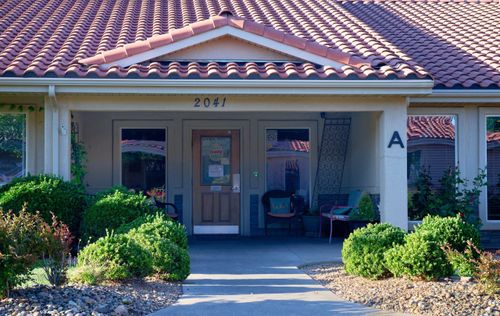
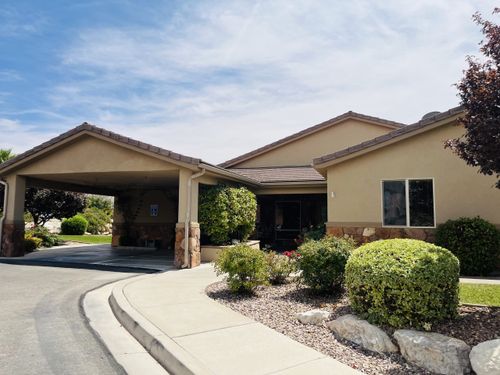
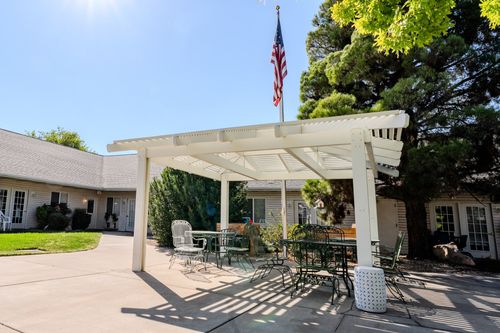


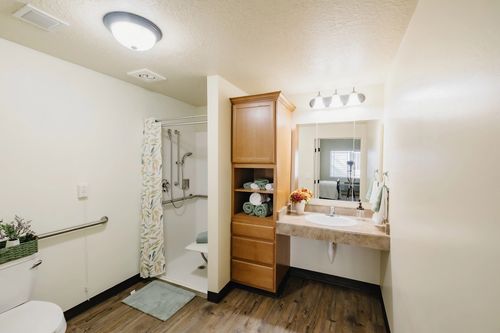





St. George draws retirees the way few Utah cities do, and its senior-living market reflects that: short-term respite stays are easy to find here, spread across 15 communities that range from tiny residential care homes of a dozen beds to full campuses near Red Cliffs and SunRiver. Some are houses on a quiet street with a handful of guests; others are large buildings with their own memory-care wings. What they share is a furnished room a family can book for days or weeks, with the same meals, daily help, and overnight staffing a permanent resident receives.
Two kinds of families call St. George communities about respite: local households reach for it when a spouse or adult child who handles the care needs time away, or when an older adult is leaving the hospital and is not ready to manage alone. Seasonal families book it too, the visiting relatives and snowbirds for whom a warm-weather respite stay doubles as a safe place for an older relative while the rest of the household travels.
Booking a Short-Term Stay in St. George
Because respite depends on a furnished room being free the week a family needs it, availability is the real question in St. George, not whether respite exists. Plain assisted-living respite is the easier booking; rooms open across the larger communities like Sterling Court, Spring Gardens St. George, and Desert Oaks, and the small residential homes such as Oasis Senior Living and the Beehive Homes houses can take a guest into a more intimate setting. A secured memory-care stay is the harder one to place on short notice, because those rooms are fewer and turn over slowly. St. George does have real depth here, including two memory-care-only homes, Beehive Homes of St. George and Desert Willows Memory Care, alongside secured wings at Southgate Senior Living and The Retreat at Sunbrook. Whatever the setting, a respite guest steps into the community's normal day from the first morning: meals in the dining room, medication and bathing help, laundry, activities, and staff awake overnight. Most communities also set a minimum stay, commonly in the two-week-to-a-month range, with the exact floor and the daily rate differing from one building to the next. The practical move is to confirm an open room, the minimum, and the rate for the specific dates rather than assume them.
The Daily Cost of a St. George Respite Stay
The number families want first is the daily rate, and the figure at the top of this page is not it, since that reflects long-term monthly pricing while respite is billed by the day. In St. George an assisted-living respite day runs from about $160 to $215, climbing for a secured memory-care room, and a day costs more than a long-term month divided out because the community is holding a room for a brief stay. For context, the most recent 2026 cost-of-care surveys peg an assisted-living respite day at roughly $175 across the country, and St. George generally tracks the lower Utah end. Then comes the question that trips up the most families, who pays, and almost always the answer is the family covering it out of pocket. Medicare covers no part of an assisted-living or memory-care respite stay, aside from a short hospice respite admission that applies only to patients already in hospice. Utah Medicaid waivers go toward long-term custodial care for residents who meet the eligibility bar, not brief private respite. The places worth checking before writing the full check are veterans' programs and certain long-term-care policies, either of which may pick up a share, though neither is automatic.
Seasonal Demand in a Retirement City
Close to one in five St. George residents is 65 or older, one of the highest senior shares in Utah, and winter brings still more older adults escaping colder states. That mix keeps respite demand higher and more seasonal here than in northern Utah. Assisted-living respite rooms still open regularly across the 15 communities, but the busy winter stretch can tighten availability, and a secured memory-care room on short notice is the hardest to land in any season. Because the picture shifts with the calendar and from week to week, the only count that helps is the current one, checked when the room is actually needed.
What Draws Families to a St. George Short Stay
For a family weighing a permanent move, nothing beats a short stay for finding out whether a community actually fits. A week or two living in a St. George community tells the family what a tour cannot, how the food really tastes, whether the staff are warm, how the day is paced, and a fair number of these short stays end as permanent moves, never through pressure, simply because living there resolved the decision. The trial is not the only draw: for a caregiver, a planned stay is a genuine break rather than a guilty absence. For an older adult recovering from surgery or illness, St. George offers a mild climate and unhurried days to regain strength, with the hospital close by if anything changes. And keeping the stay in town means the rest of the family stays close, able to visit between errands rather than coordinate care from a distance.
Where an Advisor Saves Time in St. George
Of the 15 St. George communities that offer respite, only a few will be the right match on any given week, the ones with an open room, a minimum stay that fits the family's dates, a daily rate inside the budget, and the right level of care. A local advisor holds that picture in real time, including which small residential homes and which secured memory-care settings can actually take a guest now.
Sorting that out by phone, one community at a time, eats the days a family on a deadline does not have. An advisor narrows the list to the two or three worth touring and confirms the room first. Talk it through for a short-term stay in St. George, and we will start with the openings that fit.