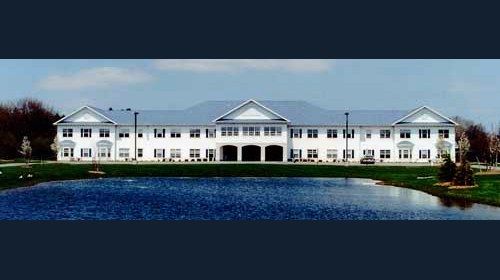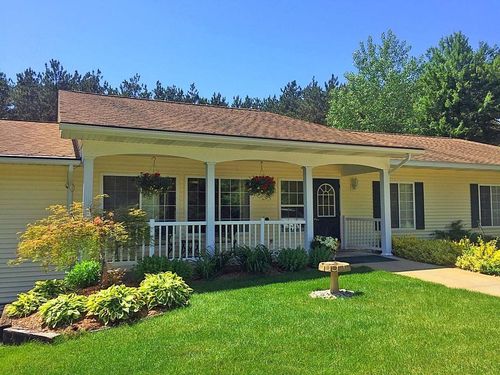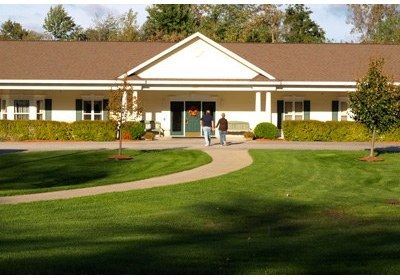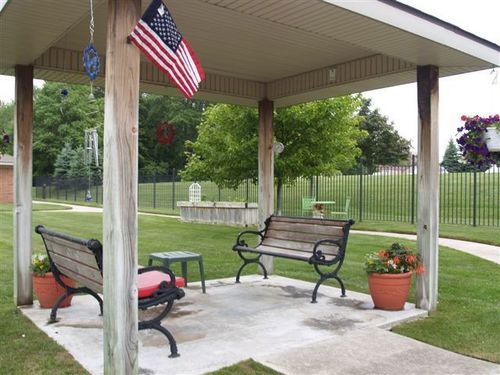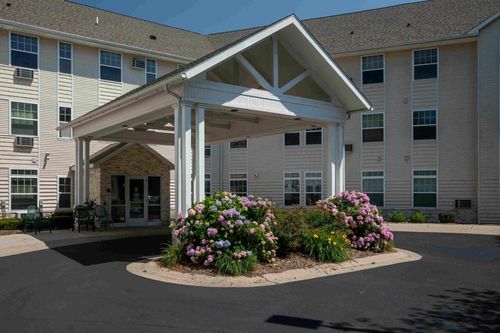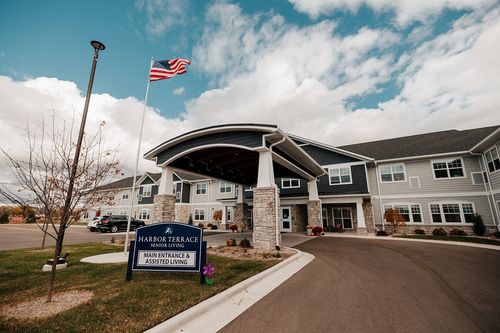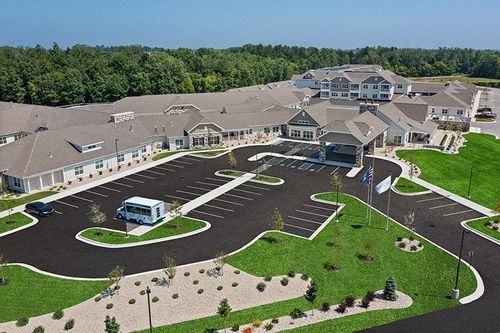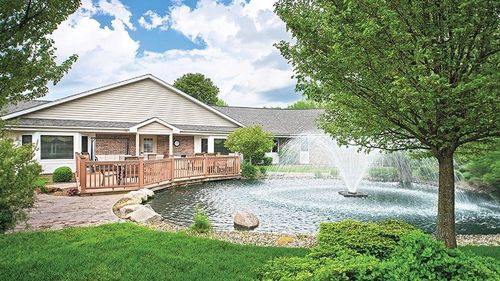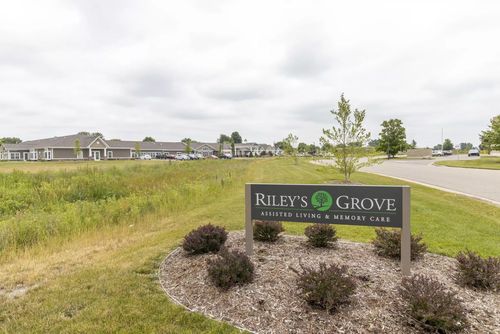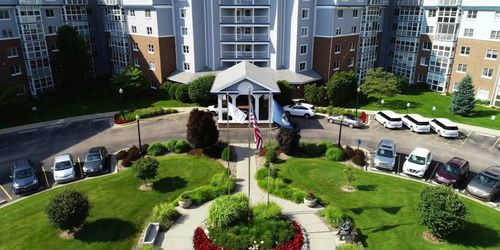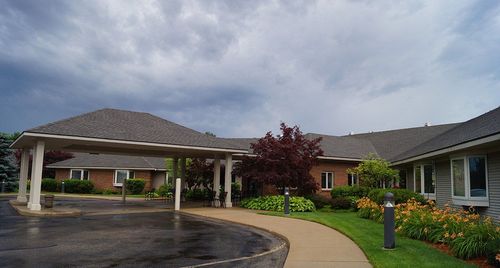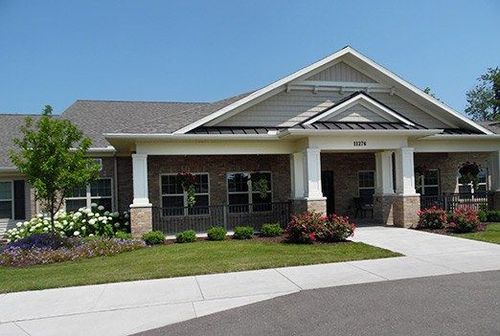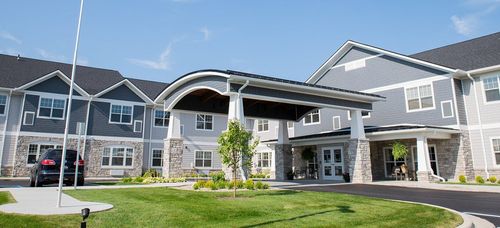


Grand Haven kept its own hospital, which most towns of its size did not, and that single fact shapes assisted living here more than any feature of either building. A resident at Grand Pines Assisted Living Center on South Ferry Street or Robbinswood Assisted Living Community on Robbins Road stays inside a local medical picture: appointments, imaging and an emergency visit all happen in town rather than at the end of a forty-minute drive.
What brings a household to this level is usually accumulation rather than an event. Medications have become a schedule somebody has to keep, the stairs have started to matter, and the week has more appointments in it than a family working full time can cover.
The Shape of a Week Inside
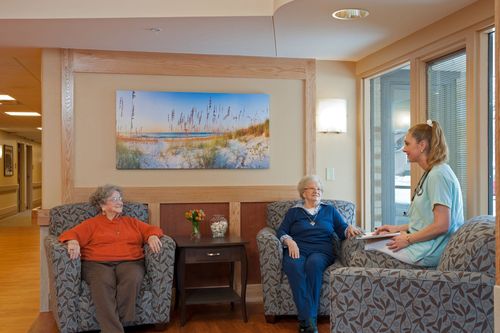
Assisted living is defined as much by what it leaves alone as by what it takes over. A resident keeps a private apartment, their own hours, their own visitors and, where they still want it, their own routine at the grocery store and the church. What the building absorbs is the part that had become unreliable: medications given and recorded on time, a caregiver on hand for bathing and dressing at agreed points, meals prepared and served, and someone reachable through the night.
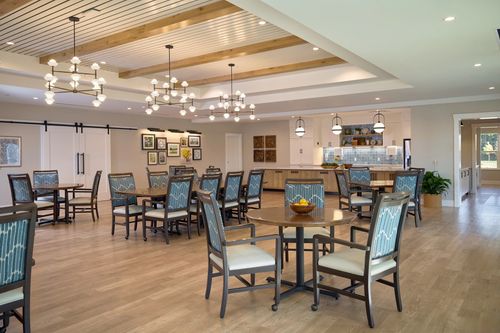
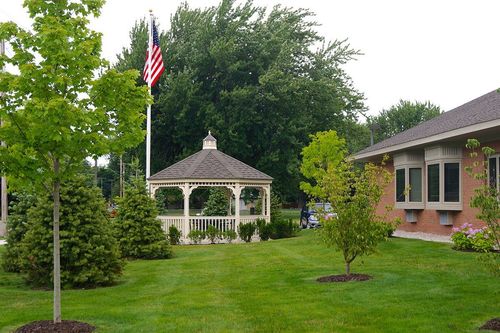
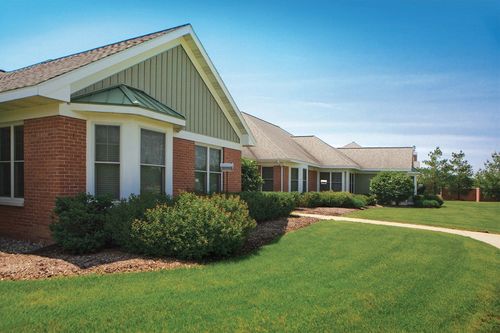
Size changes the texture of that, since a thirty-five-resident building runs closer to a household, with staff who know everyone and a dining room where the same people sit together every day. A seventy-resident building carries more staff, a fuller calendar and a secured dementia neighborhood on the same site, which matters if memory is part of the picture now or might be later. Both arrange transportation to appointments, which in a town with its own hospital means a resident often keeps the same doctor they had at home.
Two Rates, Two Funding Paths
Assisted living in Grand Haven is quoted at $4,600 a month on Robbins Road and $5,200 on South Ferry Street for 2026. That six-hundred-dollar difference is not really the story, because the two addresses diverge on something larger: one participates in Michigan Medicaid and the other does not.
That divergence is what a household should settle first, and it runs against instinct, since most families want to pick a building before they discuss money. Michigan's MI Choice waiver pays a community for what its staff do and never for the apartment they do it in, so even an approved resident owes the residence for the room and the board. If savings are likely to run out inside a decade, starting at the address that already accepts Medicaid avoids moving a frail resident later to find one, and that is worth more than a monthly difference of a few hundred dollars.
A Lakeshore County Aging Slowly
Ottawa County counts roughly 54,000 residents past 65, close to eighteen percent of the population and a little under the Michigan figure, which is unusual for a county with this much lakeshore. Grand Haven itself skews older than the county does, as beach towns tend to, with retirees who summered here for decades and then stayed.
Coverage of that kind means openings appear steadily rather than abundantly. Both take respite guests, which is often the practical way in when a permanent apartment is not free and a family needs something arranged this month.
A Town That Works in February
The waterfront is the obvious answer and the wrong one. What actually keeps families here is that Grand Haven still functions as a full town in February as well as July: a working downtown, a hospital, a library, and adult children who live within a few minutes rather than a few counties.
Trinity Health Grand Haven runs 81 beds on the site of the former North Ottawa Community Hospital, serving northwest Ottawa and southern Muskegon counties, and covers surgery, imaging, rehabilitation and emergency care in town. Anything past that heads to Grand Rapids, thirty-four miles east, where Corewell Health Butterworth Hospital carries West Michigan's only Level I trauma center and its only regional burn center.
What a Local Advisor Brings to Grand Haven
The Grand Haven decision has an unusual order to it, and an advisor working the lakeshore starts where families do not: with the funding path, then the level of help, then the building. That sequence sounds cold and saves a second move, which is the expensive kind.
Beyond that, the useful knowledge is current rather than general: which address has an apartment open this month, how each handles a resident whose needs grow past assisted living, and what a respite booking actually costs against a permanent rate. If you are weighing the two and are not sure which question comes first, a short conversation will usually put them in the right order.
The Grand Haven directory continues to grow as we evaluate providers for quality and alignment in 2026. Reach out for a conversation about assisted living in Grand Haven, or look through the communities we have vetted at your own pace.