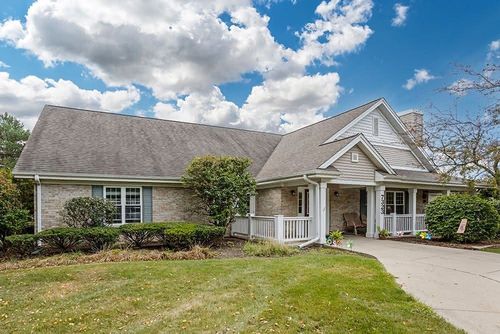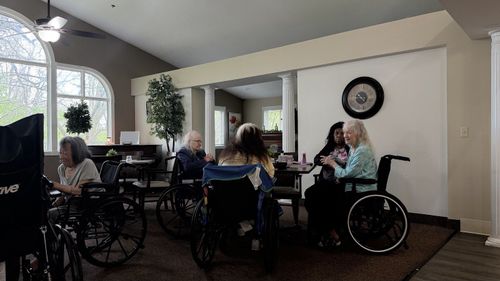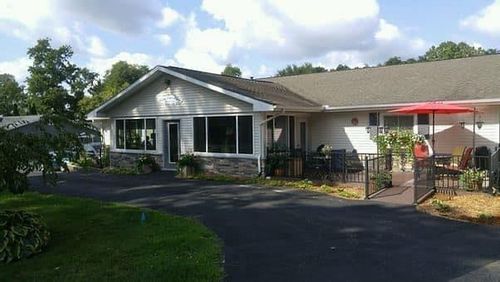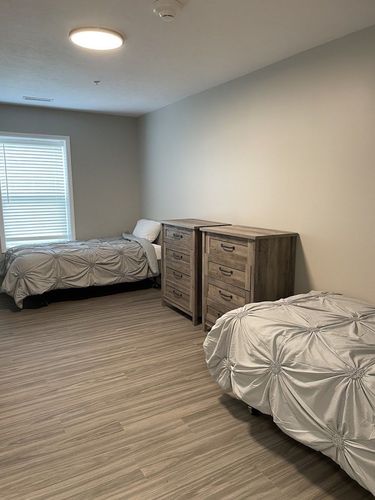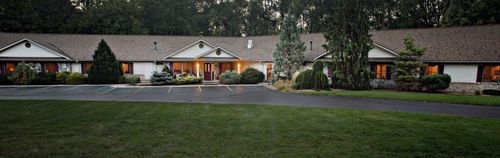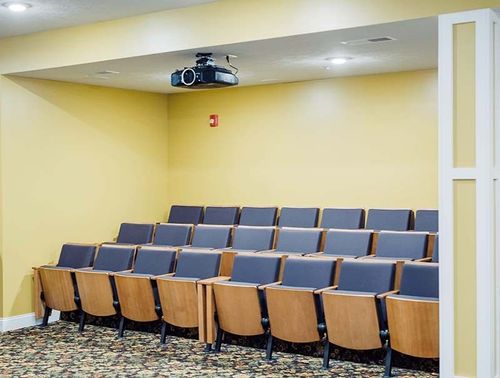
Fairview AFC starts at $5,500 a month, which is a number worth pausing on, because it runs well above what people expect a small care home to cost. The assumption behind the surprise is that a house with a handful of residents should be the budget option, and in Michigan that is often wrong. A licensed home carries the full cost of staffing, feeding and heating a residence across a small group rather than spreading it over sixty apartments, and a resident needing substantial hands-on help absorbs a much larger share of one caregiver's shift than the same resident would in a large building. Grand Ledge has this one licensed home, set among ordinary streets rather than on any campus, close enough to the Grand River and the Bridge Street stretch of town that a spouse can visit on foot from parts of the village.
What a Licensed Home Provides in Grand Ledge
The letters at the end of the name are Michigan's own. The state licenses small residential settings as adult foster care homes, a separate category from the homes for the aged license that larger buildings carry, and every listing a Grand Ledge family reads will use that vocabulary before anyone says assisted living. What it describes is a household: bedrooms rather than apartments, a kitchen that cooks for everyone, and caregivers who are present rather than summoned.
The help provided is custodial in the strict sense of the word, covering washing, dressing, grooming, getting from one room to another, medication support, laundry, housekeeping and supervision through the night are all inside the remit. Clinical treatment is not, so a resident who needs daily nursing has moved past what the license permits. The other side of the trade deserves stating too, since a larger community elsewhere in Eaton or Ingham County brings a longer activity list, more people to sit with and staff on site in greater numbers, and for a sociable resident that is a genuinely better environment rather than a compromise.
Paying for It
Most of the bill comes from private sources: a pension, savings, a monthly income stream, or the proceeds of a house that has just been sold. A long-term-care insurance policy, where one exists, often covers a licensed home the same way it covers assisted living, and the policy schedule rather than the community decides that.
Two Michigan arrangements sit alongside private funds, and both are slower to set up than families expect. MI Choice, the state's waiver for people whose assessed needs have reached nursing-home level, can pay for the care a resident receives in a licensed home while leaving the housing portion untouched, so that share continues to come from the resident's income. Michigan also supplements the federal disability payment received by residents of licensed homes, a modest monthly addition pointed at that same housing portion. Neither is quick to arrange, and waiver enrollment in particular is capped and administered regionally, so timing is part of the planning rather than an afterthought.
Questions the License Answers
With one licensed home in the village, the questions shift from comparison to fit, and the license is the place to begin. Every Michigan home is approved for named categories of resident need, and the limit on how advanced a dementia it may keep serving is written into that approval rather than decided informally. A family that asks it early avoids arranging a second move at the point when a resident can least absorb one.
The rest is concrete and quickly answered: whether the available bedroom is private or shared, whether the overnight caregiver stays awake or sleeps on the premises, and whether doorways and bathrooms take a walker without a struggle. The last question is the one most likely to matter, and it is about the future rather than today, namely what this home does when a resident's needs increase.
Finding Out Whether a Bedroom Is Free
A single licensed home is close to unresearchable from a screen. Homes at this scale do not advertise, never post openings, and change availability the moment one resident moves in or out, so anything a family reads online about whether there is space may have stopped being accurate weeks earlier.
An advisor covering Eaton County holds a current answer and puts the licensing question directly, so a household establishes at the outset both what level of need this home is approved to serve and whether a bedroom has actually come free. If the answer turns out to be no on either count, that is far better learned in a conversation than after two visits, and it is worth taking the time to talk it through first.
Our directory for Grand Ledge continues to grow as we evaluate providers for quality and alignment in 2026. Start the conversation about residential care homes in Grand Ledge, or scan the buildings we cover at your own pace.