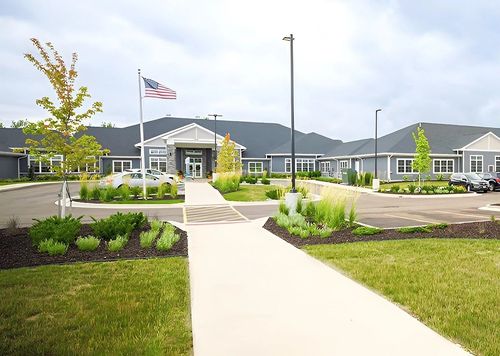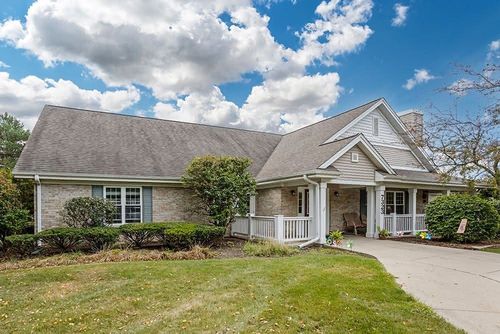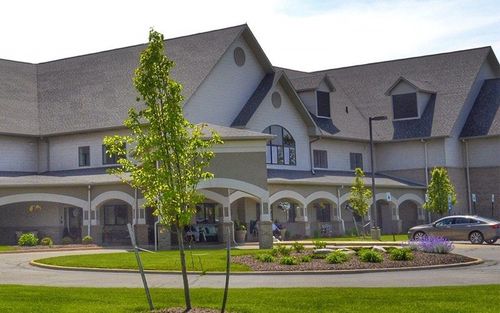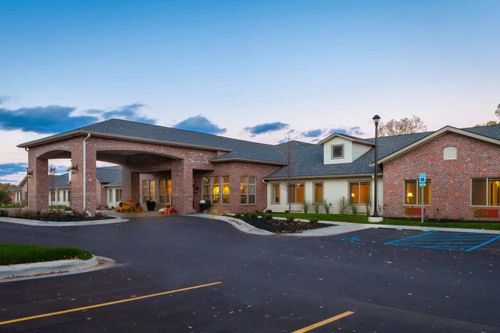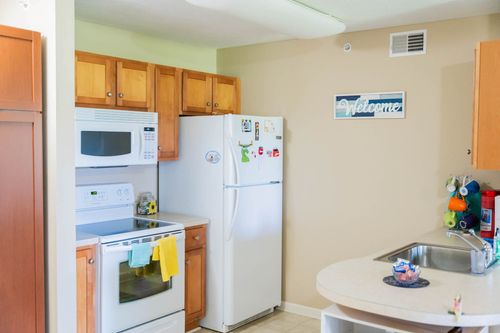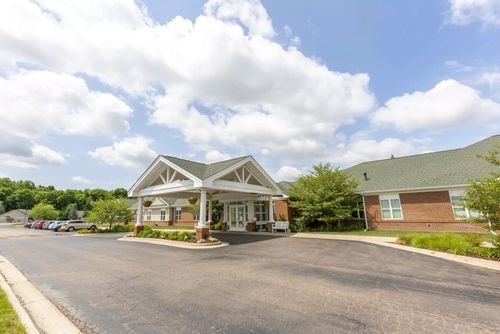
The most useful thing a short stay does in a town like Grand Ledge is answer a question nobody can answer from a tour. A family circling a permanent move spends months weighing an unfamiliar building against a house that is becoming unmanageable, and two or three weeks inside the building settles more of it than any number of visits. Story Point of Grand Ledge is the local address taking temporary residents, which means the town supports the trial approach even though it does not offer a choice of places to try it. The other two reasons families book one here are the ordinary ones: a caregiver with surgery scheduled, and a recovery stretch after a Lansing hospital has finished but home is not yet safe.
What Two or Three Weeks Reveals
A trial stay works because it exposes the things a scheduled visit is designed to smooth over. An afternoon tour shows a clean dining room at a quiet hour. A fortnight shows what that room sounds like at noon on a Tuesday, how long a call light takes to be answered at nine on a Sunday evening, whether the food holds up past the first impression, and whether someone who has been alone in a house for two years starts appearing at things.
It also tests the resident rather than the building, which is the half families forget. Someone who has resisted the idea for a year sometimes settles within days and says so. Someone who was enthusiastic discovers they miss their own kitchen more than they expected. Both answers are worth having before a house is sold, and neither is available from the outside.
What It Costs to Try
The long-term rate at the community taking short stays here starts at $3,500, and that is the only published local figure to anchor against. A trial stay is not billed against it, being priced by the day instead, generally as a single figure covering the room, the meals and the personal care, and the per-day number will exceed a month divided across its nights because a room released after a fortnight earns nothing until the next booking arrives.
That cost is worth setting against what it prevents. A permanent move that turns out to be wrong is expensive in ways a short stay is not: a community fee that may not be refundable, a household dismantled, and a second move made by someone who has just absorbed a first. Weighed against that, a few weeks paid privately is a modest amount to spend on finding out. What will not contribute is Medicare, whose respite provision applies only inside hospice, or Michigan's MI Choice waiver, which is designed for ongoing care rather than a booked fortnight.
Making a Trial Stay Actually Useful
A trial stay tells a family little if it is arranged badly, and two decisions determine whether it is. Length is the first of them, and a week is not long enough for anyone to stop behaving like a visitor, and a month is longer than most households want to commit to before deciding, so somewhere in between is usually where the useful information appears.
The second decision concerns what actually happens during the weeks. A stay in which family visits daily and drives the resident out for every meal measures nothing except the drive. The point is to let ordinary days happen, which means agreeing in advance to leave some space and to ask the resident afterward rather than during. It is also worth being clear with the building that the stay is exploratory, since a community that knows it will generally make a point of including the guest in things rather than leaving them to their room.
Judging When a Trial Is the Wrong Tool
With a single address in town, an advisor's contribution is not a shortlist but the timing and the terms. What a family needs to know is whether a room is genuinely free for the dates in question, what the daily rate covers, how short a booking the building will take, and what paperwork is expected before arrival, and none of that is published anywhere.
An advisor covering Eaton County keeps that current and will also say plainly when a trial stay is not the right tool, which happens when a resident's needs have already moved beyond what the building could serve permanently. Sorting that out beforehand saves a household from paying to test something that was never going to work, and it usually takes no more than a short conversation.
The Grand Ledge directory continues to grow as we evaluate providers for quality and alignment in 2026. Start the conversation about respite care in Grand Ledge, or look through the buildings we cover at your own pace.