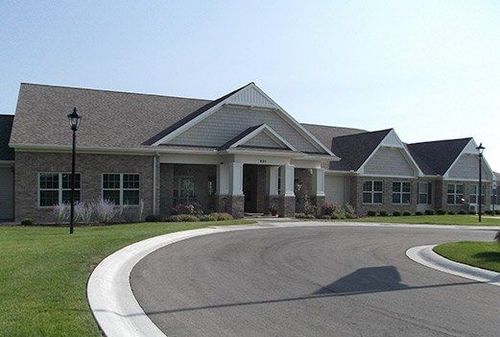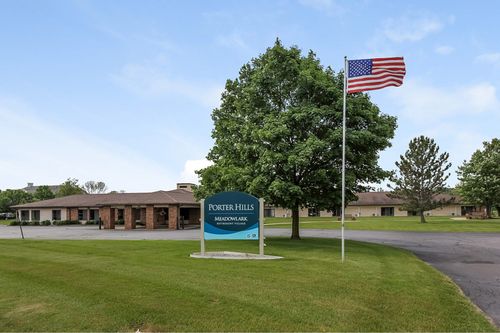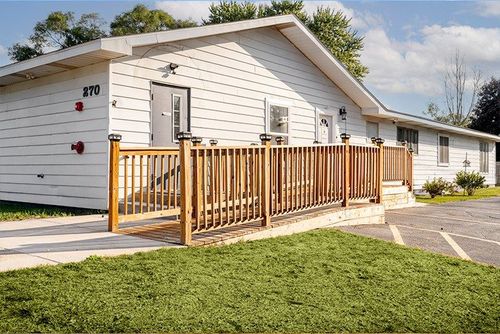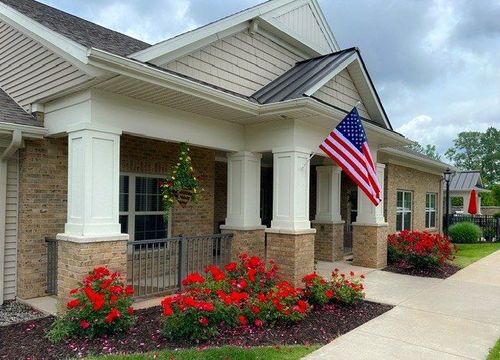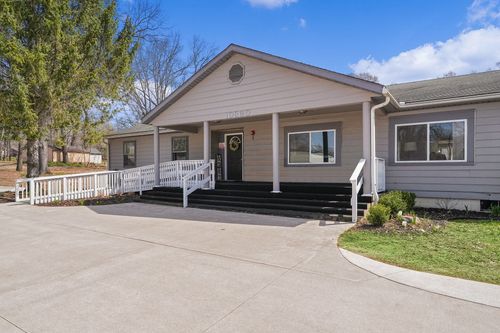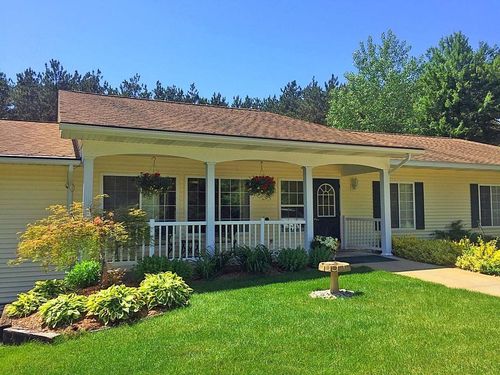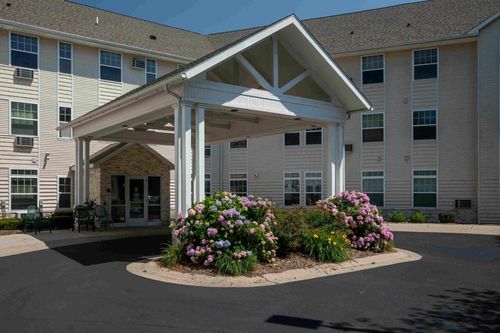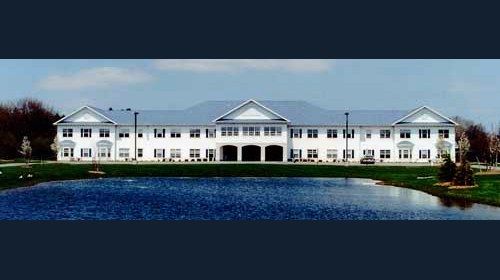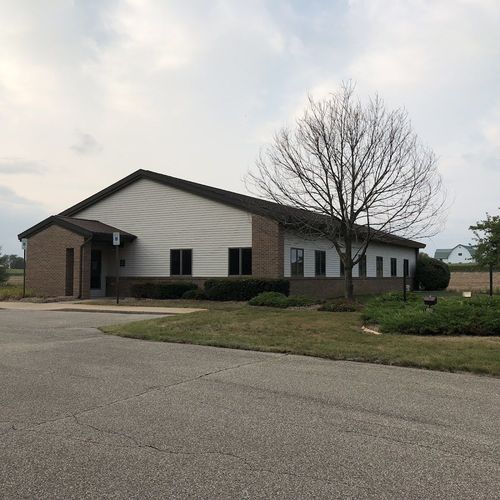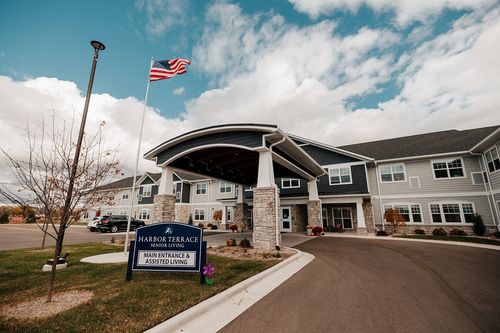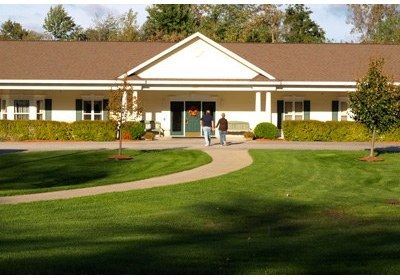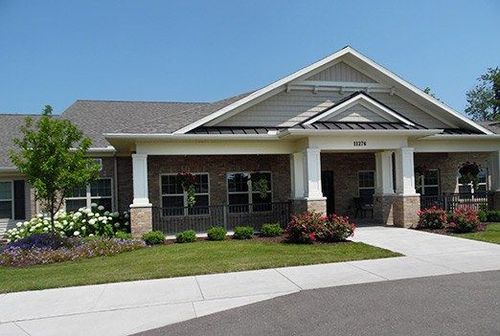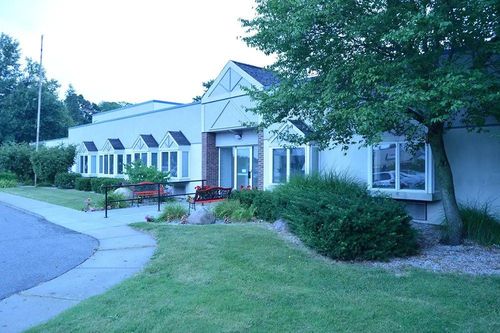

Memory care in Grant sits inside Fountain View Retirement Village Grant on South Maple Street, a community that runs a secured side alongside general daily care. What sets this town apart is not the building but the funding position: dementia care here comes with a Medicaid route, which almost nowhere else in rural West Michigan can say.
That distinction is the whole reason this page is worth reading carefully. Plenty of buildings quote a comparable monthly figure; very few in a county like this one give a household anywhere to go when private funds run down, and for a diagnosis measured in years rather than months that is the difference between one move and two.
A Secured Side Inside a Community
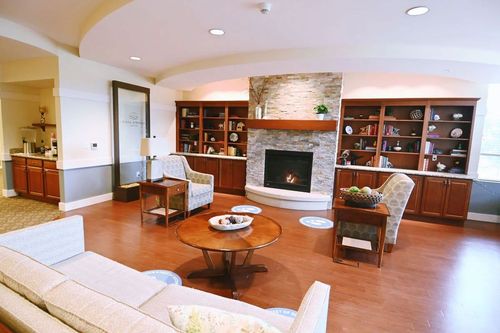
The secured rooms sit within a building that also carries general assisted living, which gives them the depth of a bigger address: catering, activity staff and cover through the night belong to the whole community rather than to twelve rooms. The staff hold dementia training, the setting is enclosed, and a day is shaped around whatever a resident still manages without effort.
The community also takes short respite stays, which in a rural county is more useful than it sounds, because it lets a family find out how somebody settles without committing, and it gives a caregiver who has been carrying the week a fortnight to recover. A household should still ask what a difficult afternoon looks like here, since that answer tells more about a secured side than any tour of the rooms will.
What Medicaid Participation Actually Changes
Open rooms are published at $4,501 a month in 2026; the secured side carries a higher figure again, and both sit near the middle for rural West Michigan. The number that matters more is not on the list at all.
Because this community participates in Medicaid, a resident whose savings run down over several years may be able to stay rather than move at the worst possible moment. That is not the same as the waiver paying the whole bill: Michigan's MI Choice waiver funds assessed care, while a resident's own income goes toward the cost of the room, and the arithmetic differs household by household. What it removes is the cliff, and a family planning a long stay should understand exactly how the community handles that transition before choosing on price. An entry charge and a daily respite figure sit apart from the monthly rates.
A Southern County Town With Northern Distances
Newaygo County holds an older population slightly ahead of the state, spread across a lot of ground, and Grant sits at its southern end. That position gives the town something the rest of the county does not have, which is a short run toward Grand Rapids rather than a long one.
For a dementia family the effect is on availability rather than geography. A secured side of this size, in a community with a funding route, draws enquiries from further away than the town's own population would generate, so asking early is the difference between a plan and a scramble.
Why Families Keep a Parent in Grant
Grant is a small farming town where most older residents have been for decades rather than arriving late, so neighbours and church stay a few streets from wherever somebody moves. For a resident whose memory is changing, that unbroken world does more good than any programme, because familiarity is the one thing dementia care cannot manufacture.
The clinical arrangement suits the same logic, with Corewell Health Gerber Hospital in Fremont covers the county with intensive care, oncology and imaging on a critical access campus, and Grand Rapids sits thirty miles south with Corewell Health Butterworth carrying the only Level I trauma designation on this side of the state. Being half an hour from that rather than three quarters genuinely changes the calculation when a resident has a serious cardiac or neurological condition alongside dementia.
What a Local Advisor Brings to Grant
A rural community that accepts Medicaid deserves to be understood properly rather than assumed, and that is the first thing a Local Senior Advisor working Newaygo County will set out. How waiver funding behaves at a building of this scale, how many residents it carries that way, and what a household would need to have in place before the transition are all answerable in advance rather than discovered at the point of crisis.
The rest is availability and fit: whether the secured side has a room, how quickly it turns over, and whether a community setting or a smaller household would suit the person moving. Those are the pieces that decide a Grant search, and they are worth a short conversation long before anybody needs an answer quickly.
Our Grant directory keeps expanding as we evaluate providers for quality and alignment in 2026. Reach out for a conversation about memory care in Grant, or browse the communities we have vetted at your own pace.