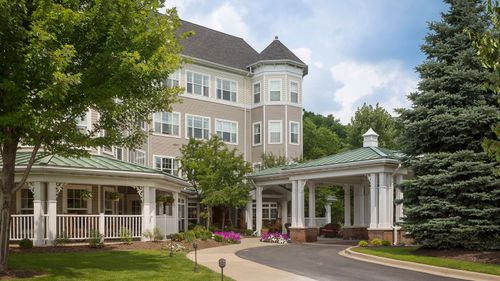
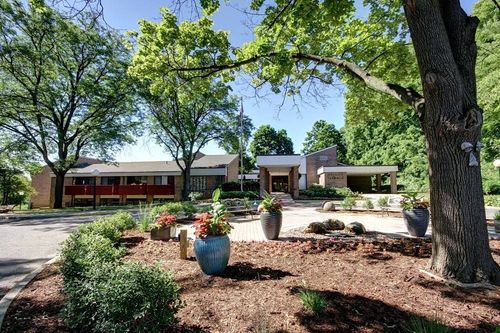
Livingston County filled up with people who chose to drive. Through the eighties and nineties households moved out here for land and schools and accepted a commute toward Detroit, Lansing, or Ann Arbor as the price, and that generation is now the one reaching the age where assisted living enters the conversation.
It leaves a particular kind of resident in Howell's buildings, someone who has organized sixty years of life around a car and a house with a garage. Local capacity tops out near fifty-six residents and starts at a twenty-bed home, and one of the 3 addresses participates in Medicaid, which is worth establishing early because it shapes what a long stay can look like.
When the Car Goes, Everything Changes
For most residents here the hardest part of the move is not the building, it is the driving. Someone who has fetched their own groceries, driven themselves to every appointment, and taken themselves out on a Saturday for half a century experiences the loss of that as the real change, and assisted living either replaces it convincingly or it does not.
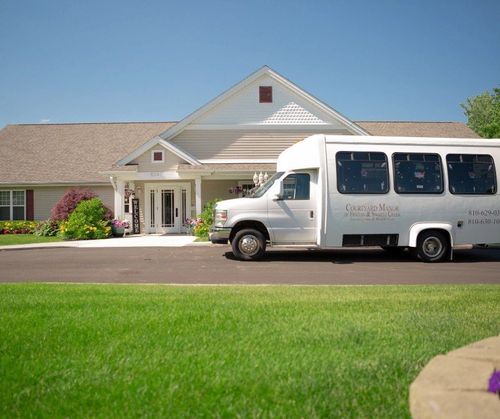
That makes transport the question worth pressing hardest on a tour. Ask how often the van runs, how far it will travel for a specialist appointment, whether a resident can book it for something that is not medical, and what happens when two people need it at the same hour. The rest of the support is consistent across the town, covering medicines, help with washing and dressing at the assessed level, meals, laundry, and housekeeping, but the transport answer is what determines whether a resident's week still feels like theirs.
What the Base Rate Covers Before Anything Is Added
Published figures in Howell run from $4,200 to $5,354 a month in 2026. Some of that difference is the room and the setting, but the more consequential part is where each address draws the line between what the base rate includes and what an assessment adds afterwards.
A building quoting a lower figure with care billed separately can end up costing more over two years than one quoting higher with more folded in, particularly for a resident whose needs are climbing. The comparison that works is to ask each address what it charges a resident who needs two people for a transfer and full help getting dressed, then ask how much notice a family receives before a reassessment moves that number.
Who Actually Fills These Buildings
Howell's assisted living serves Livingston County rather than only Howell, which is what allows a town this size to support several addresses. Households in Brighton, Fowlerville, Pinckney, and the surrounding townships work through the same short list, and most of them are moving a parent who has lived in the county for decades rather than bringing one in from elsewhere.
That produces steady rather than spiky demand, and it means the buildings know each other's residents. It also means a family beginning a search will meet somebody with an opinion about every local address within about a day, which is useful as a starting point and no substitute for asking the specific questions yourself.
Close Enough for the Grandchildren
The strongest argument for keeping a search inside Howell is usually generational. Adult children who grew up here have frequently stayed, so a resident who moves into a local building remains inside a twenty-minute radius of children and grandchildren, and the visits that follow are the casual sort rather than the arranged sort.
Healthcare works in the same favor, since cardiac rehabilitation, surgical follow-up, and emergency care all run through Trinity Health Livingston on Byron Road, so a resident moving into town keeps their existing doctors, their existing records, and a hospital five minutes from the front door rather than half an hour.
Getting the Level Right Before It Escalates
The most common expensive mistake in a market like this is choosing an address that suits a resident today and cannot hold them in two years. Some Howell buildings carry secured dementia support alongside assisted living and some do not, and the difference determines whether a future change of need means a corridor or a whole new town.
An advisor working these addresses knows which will accept a resident needing two people to transfer, which manages insulin on site, how the Medicaid-participating building handles an application and how long that takes, and which has a room genuinely free rather than nominally listed. Families who talk it through before touring generally arrive with the right two questions rather than a general impression, and they choose an address that still works when circumstances move.
Our Howell directory keeps expanding as we evaluate providers for quality and alignment in 2026. Reach out for a conversation about assisted living in Howell, or look through the communities we have vetted at your own pace.