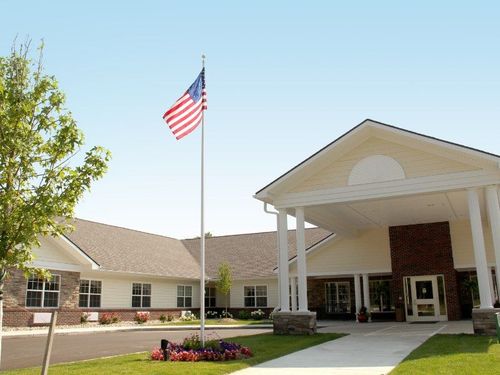
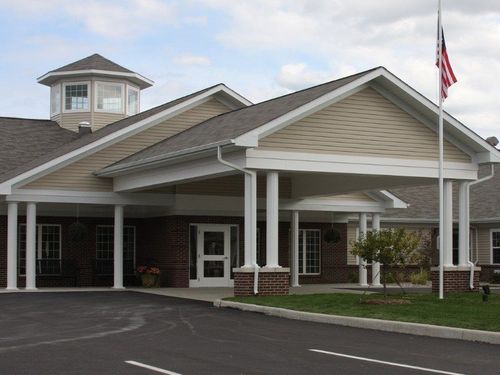
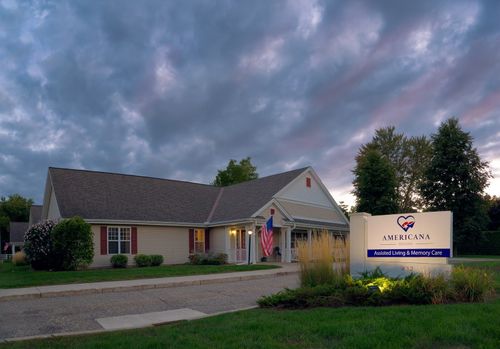
Most Livingston County families do not begin with Medicaid. They begin by paying privately, out of a pension and a savings account and often the proceeds of a house sold in the first year, and they arrive at this page somewhere around the point that arithmetic stops working. The Willows at Howell is the local address carrying Medicaid acceptance, and the transition a household is really asking about is not how to enter the system cold but how to move from paying to being funded without a resident having to move buildings in the middle of it. That is a specific question with a specific answer, and the answer depends heavily on when it gets asked.
What Changes When the Money Runs Out
The first thing to absorb is that the bill does not vanish, it changes shape. A private rate arrives as one number covering everything. Under MI Choice, Michigan's route into assisted living, the state takes on the caregiving side while the resident continues to meet the cost of the room, the food and the heat out of monthly income. A household two years into paying a single all-in figure has to reorganize its expectations around two separate obligations rather than one disappearing.
Care tier governs which route applies, and the three diverge completely. Assisted living and memory care come through the waiver. A nursing facility runs on traditional Medicaid, which takes in living costs alongside clinical ones. Independent living is outside every Medicaid route at any income level, since these programs are built on an assessed need for care. So the phrase Medicaid-accepting describes part of a building rather than the whole of it.
The Conversion Question
A community that accepts Medicaid is not obliged to convert every private-paying resident to it, and this is the point where households are most often caught out. Some buildings expect a defined stretch of private payment before they will consider a waiver arrangement. Some cap the number of waiver-funded residents they carry at any one time. Some will convert an existing resident readily but will not admit a new one on the waiver at all.
None of that reflects badly on a building, and it is worth understanding why. What the program reimburses and what a private household pays are not the same figure, and a community has to keep both in balance to stay solvent. But it does mean that a family choosing where to place a parent while still paying privately should be asking about conversion at that moment rather than three years later, because the answer determines whether the placement is a home or a way station.
The Local Money Picture
The published starting figure at the Howell address carrying Medicaid acceptance is $4,800 a month, which describes private payment rather than a waiver arrangement. Livingston County sits toward the more expensive end of the state, and the practical effect is that private savings run down faster here than they would elsewhere in Michigan, which brings this conversation forward by a year or two.
One Michigan provision belongs in the arithmetic and is routinely left out of it. A resident drawing federal disability income while living in a licensed setting receives an additional payment from the state each month, and it goes to the half of the bill the waiver never touches. It will not carry a whole shortfall by itself, though in Livingston County it has decided more than a few cases where staying put came down to a modest monthly difference.
What an Advisor Handles in Livingston County
The useful work here is timing and disclosure rather than searching, since there is one address to know about. What cannot be seen from outside is whether the building currently holds a waiver-funded place, what its actual practice is on converting a resident already living there, and how far through the regional approval process a household would need to be for any of it to matter.
An advisor covering Livingston County has those answers and will also flag when a household should be speaking to an elder law attorney instead, which is the right call whenever a house or a substantial gift sits in recent history. Families reach this page when the money has become the pressing issue, and getting the order of operations right is worth more at that point than any listing. A short conversation early is what makes the difference between a planned transition and a scramble.
We keep expanding our Howell coverage as we evaluate providers for quality and alignment in 2026. Start the conversation about medicaid in Howell, or look through the buildings we cover at your own pace.