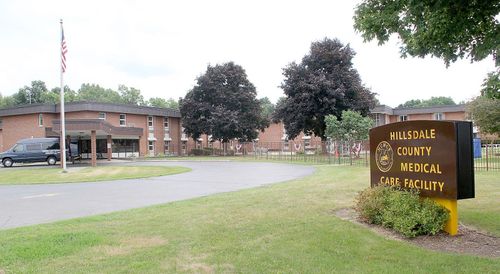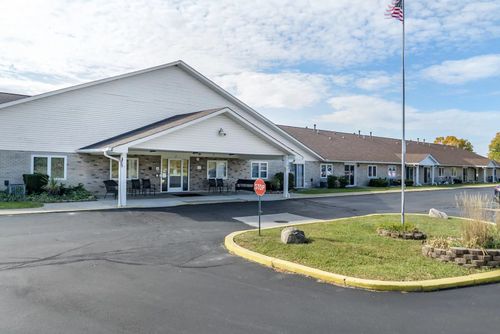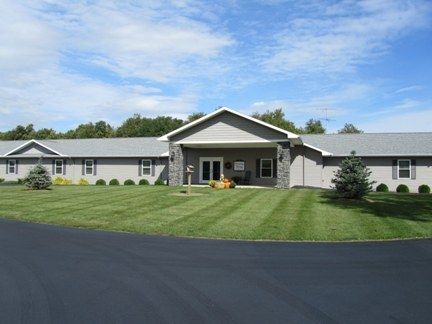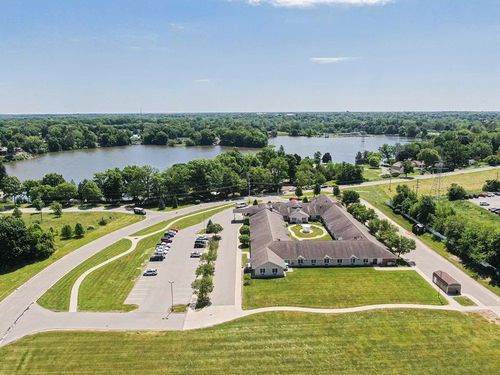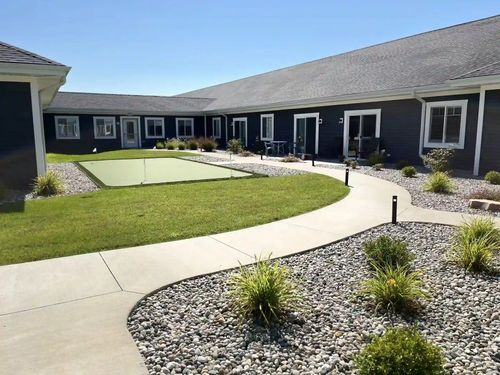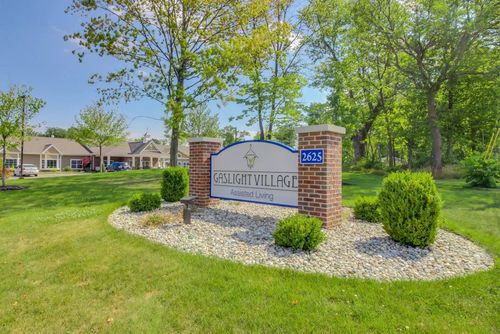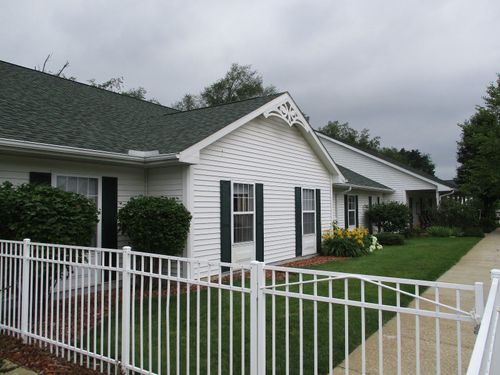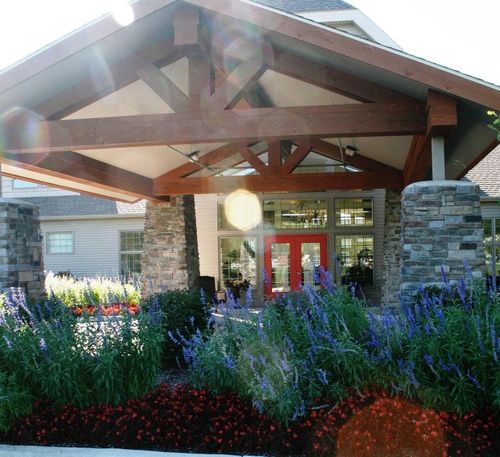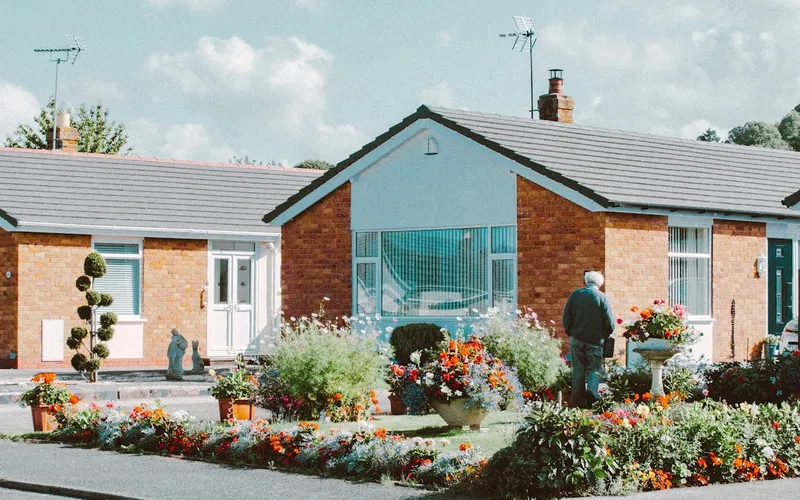
Both of Hudson's assisted-living addresses are houses rather than buildings. Coleman Foundation Unit A and Maple Ridge Farms Assisted Living run at fifteen and sixteen residents, which is small enough that the person who cooks dinner is often the person who helped someone dress that morning, and small enough that the whole place notices when a resident has a bad night.
Hudson is a farming town that has stayed one, and the households reaching this point have usually worked the same ground or taught in the same schools for forty years. Staying means the people who visit already know the resident, and in a town this size that is not a sentimental point but a practical one.
Life in a Fifteen-Bed House
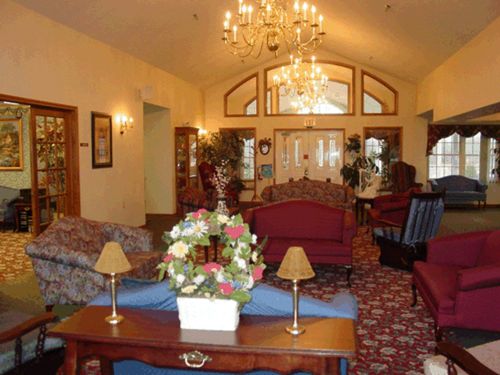
A house at this scale does not run on departments. Medications are given and recorded on a schedule, a caregiver helps with bathing and dressing at whatever point in the morning suits the resident, meals come out of one kitchen at a table everybody shares, and laundry and housekeeping simply happen. There is no lobby, no wing and no activities director; there is a living room, and what fills it depends on who is in it.
The trade runs in both directions, since what a household of this size gives is attention, familiarity and a pace that suits someone who found a large dining room exhausting. What it cannot always give is depth: two caregivers on shift means a resident who needs two people for every transfer stretches the roster, and a stretch of broken nights is felt immediately. The honest question to put to each house is what it has done when a resident's needs grew, and what finally sat beyond it.
What Five Hundred Dollars Separates
Assisted living in Hudson is quoted at $3,500 a month at Coleman Foundation Unit A and $4,000 at Maple Ridge Farms Assisted Living for 2026. Both figures sit well under what the campus-style communities in Michigan's metro corridors ask, which is what a fifteen-resident house in a farming town costs to run rather than a discount anyone is offering.
Neither house bills Michigan Medicaid, so this is private money: a pension, Social Security, and often the sale or rental of land. The state's MI Choice waiver pays for the help rather than the housing, so it never covers what a house charges for the room and the board, and it is slot-limited rather than available when a family needs it. One of the two takes pets, which for a resident coming out of a farmhouse is not a minor consideration.
A Farming County That Aged in Place
Lenawee County counts about 21,100 residents past 65, which is better than one in five, well ahead of the statewide figure, and it has been climbing for a decade. That is the arithmetic of a rural county whose young people followed work elsewhere while their parents stayed on the same roads.
Two houses of fifteen and sixteen residents is a thin margin against that, and it produces the defining local reality: when nothing is free, nothing is free. Households who do well here decide early which house they would accept, introduce themselves to it, and keep a plan ready for the weeks when neither has a room.
Why Hudson Households Stay in Hudson
Proximity is worth more here than choice, and Hudson makes families weigh that starkly. A resident who stays is a resident whose neighbors, church and former colleagues can still call in without planning a day around it, and for someone recently widowed or beginning to get confused, that continuity does real work.
Medical care is the honest counterweight, because the nearest hospital of any kind is ProMedica Charles and Virginia Hickman in Adrian, twenty-four miles northeast and about forty minutes away, opened in 2020 to replace two older county hospitals and carrying fifty inpatient beds, four operating rooms, a catheterization lab and a Level IV trauma designation. Routine appointments and prescriptions stay in town; anything acute is a drive, and both houses arrange transport for it.
What a Local Advisor Brings to Hudson
Where the whole field is two houses, timing beats comparison. An advisor working Lenawee County knows which Hudson house has a room now or expects one, which will take a resident who needs two-person help, and what each has actually done when a resident's needs outgrew the arrangement.
The rest is preparation, since having the care assessment, a current physician's statement and the financial picture ready is what turns a phone call about an opening into a move rather than a missed chance. If a household is a year or two away from needing a room, that is precisely the moment to talk it through, while the choice still exists.
The Hudson directory continues to grow as we evaluate providers for quality and alignment in 2026. Start the conversation about assisted living in Hudson, or look through the buildings we cover at your own pace.