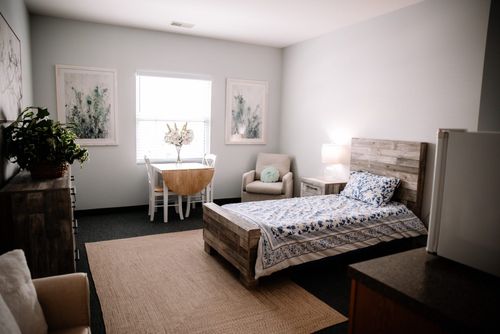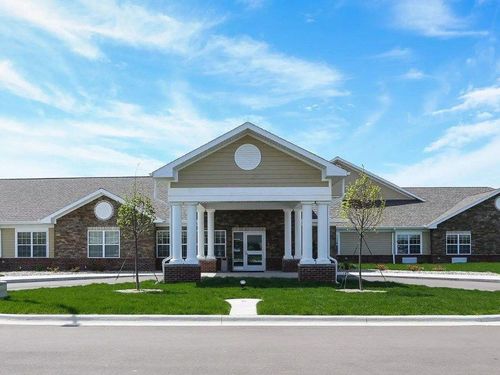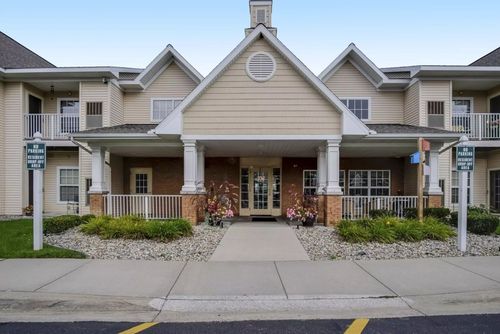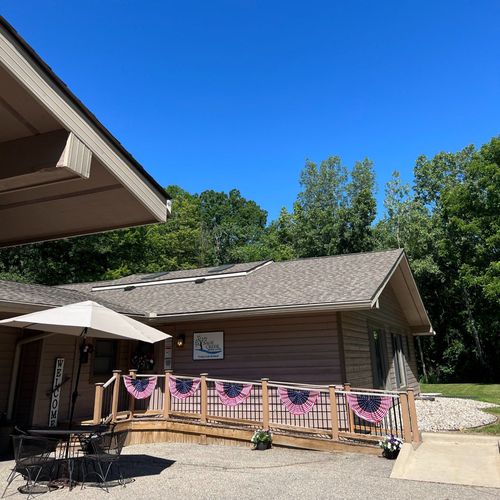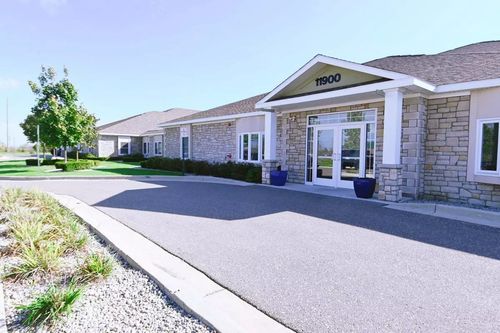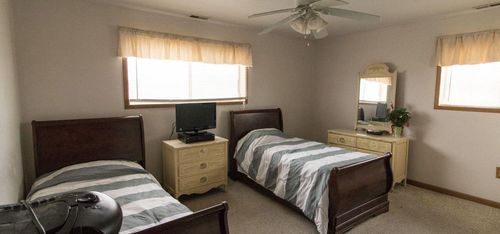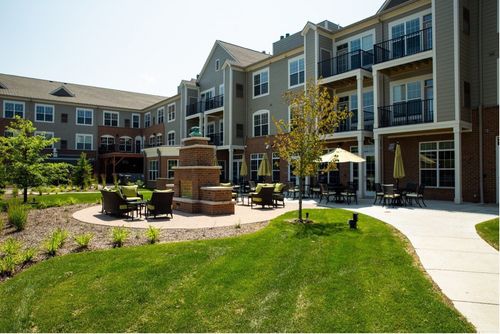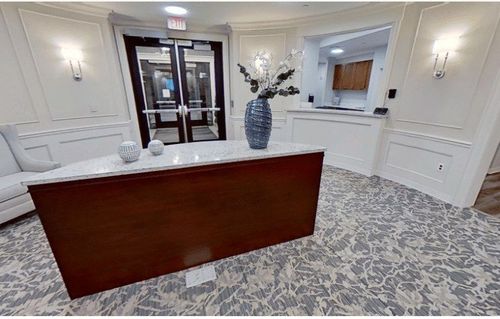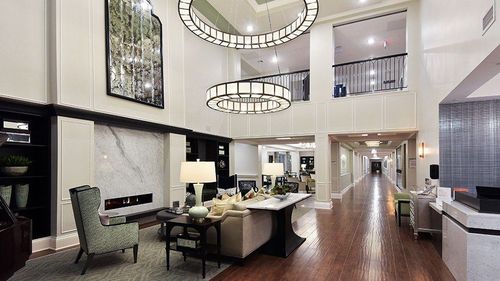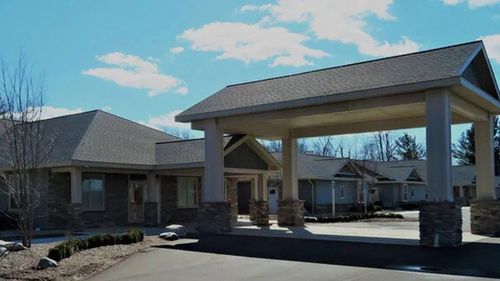
Imlay City holds one secured dementia address, Serene Gardens of Imlay City II, published from $4,200 a month, in a part of Lapeer County where most of the surrounding villages have nothing at all. For families across the eastern half of the county that makes this a regional resource rather than a local one, and it explains why a room here is harder to time than the town's size suggests.
It also means the search has a different shape. Nobody here is choosing between buildings, so what a household is really deciding is whether this address fits the person, how it will be paid for, and what holds things together in the weeks when it is full.
Structure, Safety and the Shape of a Day
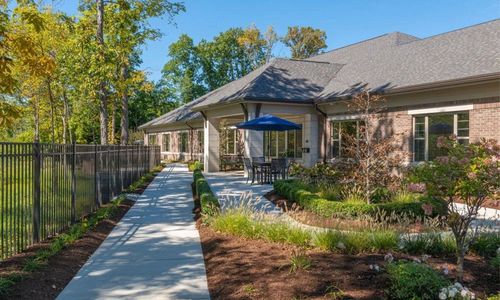
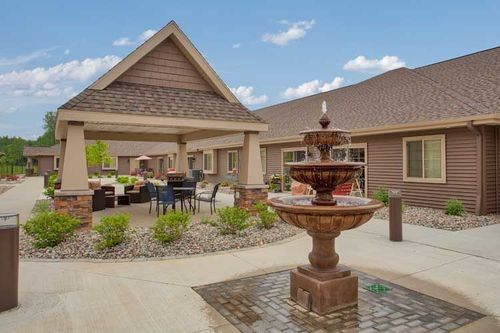
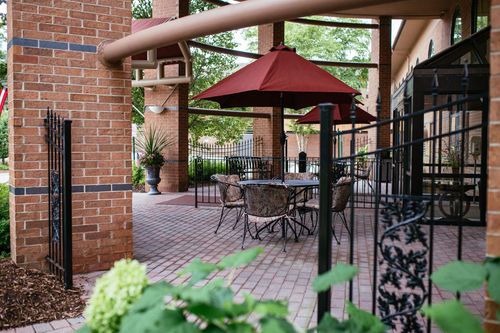
Secured care works by removing the things a person with dementia can no longer manage rather than by adding activity on top. Meals land at fixed hours, the same caregivers appear across the week, the door to outside is controlled, the outdoor space is enclosed and open without asking, staff are awake overnight rather than sleeping on call, and the day comes in short blocks that can be joined at any point.
The gain families notice first is not a clinical one at all. It is that nobody is being asked to remember anything, so the friction that had been building at home disappears, and residents frequently settle faster than their relatives expected. What is worth probing on a visit is the quiet end of the day, since late afternoon is when a dementia building is most stretched, and how it handles somebody who wants no part of the calendar.
What the Figure Is Built From, and How to Pay It
Published pricing starts at $4,200 a month in 2026, and above that sits a support charge built from hours rather than square footage: transfers, the medication round, help with washing and dressing, and how much of the night is broken. It is rewritten whenever any of those change, so it should be planned as a moving figure rather than a fixed one.
Lapeer County is worth understanding in the right order here. The county's own senior programmes reach residents past sixty with home-delivered meals, care management, in-home personal care, respite and transport, and for many households they are what makes the year before a move survivable. Michigan's MI Choice waiver is the separate, slower thing: it can meet the support half of a bill inside a licensed building while the resident's own income covers the room and the food, and this address does not take waiver residents. County services first, waiver second, is the sequence that actually helps.
An Older County Than the State
More than one Lapeer County resident in five is past sixty-five, above the Michigan share, and the eastern villages around Imlay City carry a good deal of that. Dementia tracks age more closely than almost any other condition, so the demand reaching this one address comes from a much larger population than the town.
Openings are therefore infrequent, unadvertised and quickly taken, and the households who get them are the ones already known to the building, with a budget settled and the paperwork ready.
Why Families Keep the Move Close
Visit frequency is the only lever a family really controls in dementia care, and it is decided by the drive. A relative fifteen minutes away appears several times a week without arranging anything; one an hour off appears at weekends, and the resident who sees familiar faces daily holds recognition and routine longer.
Staying local keeps everything else in place as well, because the senior centre on Third Street, run through the county's senior programmes, remains part of a family's support rather than something left behind, and hospital care continues at McLaren Lapeer Region, which keeps the doctors and the records a household already has. A move out of the county would replace all of it at once, at exactly the moment a resident can least absorb change.
What a Local Advisor Adds Where There Is One Address
The questions worth answering are few and specific: whether a secured room genuinely exists now, what the support charge will realistically add, and how far the building has carried residents in the past before asking a family to look again. That last answer decides whether this is the final move.
Have three things ready before that conversation, and it takes one sitting: an honest description of the nights, the monthly figure the household can hold for several years, and how often family can actually drive over. Reach out with those in hand and the answer comes back quickly, whether or not a room happens to be free.
The Imlay City directory continues to grow as we evaluate providers for quality and alignment in 2026. Reach out for a conversation about memory care in Imlay City, or browse the communities we have vetted at your own pace.