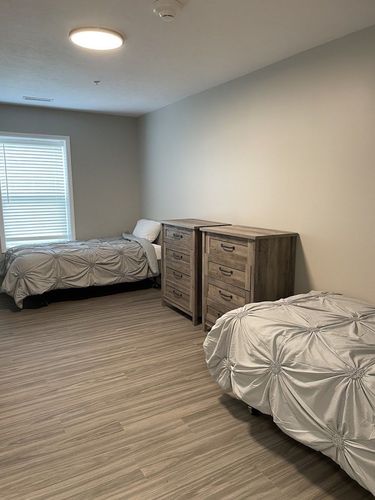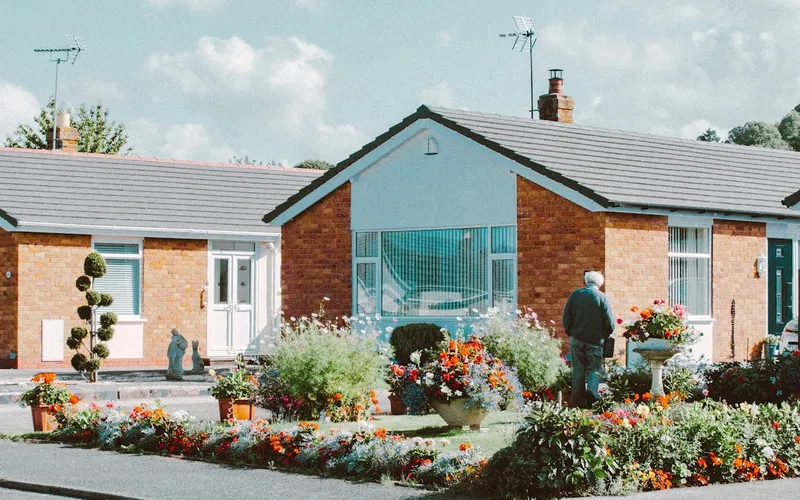

Residential care in Jackson means living in a house rather than in an apartment, and the distinction is more concrete than it sounds. A resident has a furnished private room and shares everything else: the dining room, the day rooms, the staff, the routine. The Jackson Friendly Home on West North Street works exactly that way, at $2,500 a month, in a building that has stood on the same grounds since 1908.
It is also a nonprofit, and a women's home, both of which shape who it suits. The charity behind it dates to 1878, when it opened as a refuge for widows and children left behind by the Civil War, and it has never taken men.
What Daily Life in the House Involves
Rooms come furnished, which matters more than families expect at the point of a move, because it turns a house clearance into a suitcase. Three meals arrive each day with an evening snack, housekeeping and personal laundry are handled daily, and the day rooms rather than the bedrooms are where residents actually spend their time.
The support around that is practical rather than clinical. Medications are administered by staff, someone is on duty around the clock, and visiting services come to the building instead of the residents travelling for them, including an on-site salon and podiatry. Home health services can be brought in when a resident's needs grow. What the house is not is a nursing facility, so a resident who comes to need daily skilled nursing has reached the edge of what it can offer.
What $2,500 a Month Reflects
That figure sits well below what most Jackson senior living costs, and the reason is structural rather than a matter of what the residents receive. A nonprofit home with a charitable endowment behind it and more than a century of local giving is not pricing to a return, and the home has historically worked with residents on what they can pay rather than turning them away at a fixed rate.
Medicaid also has a place here, though it works differently from how families assume. Michigan's waiver program can fund the care a resident receives in a licensed residential setting; the housing portion continues to be met out of the resident's own monthly income. A conversation about what a household can genuinely afford is therefore worth having openly rather than assuming the answer in advance.
Who a Communal Home Suits, and Who It Does Not
The case for a house of this kind is company. Someone living alone who has stopped cooking properly, stopped seeing anybody most days and stopped keeping the house up is describing a problem that a shared dining room and a day room full of people solves directly, and solves better than a self-contained apartment does.
The case against it comes down to privacy and independence. A resident who wants a kitchen of her own, her own front door and the freedom to keep her own hours will find communal living a poor fit, however good the home is. Neither preference is wrong, and a family is better served by naming which one applies than by touring on the assumption that any decent building will do.
Deciding Whether the Friendly Home Fits
An advisor covering Jackson County can talk through the practical questions that decide it: whether a room is currently free, what level of care the home can support and for how long, how the money would actually work for a particular household, and whether communal living matches what the person in question wants rather than what the family finds reassuring.
If a shared, settled household in Jackson sounds closer to right than an apartment would be, a short conversation will establish quickly whether it is a genuine fit.
The Jackson directory continues to grow as we evaluate providers for quality and alignment in 2026. Reach out for a conversation about residential care homes in Jackson, or look through the communities we have vetted at your own pace.