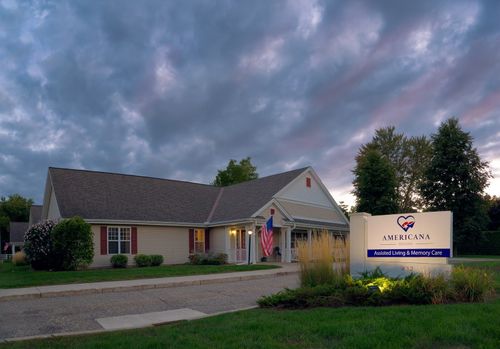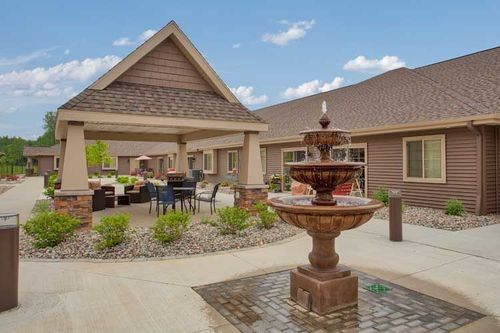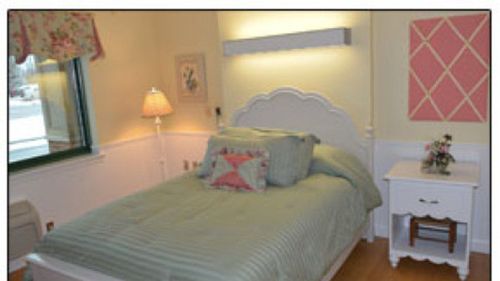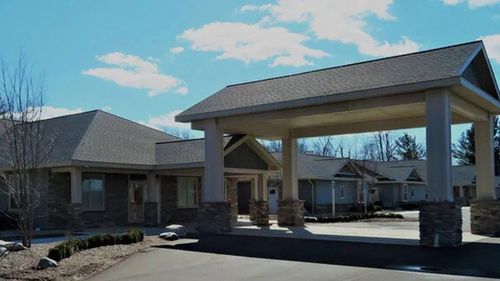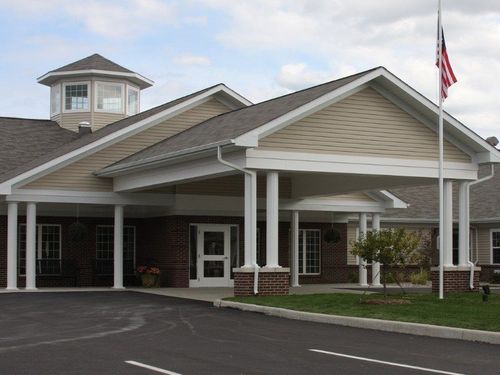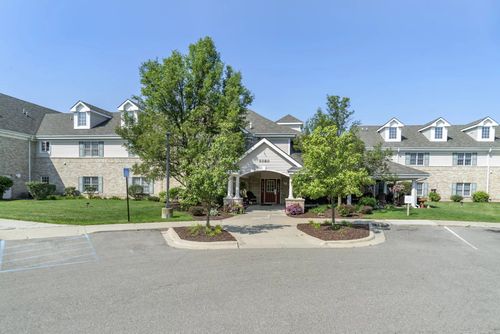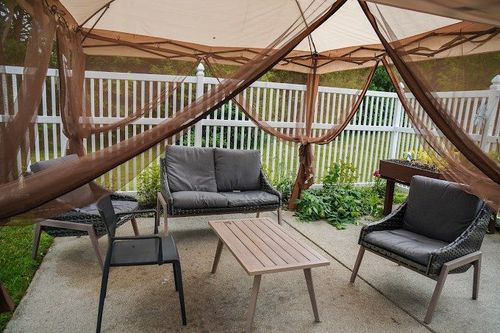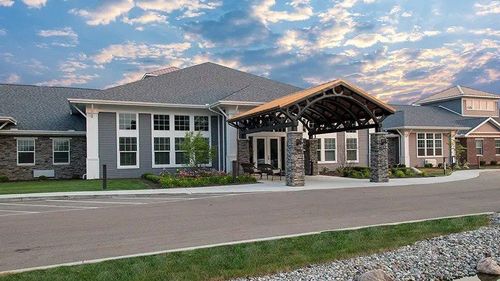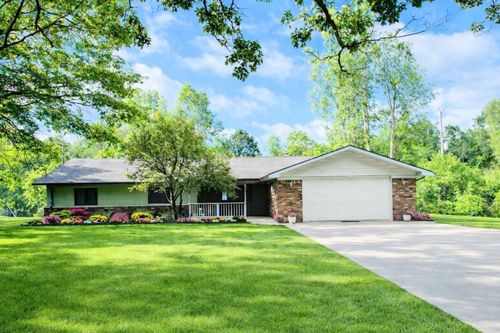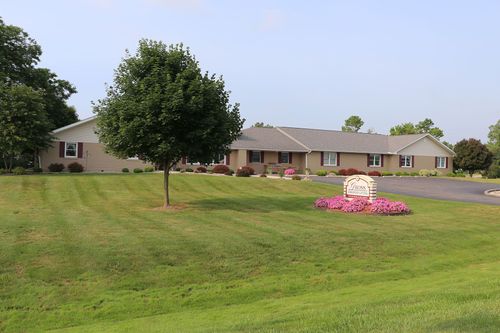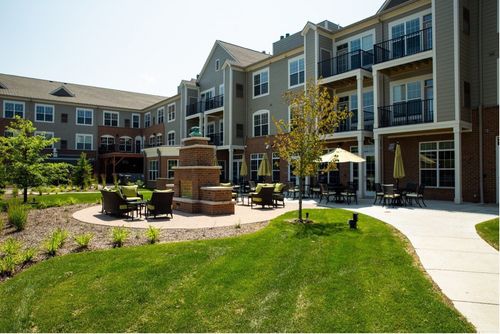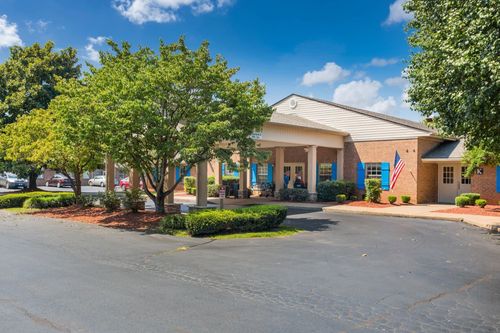
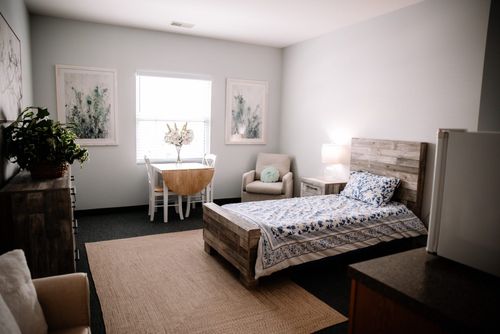
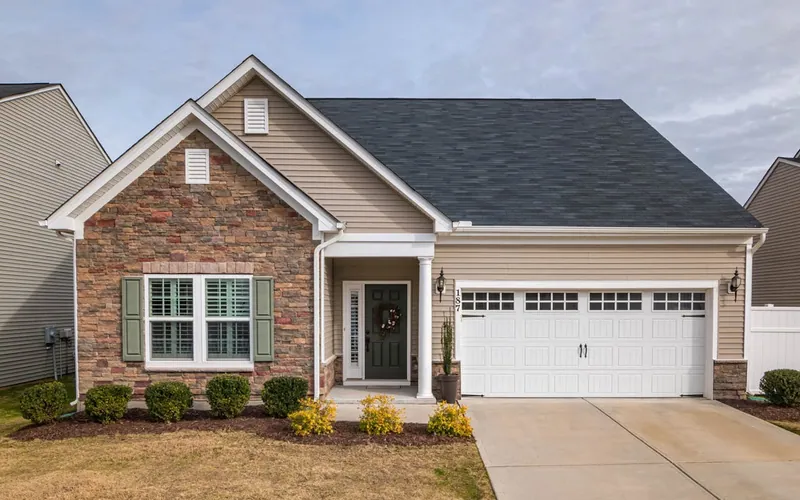
One of Lapeer's dementia options is licensed as an adult foster care home, which is worth understanding because it is the smallest and least institutional setting Michigan permits. An adult foster care license caps a home at twenty residents, and in practice that means a house on a residential street with a kitchen somebody cooks in, a handful of caregivers, and no corridors to speak of.
The other local addresses run larger, up to about forty-five residents, and the 3 together span published figures from $3,000 to $4,200 a month. One takes respite guests and one welcomes pets, and a family here is genuinely choosing between household living and something closer to a small community.
Dementia Care at the Scale of a House
In a home of nineteen or twenty people, a resident stops having to navigate. The bathroom is where it was yesterday, the same two caregivers are on through the afternoon, and somebody notices within an hour that a person has not eaten, which in dementia is worth more than most features that appear on a brochure.
What a household-scale home cannot always match is depth on a bad day, because when two residents need attention at once the size of the rota is the constraint. Press on how many staff cover an afternoon and who is awake and attentive overnight. Secured exits, enclosed outdoor space, and medicines given rather than left out are standard locally regardless of setting.
From Three Thousand to Four Thousand Two Hundred
Lapeer's range is wide in proportional terms, running from $3,000 up to $4,200 a month in 2026, and most of that gap describes the setting rather than the standard of care. A licensed adult foster care home carries lower overheads than a larger building with a nurse present through the day, and that flows straight into the figure.
Both models then assess a resident and add a care charge above the base rate, which climbs as dementia advances. No Lapeer address holds a Michigan MI Choice waiver contract, so funding is private throughout, generally drawn from retirement income, savings, the sale of a house, a long-term care policy where one exists, and VA benefits for those who served. Plan against what a resident with advanced needs would pay, because that is the figure a household lives with longest.
The Hub of the Thumb
Lapeer functions as the medical anchor for a wide rural area, and McLaren Lapeer Region carries two hundred and twenty-two beds along with a verified Level II trauma center, the only one across the Thumb region. It also runs a rehabilitation unit, which matters when a resident with dementia comes out of a fall or a fracture.
That concentration means the neurology and primary care relationships a resident already has sit close to whichever building they move into. It also draws demand for a small number of secured rooms from across the county, so households in Imlay City, North Branch, and the surrounding townships work the same short list.
Staying Where the Roads Are Familiar
Distance decides more in dementia than in any other care type, because the visiting that helps is frequent and short rather than long and occasional. Adult children spread across Lapeer County can reach a building in town inside twenty minutes, and a resident seen three or four times a week is in a different situation from one seen on Sundays.
There is a second and quieter argument for staying, which is that a person whose recent memory has gone often retains the older layer intact, so the roads, the water tower, and the church they have driven past for fifty years still register from a car window. That recognition does real work in the early months of a move, and it does not transfer to an unfamiliar town.
Choosing Between a House and a Building
The advisor's job in Lapeer is largely helping a family see that these are different kinds of place rather than cheaper and dearer versions of one thing. A resident who is easily overwhelmed, needs constant supervision, and has always kept to a small circle frequently does better in the household-scale home. Someone still sociable, physically capable, and in the earlier stages often needs more happening around them than a house of twenty can provide.
Alongside that sits the practical checking: how far each address will let dementia progress before asking a family to move, what the overnight rota genuinely looks like, which has a room actually coming free, and whether the one respite option is available in a window a household can use. A short conversation about all of that is usually enough to work out which setting fits the person, which is the decision that matters most here.
We keep expanding our Lapeer coverage as we evaluate providers for quality and alignment in 2026. Start the conversation about memory care in Lapeer, or look through the buildings we cover at your own pace.