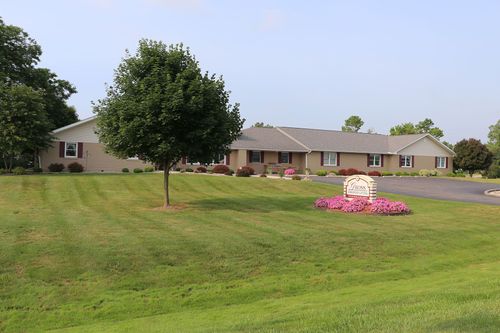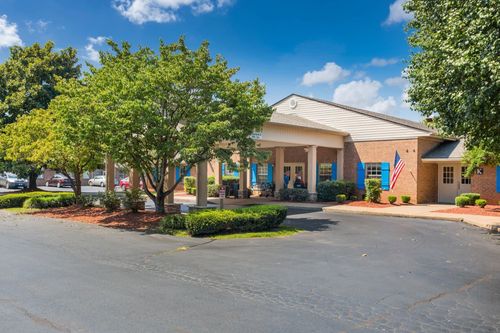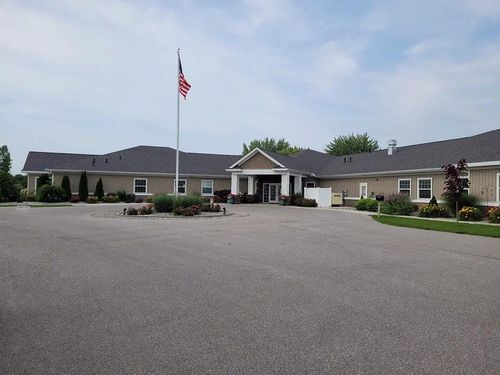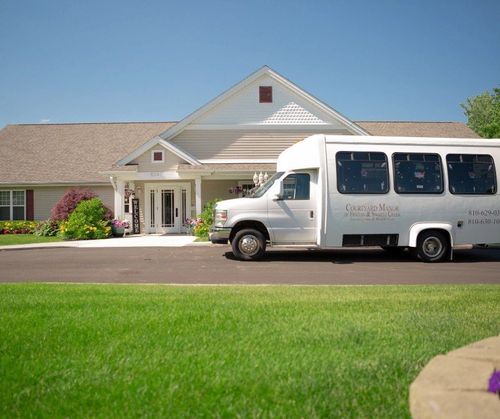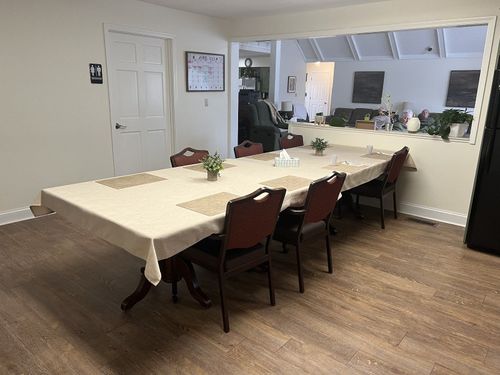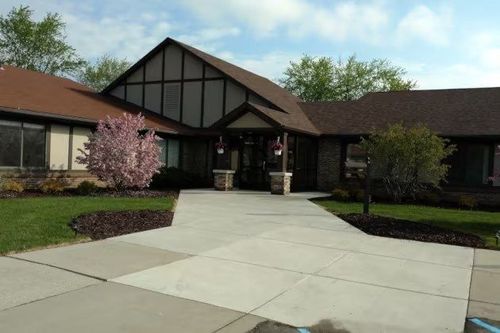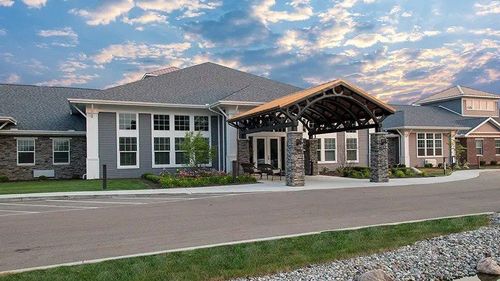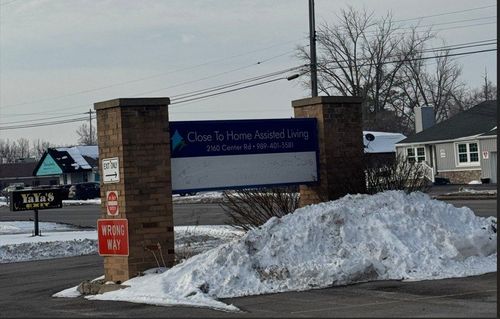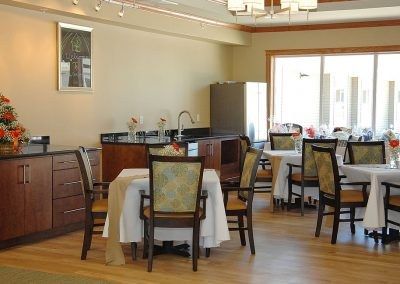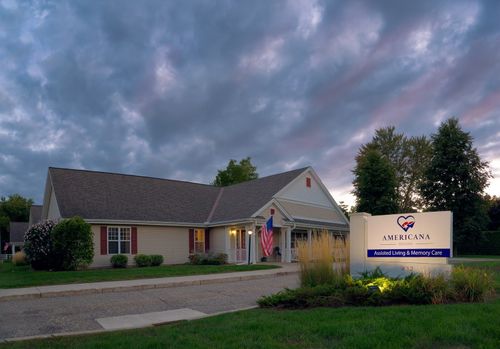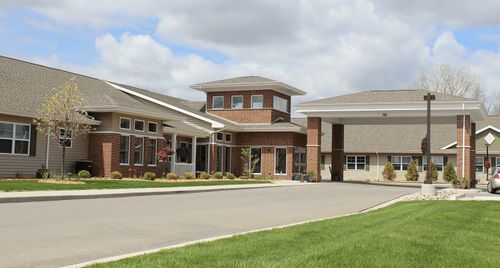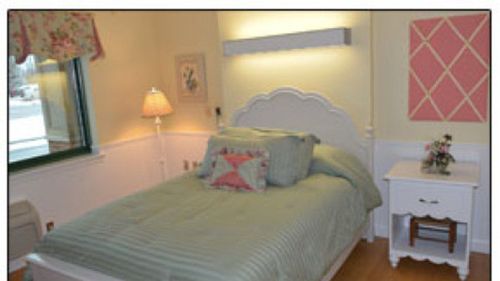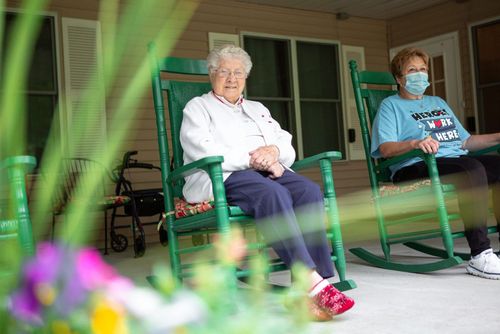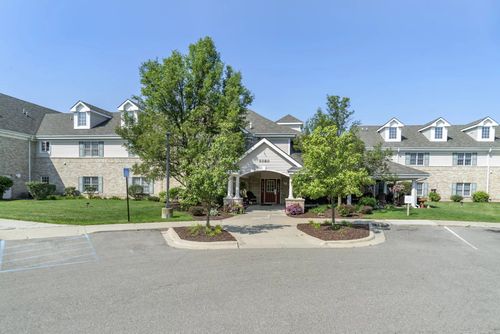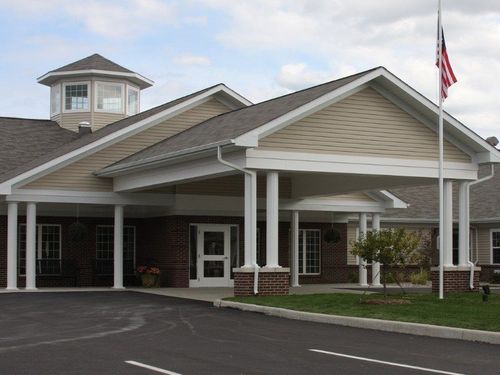
Montrose runs one small house in which every resident lives with memory loss. That is unusual and it is the first thing a family should weigh, because a building with no non-dementia residents behaves differently from a secured wing inside a general senior community, and the difference decides whether Hampton Manor of Montrose belongs on a shortlist at all.
What changes is the orientation of everything, since staff are not splitting attention between residents who need reminding and residents who need reorienting, the dining room does not have to work for two populations at once, and the pace of the day is set by the people who live there rather than accommodated around them.
When the Whole House Is the Secured Setting
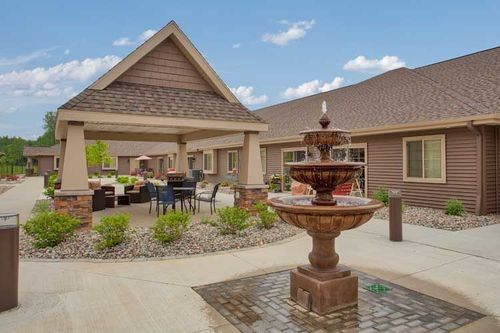
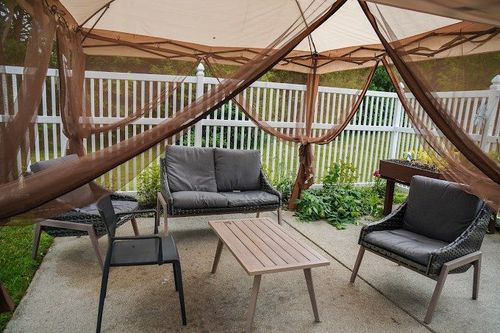
There is no boundary to cross here and no moment where a resident is moved from one side to the other. Exterior doors stay secured, the outdoor space is enclosed, help with dressing, bathing and eating comes whenever it is wanted rather than at fixed rounds, and someone is awake overnight rather than sleeping on the premises.
The advantage is that nothing has to be adapted. Activities are pitched for people living with memory loss instead of adjusted for them, a resident who ends up in a neighbor's room meets staff who consider that ordinary, and the late afternoon is planned for rather than survived. The limit is staffing depth, and a short roster is stretched by anyone who needs lifting by two people or whose nights go wrong for a fortnight at a stretch. Ask what the house has previously found itself unable to hold, and expect a specific answer.
Higher Than Most Small Houses, and Why
Hampton Manor of Montrose publishes $5,014 a month for 2026 as its opening figure, with secured care quoted above it after an assessment. That sits above what small residential houses in Genesee County typically ask, and the caregiver ratio is the reason: a house where every resident has dementia has to staff for that from the first hour of the day to the last, with no lighter-need residents to balance the roster against.
Michigan Medicaid is not billed here, so the stay is private money. The state's MI Choice waiver reaches the caregiving and stops, so it never covers what the house charges for the room and the meals, and the funded places are limited. Because dementia is measured in years, the projection that matters is the third year rather than the first, and in a one-address town there is no cheaper local fallback if that projection turns out to be wrong.
Genesee County's Northern Villages
Genesee County counts around 79,500 residents past 65, close to a fifth of its population. The county's weight sits in and around Flint, while Montrose is a northern village where the population is older than the county average and senior housing is thinner.
One small dementia house serving that geography means availability governs. Respite is available here, which is genuinely useful: it gives a family a way to see how the house handles this particular resident, and a way in that does not depend on a permanent room coming free.
Why Genesee Families Keep the Search Local
In dementia care, visiting becomes frequent and short rather than occasional and long, which changes the calculation about distance. A daughter who can stop in for twenty minutes after work does so several times a week; the same daughter forty minutes away comes on Sundays, and the resident notices even when they cannot name it.
Medical access supports the choice, with Flint holding the region's Level I trauma verification at Hurley Medical Center, whose burn unit and children's hospital have no equivalent nearby, and McLaren Flint adds a 378-bed teaching hospital with the Karmanos Cancer Institute on its campus. For a resident whose specialists are already in Flint, staying in Montrose keeps every one of those relationships intact.
What a Local Advisor Brings to Montrose
The first question in Montrose is not price or availability but suitability, because a whole-house dementia setting is right for some residents and wrong for others. An advisor working Genesee County can say plainly which profile the house serves well, what it has managed in the past, and where it has reached its limit.
The second question is timing, and it is where families lose ground. A house this small does not come open on a schedule, so the households that get a choice are the ones who introduced themselves months before they needed to. A diagnosis in hand and no immediate pressure is the ideal moment to reach out.
We keep expanding our Montrose coverage as we evaluate providers for quality and alignment in 2026. Start the conversation about memory care in Montrose, or look through the buildings we cover at your own pace.