Oakland County has more senior living than anywhere else in Michigan and remarkably little of this particular level. Dozens of communities across two dozen towns cover assisted living, memory care and independent apartments, while skilled nursing sits at a handful of addresses, so a family arriving from a hospital discharge finds the market narrow at exactly the moment they need it wide.
They also cluster: Cedarbrook Of Bloomfield Hills sits on the county's eastern side, and Novi Lakes Health Campus and Renaissance Gardens at Fox Run are both in Novi to the west, so a household in the middle or north of the county faces a real drive either way.
Rehabilitation Inside a Larger Community
What distinguishes this level is licensed nursing cover through the full twenty-four hours with a physician directing the plan, so that intravenous drugs, wound management, oxygen and difficult pain control can carry on somewhere other than a ward. Therapy runs against a recovery target and gets measured weekly, because the funding depends on the measurement.
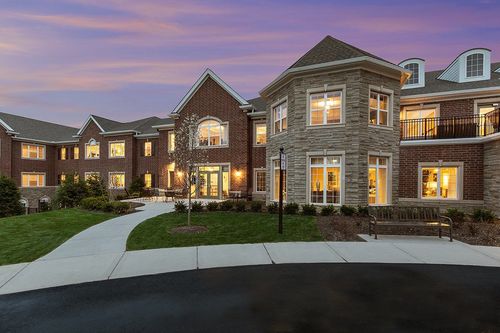
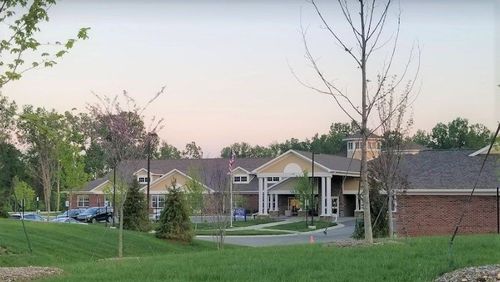
The local particular is that all of this happens inside larger senior living communities rather than in standalone nursing buildings. That carries a real advantage: somebody who finishes rehabilitation but is not safe alone can often move to the assisted living or memory care side of the same campus, keeping the staff and visitors and skipping a second search. Ask on day one whether that step down exists and how it is decided, rather than finding out in week ten.
Who Pays, and the Part That Bites
Medicare opens most stays after a qualifying inpatient admission and covers a limited stretch of days, without charge to begin with and then with a daily contribution a Medigap policy will often take on. Coverage ends at the point a resident stops improving in a way the therapy team can measure, which is usually well short of the day limit, and that is what catches families off guard.
After that, the county's affluence becomes a problem rather than a cushion. Only one of the local skilled addresses accepts Medicaid, which in a market this size is the single most consequential fact for anybody whose stay turns long. A household expecting to need it should begin an application while Medicare is still paying, because meeting that constraint on the day coverage ends is how families end up moving somebody twice.
A Quarter of a Million Seniors and a Handful of Beds
About 250,500 Oakland County residents have passed 65, the largest such population in the state, though at roughly nineteen percent the share is unremarkable because the county is enormous rather than old.
The absolute number is what matters at this level. Demand at this level follows hospital discharge volume, and a county of one and a quarter million generates a great deal of it, all arriving at the same short list of buildings running between fifty-four and ninety-five beds. Availability moves daily, is never published, and is the reason two families with identical needs end up in very different places.
Why Distance Deserves a Hard Look Here
In most counties the argument for staying local is straightforward. Here it needs thinking about, because the skilled addresses sit at opposite ends of a large and congested county, and six weeks of recovery depends on a visitor frequent enough to catch a change in eating, mood or steadiness before the notes do.
The medical argument still holds, since Oakland County contains one of the state's largest academic referral hospitals, an eleven-hundred-bed centre carrying adult Level I and paediatric Level II trauma verification, so a resident who needs to go back to hospital is going somewhere with every specialty under one roof. What families should weigh is the ordinary journey rather than the emergency one: which building can realistically be reached on a Tuesday evening after work.
Where an Advisor Earns the Call
This level is chosen in days rather than weeks, and speed is what produces the placements families regret. A local advisor can say which of the county's skilled addresses is free on the day it is needed, which of them will accept a particular clinical picture, how each one staffs its therapy, and which single address takes Medicaid should the stay run long.
The step-down question belongs in the same conversation rather than a later one. The charge at each campus for its lower levels of care, whether a move across to them is assured or depends on a vacancy, and a realistic estimate of when Medicare will stop are what convert a cliff edge into a sequence. Better to talk it through in ten minutes now than to spend a week on the phone once a discharge date is fixed.
We keep expanding our Oakland County coverage as we evaluate providers for quality and alignment in 2026. Start the conversation about skilled nursing in Oakland County, or scan the buildings we cover at your own pace.