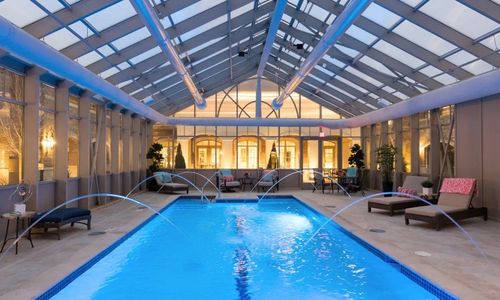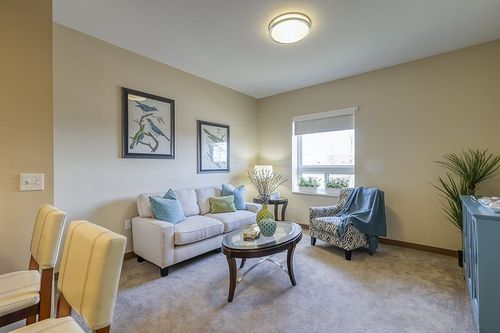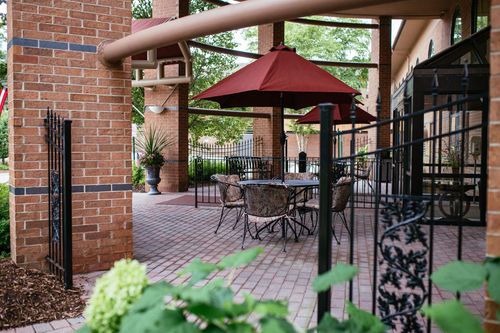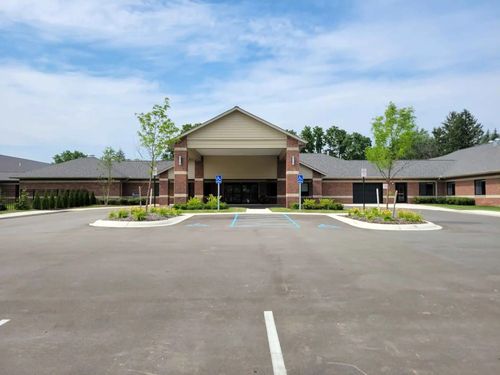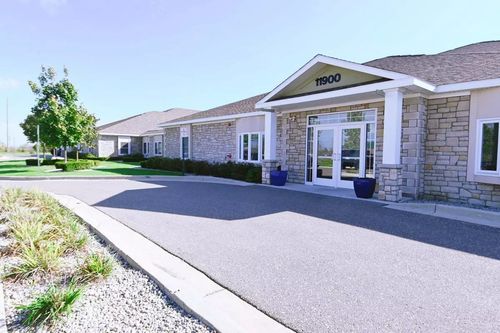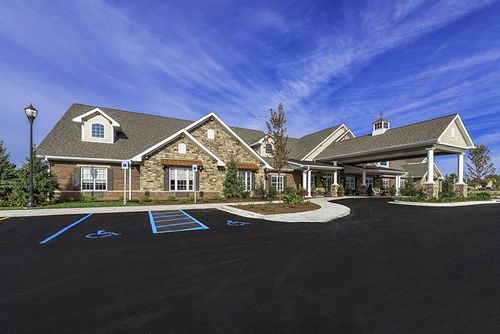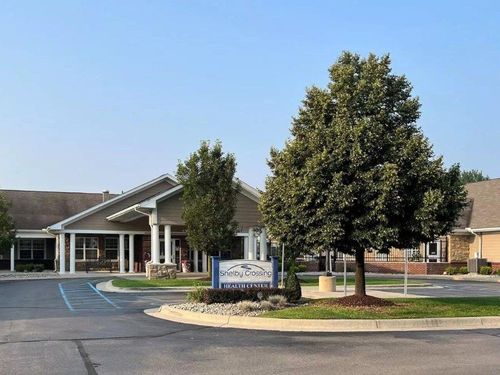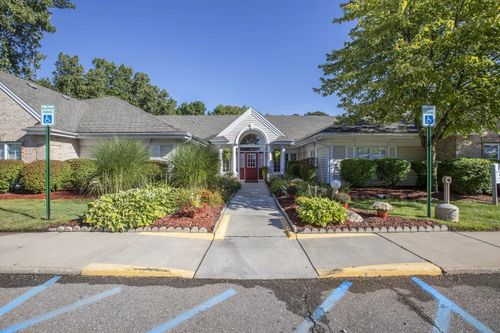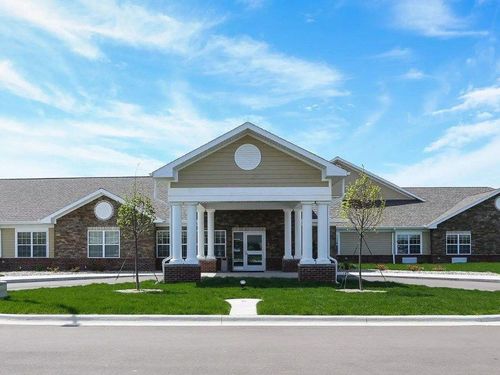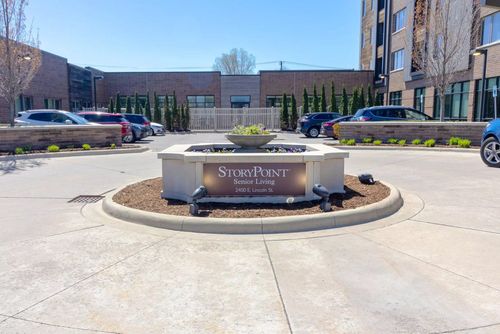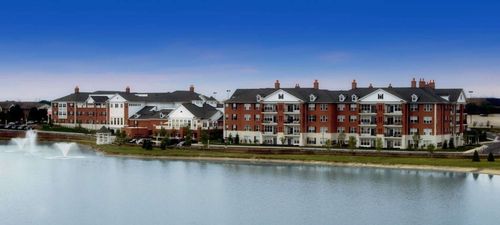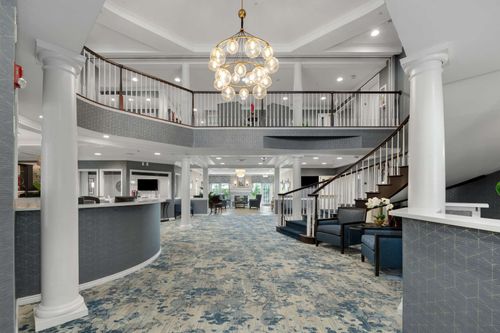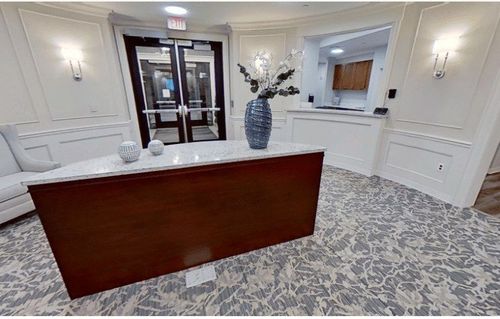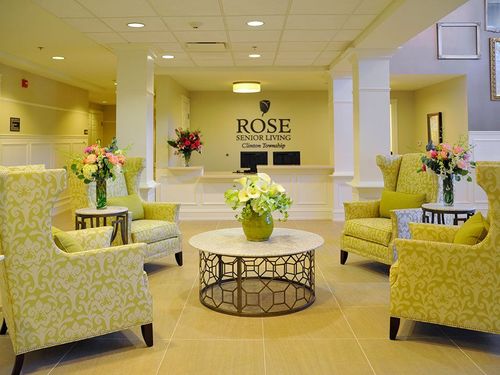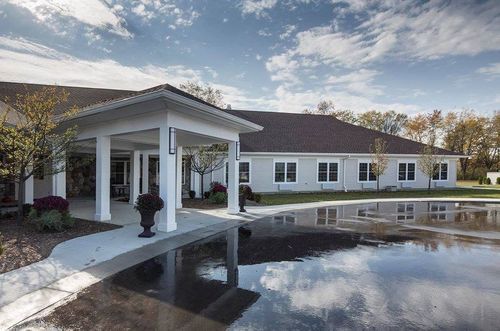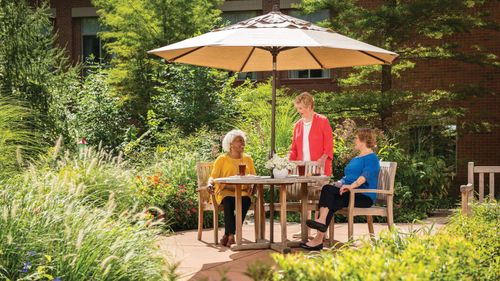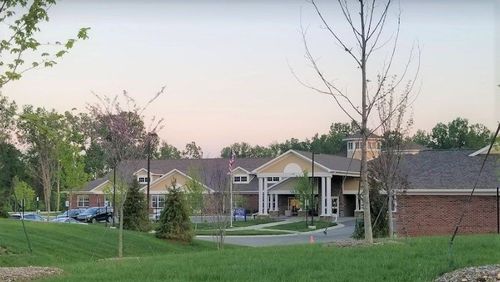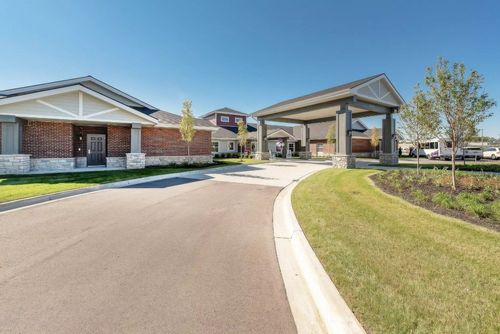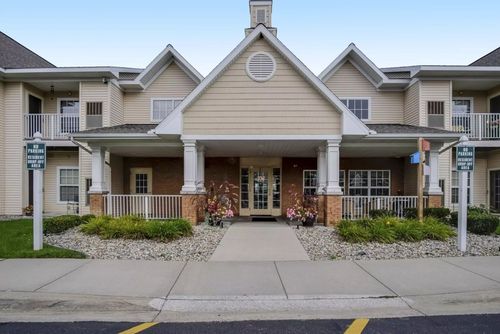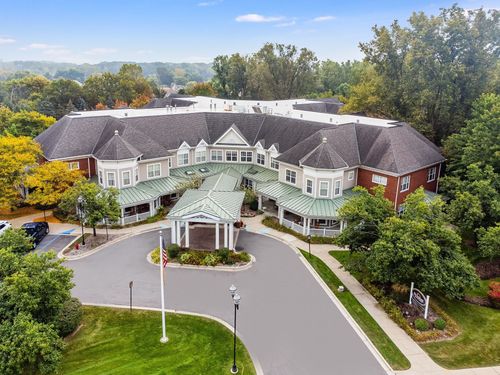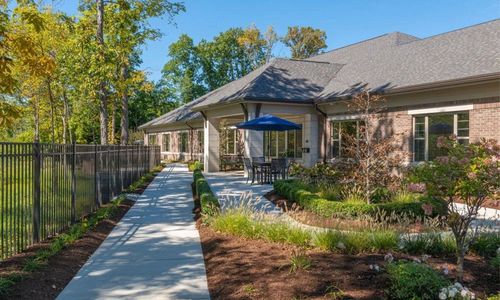
Oakland Township is walking country, which is the whole reason this question comes up here more insistently than it does elsewhere. The Paint Creek Trail runs through it, the roads are quiet, and a great many older residents have organised their days for years around taking a dog out along one or the other. Flourish Collection at Oakland Charter Twp is the address accepting animals, from $4,200 a month. Where a resident's routine is genuinely built around the dog, the questions that matter are less about whether animals are allowed and more about whether the routine survives the move.
Whether the Walk Survives
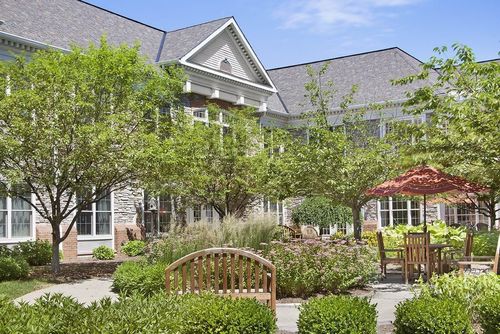
Start with the geography of an ordinary morning rather than the policy. How far is it from the room to a patch of grass, is that route level and lit, and does it get cleared when it snows? A resident using a stick or a frame has a much shorter usable range than the same person had five years ago, and a walk that requires crossing a car park in February will quietly stop happening.
Then ask what the building expects of the resident. The standing condition everywhere is that whoever brings an animal must be able to feed, exercise and clean up after it, or must have named somebody who will. That condition is not administrative padding on a form. It exists because a dog whose needs are not being met becomes visible to everyone in a building very quickly, and because the alternative arrangements are far easier to think about in advance than in the middle of a hospital admission.
The Terms and the Money
Conditions are set by the building rather than by any Michigan rule, and they cluster around three levers: how many animals, how heavy a dog may be, and which breeds an insurer declines to underwrite. Current vaccinations and a neutering record are asked for routinely, and some buildings want to meet an animal before agreeing anything.
The published figure here is $4,200 a month, covering the room and the daily support rather than the pet. On top of that expect a deposit at move-in, returnable in some buildings and not in others, and frequently a monthly amount per animal. Neither charge may be applied to an animal that is not a pet. Fair housing law treats a trained service dog, and an animal documented as providing assistance, as something else entirely: no deposit, no monthly sum, and no weight or breed rule governing it. Liability for any damage the animal does still rests with the resident throughout.
What Changes for the Animal
Something worth weighing that policies never mention: the dog's own adjustment. An animal that has had a house, a yard and one or two familiar people now has a room, fixed walk times and a steady traffic of strangers. Most of them cope with it perfectly well in the end. Some do not, and an unsettled dog in a shared building becomes everybody's difficulty rather than just the resident's.
It is entirely fair to ask a building how it introduces a new animal, whether there is any settling-in arrangement, and what it has done previously when a pet struggled. A house with experience of this will answer in specifics rather than reassurance.
What a Local Advisor Brings to Oakland Township
What has actually been accepted here recently, as against what a written policy implies, and whether a room with straightforward access outside happens to be free are questions with no published answer.
An advisor covering this part of Oakland County carries both, and tracks how terms shift at buildings across the area, which counts for more when the nearby list is short. Where the dog is the condition everything rests on, it is worth a short conversation before arranging a visit.
The Oakland Township directory continues to grow as we evaluate providers for quality and alignment in 2026. Start the conversation about pet friendly in Oakland Township, or scan the buildings we cover at your own pace.