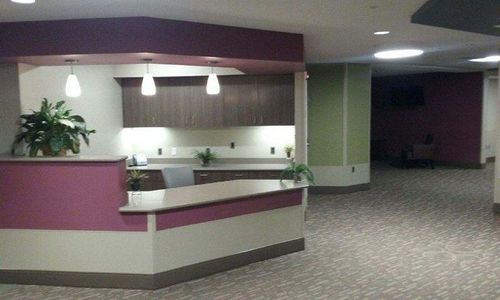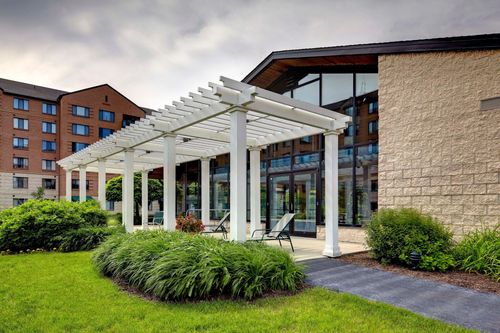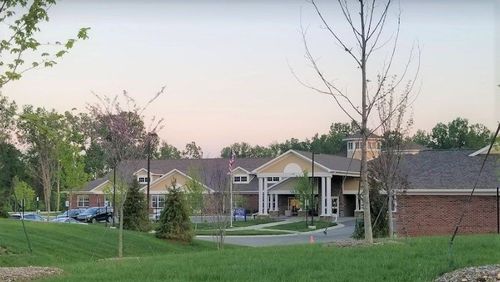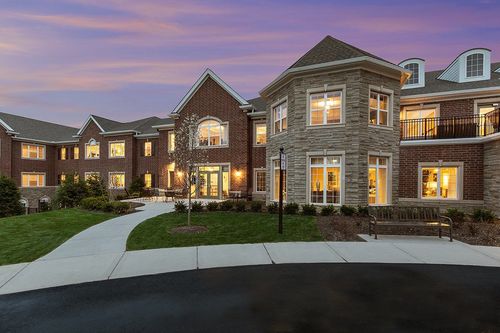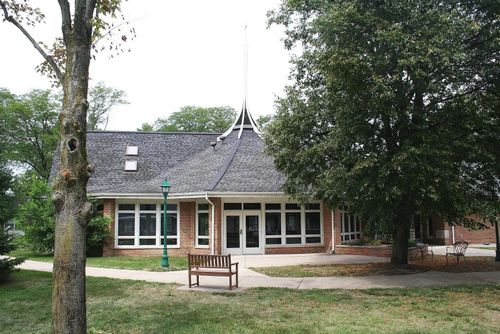
Most people arrive at skilled nursing as strangers, coming from a hospital ward to a building nobody in the family has seen, met by staff who know a chart and not a person, at the point when a patient is least able to explain themselves. Redford Township has an address where a meaningful share of admissions do not work that way at all: The 1 matching community, The Orchards at Redford Village, carries nursing care on Six Mile Road inside the same building as its assisted living rooms and its secured dementia neighborhood.
What that changes is the character of the admission. A resident moving down from upstairs arrives somewhere already familiar, cared for by people who know their ordinary self rather than their worst week, and a family walks a corridor instead of learning a new building under pressure.
What the Nursing Side Provides
The clinical substance is what a nursing licence requires: registered nurses present continuously, a physician directing care rather than dropping in, and rehabilitation delivered by physical, occupational and speech therapists on a schedule built around a specific recovery. Intravenous medication, wound management, oxygen and the sort of monitoring that follows an unstable week all sit within it.
The part families underestimate is how much of the outcome rests on information. A resident recovering from a fall or an infection does better when the people treating them know what normal looks like for that person, and that knowledge is what an internal transfer preserves and an external one loses. Where an admission does come from outside, it is worth sending far more detail than feels necessary: routines, what they eat, how they sleep, what unsettles them.
Two Funding Routes, and the Handover Between Them
A skilled stay is charged by the day, and the opening stretch is usually met by Medicare Part A after a qualifying hospital admission, in full at first and then with a resident contribution, for as long as the care remains skilled and the progress remains measurable. Neither condition lasts indefinitely, and the end of that coverage often arrives before a family has thought about what follows.
What follows is either private payment or, for residents meeting the financial and clinical tests, traditional Michigan Medicaid long-term-care coverage. This is the point at which the community's Medicaid participation earns its place, because it makes the handover between the two routes an administrative event rather than a move to a different building. Establishing how that transition would work, and roughly when, belongs in the first week of a stay rather than the fourth.
Nursing Capacity in the Older Ring of Wayne County
Seventeen percent of Wayne County has passed sixty-five, which in the state's largest county is a very large number of people, and Redford sits on the Detroit border among neighborhoods where households have held the same address for decades.
Nursing beds in that ring are wanted by hospitals across a wide area, so availability is genuinely competitive and discharge planners work it early. Short stays are offered here as well, which gives a recovery a landing place when a bed and a discharge date do not coincide. Neither fact makes a plan, but both are worth knowing before one is needed.
Where Recoveries Start
Trinity Health Livonia sits five miles west and was rebuilt around older patients: 304 beds, trauma verification at Level II, and an emergency department with a wing laid out specifically for older adults. Cancer care, heart and vascular medicine and inpatient rehabilitation are on the same campus, which is where a good many local recoveries begin.
Further east sits Henry Ford Hospital, whose intensive care unit is the largest in Michigan, with a second trauma centre at Corewell Health Dearborn to the south. For a Redford household the useful consequence is that the acute stage happens close by, and the recovery can then come back into the township rather than being placed wherever a bed happens to exist across the metro.
What a Local Advisor Brings to Redford Township
At an address carrying three levels of care, the questions that matter are about movement between them. A Local Senior Advisor covering the western Wayne ring can establish whether a nursing bed is free, whether a Medicaid-funded one is free, which is a different question entirely, and what the community requires clinically before it will accept an admission.
The funding sequence is where families lose the most ground, because the Medicare period ends faster than anyone expects and the application that follows takes longer than anyone plans for. Getting both mapped while a resident is still in hospital is what prevents an avoidable transfer. It is worth a short conversation at that point rather than after the letter arrives.
Our Redford Township directory keeps expanding as we evaluate providers for quality and alignment in 2026. Reach out for a conversation about skilled nursing in Redford Township, or browse the communities we have vetted at your own pace.