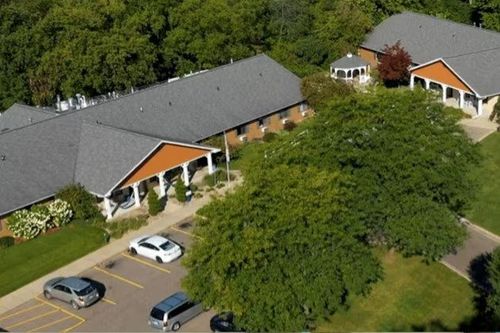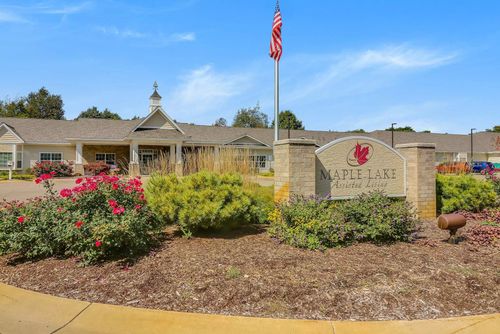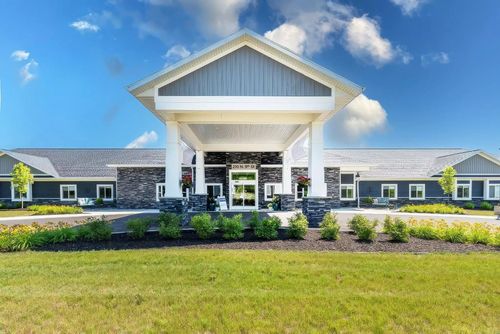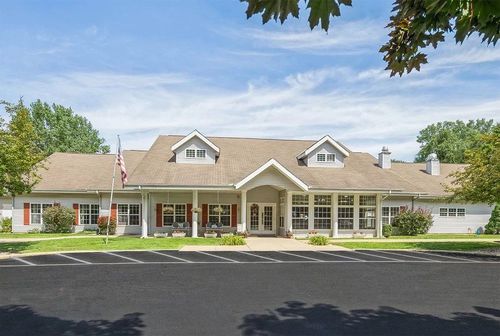
A dementia diagnosis narrows this county's senior living from a choice into a single address. Secured space in St. Joseph County sits at LakeHouse Three Rivers on Elm Street, the larger of the county's two assisted living buildings, and the smaller household-scale setting does not carry it. Families who spent a month comparing two options find the comparison over in one appointment.
That is worth knowing early rather than late, because it changes the order of the questions. Where there is one secured address, the useful work is not choosing between buildings; it is finding out whether this one fits the person, and what happens if it stops fitting later.
Moving From One Side of a Building to the Other
Because the secured space sits inside a building that also runs open assisted living, a good number of residents arrive there from down the hall rather than from home. That transition is easier than a move between towns and harder than families expect. The address stays and some of the faces do, but the day changes shape: meals move to a smaller room at a slower pace, the exit doors stop being the resident's decision, and the schedule gets built around them rather than by them.
What should stay constant is who delivers it. The question to put directly is whether caregivers are assigned to the secured side or rotate through it from the open side, because a resident who no longer holds names still holds voices and sequences. Ask what a shift handover covers, and ask how the building tells a family that the open side is no longer safe, since that conversation is the one nobody plans for.
The Step Up From a Known Base
LakeHouse Three Rivers opens at $3,932 a month for its assisted living. Secured dementia care is priced above that base, as it is everywhere in Michigan, because the staffing ratio tightens and overnight coverage gets heavier. The advantage of a single-building county is that both figures come from the same source, so a family sees the actual size of the step rather than guessing at it from another town's rate sheet.
What has no local answer is the funding. No assisted living or memory care address in this county participates in Medicaid, so a secured stay is privately paid for as long as it lasts, and dementia stays last. The county's skilled nursing does take Medicaid, which means the eventual pathway for a household that spends down runs through Centreville rather than through staying put. That is a fact to plan around at the start rather than discover in year four.
Where the Demand Actually Comes From
Most dementia in a county this size is managed at home, by a husband or wife, for a long time before anyone calls anybody. That is why secured demand here does not build gradually the way assisted living demand does. It arrives suddenly, usually when the caregiver's own health or sleep gives out, and by then the family needs a room in weeks rather than months.
The arithmetic behind that is ordinary. About 11,400 St. Joseph County residents are past 65, close to the Michigan average, and the share of them who will need secured care at some point is what it is everywhere. What is not ordinary is that all of it converges on one wing.
The Argument for Learning One Building Well
There is an underrated advantage to a county where assisted living and secured care share an address. A family that moves a parent in while they still manage well ends up learning one building, one set of staff and one set of routines, and if dementia progresses the resident does not have to learn anything new at the point they are least able to.
The alternative, waiting until secured care is unavoidable and then moving a confused person somewhere wholly unfamiliar, is harder on everyone and produces worse first months. It is one of the few places where a small county's limited choice quietly works in a resident's favor.
What Is Worth Asking Before You Tour
With one secured address, the questions that matter are all about fit and timing rather than comparison. Whether the wing has space now, what the quote runs at the assessed care level, what stage of dementia it has managed successfully before, and what would trigger a move out. An advisor covering this corridor carries current answers to all four, and none of them are published anywhere.
The second conversation is the funding one, which where no Medicaid participation exists at this level matters more than the monthly rate. None of it costs a family anything, so reach out before the tour rather than after it.
Our directory for St. Joseph County continues to grow as we evaluate providers for quality and alignment in 2026. Reach out for a conversation about memory care in St. Joseph County, or look through the communities we have vetted at your own pace.