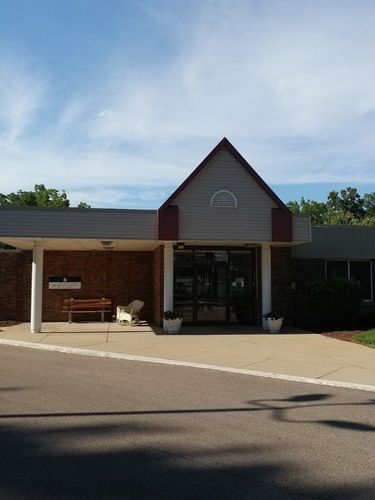

St. Joseph County's skilled nursing is a county institution in the literal sense. Fairview County Infirmary sits on East Main Street in Centreville, the county seat, and it is the public answer to a need that private senior living in this county does not cover: round-the-clock licensed nursing, at $8,500 a month. Michigan still runs a handful of these county medical care facilities, and they are often the reason a rural county has skilled nursing at all.
That public ownership is not a detail. It is why skilled nursing here participates in Medicaid when nothing else in the county's senior living does, and Medicaid is how most long skilled stays eventually get paid for.
Recovery Work, and the Other Kind of Stay
Most people arrive at skilled nursing to get out of it. A hip replacement, a stroke, a bad fall with surgery, pneumonia that emptied a person of strength: the stay is a step down from the hospital, built around therapy at an intensity nobody manages at home, and it usually runs two to five weeks. Licensed nurses cover every shift, a physician or nurse practitioner rounds, and medications move to trained staff.
The second population lives there. Some need licensed nursing continuously because of a wound, a feeding tube or a condition that will not stabilize; others arrived by degrees as medical complexity outgrew what assisted living could hold. They share a building and rarely a wing, and the rhythms differ: the rehabilitation side runs on weekday therapy hours and discharge dates, the long-stay side quieter and slower.
How the Money Actually Sequences
Skilled nursing is priced differently from everything else in senior living, and the published $8,500 a month is a private-pay figure rather than what most families pay in month one. After a qualifying hospital stay of three nights, Medicare covers a rehabilitation stay in full for the first twenty days, then leaves a substantial daily co-payment through day one hundred, and it stops there regardless of progress.
What happens next is worth understanding before it arrives. A resident who cannot go home moves to private pay at the full rate, and once assets are spent down, to Medicaid long-term-care coverage. Because skilled nursing here participates in Medicaid, that transition happens without changing buildings, which is the most consequential difference between this level and the county's assisted living. Starting the paperwork before the hundred days run out is what keeps the sequence smooth.
Where the Referrals Come From Now
Skilled nursing demand is not something a county's population predicts; it is what its hospitals discharge. About 11,400 St. Joseph County residents are past 65, close to the Michigan average, but the flow into Centreville is set by discharge desks rather than by demographics.
Those desks moved on 19 June, when the Sturgis hospital shut for good after 101 years. Patients from the county's largest city now discharge from Three Rivers Health, from Coldwater, or from across the Indiana state line, so a family can find the whole conversation starting in a different county from the one they live in. That is how a placement list ends up never mentioning the building twenty minutes from home.
Staying Inside the County Line
Centreville is central by design, which is what a county seat is for, and that geography does real work here. Rehabilitation stays are short and intense, and the family member who drops in after work on a Tuesday sees progress a weekend visitor never does. For a long stay, proximity is the whole relationship.
There is a financial dimension too. A Medicaid transition inside the same building is a paperwork event; the same transition across a state line can mean a move at exactly the point a resident is least able to absorb one. Knowing before the hundred days end which building carries you through that handover makes for a far easier year.
When the Discharge Clock Is Already Running
Skilled nursing decisions almost always get made on a clock somebody else set. A discharge planner needs an answer in a day or two, and the questions that matter are whether Centreville has a bed at the required level, whether the resident's clinical profile fits what the building is staffed for, and where the Medicare days sit against the likely length of stay.
The second question is the financial one, and it is easier to answer early than late: what the private-pay rate does to a household's assets, when Medicaid needs to be applied for, and what evidence the application will want. None of that costs a family anything to work through. When a discharge date is already on the whiteboard, a short conversation is usually enough to turn a placement list into a decision.
Our St. Joseph County directory keeps expanding as we evaluate providers for quality and alignment in 2026. Start the conversation about skilled nursing in St. Joseph County, or look through the buildings we cover at your own pace.