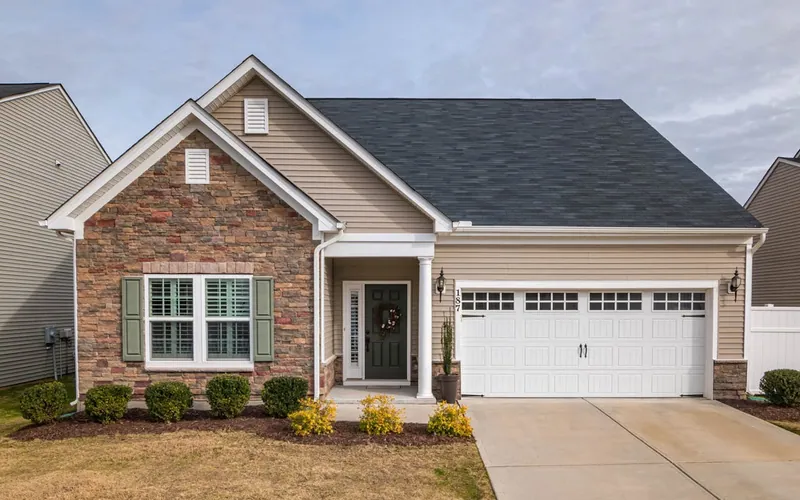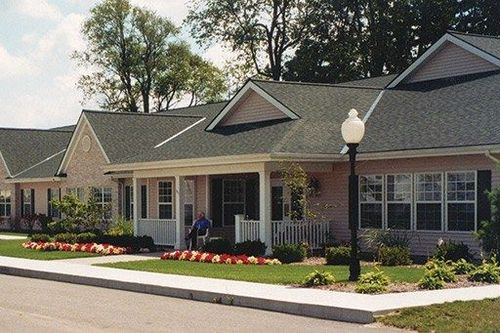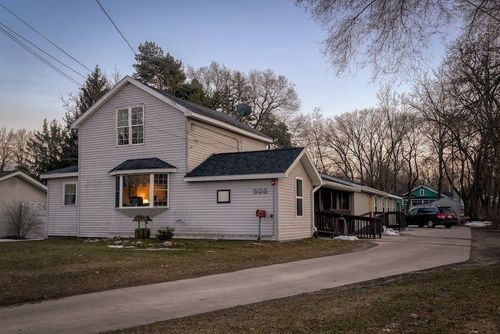
Country House Care on North Kohler Road does not publish a monthly rate, which is the first thing to understand about dementia care in Trufant rather than a gap in the information. A house this small prices each resident individually, because with a handful of rooms the staffing a particular person needs is a large fraction of the whole operation rather than a rounding adjustment to a rate card.
The second thing is that every room here sits behind a secured door. This is a dementia house rather than a senior community with a locked section, which makes the local question unusually clean: either a resident needs a secured setting, in which case Trufant has one, or they do not, in which case the village has nothing to offer them.
A House That Runs at One Pace
Because everybody living here has memory loss, nothing about the day is a compromise between two groups. The pace is set for people who need it slow, and nobody is asked to navigate crowded rooms to find a bathroom or a bed.
The care itself is what secured settings provide anywhere: doors that stay locked, an enclosed outdoor space, hands-on help with dressing, bathing and eating at any hour, meals adjusted as chewing and appetite change, and waking staff overnight. What differs is who delivers it, since the same small group of carers works most of the week, so a change in sleep or mood is spotted by someone with months of context rather than a shift handover. The corresponding limit is that a house this size has no bench, so ask what has previously proved beyond it and how much warning the family received.
Priced by the Resident, Not the Room
With no published figure, the number a household will pay comes out of an assessment, and what drives it is the staffing ratio a particular person requires. Secured care needs more hands per resident than daily support does, which is why two residents in the same house can be quoted quite differently.
The practical advice follows from that: ask for the quote in writing with the assessment attached, so it is clear what behaviors and what physical needs produced the figure, and ask what specifically would move it. Country House Care accepts no Medicaid funding, so this is private money throughout, and Michigan's MI Choice waiver does not stretch to the room and the meals in any case. For a condition measured in years, the projection that matters is the one that reaches past the first twelve months.
A Village House in Lake Country
Montcalm County counts a little under a fifth of its residents past 65, which is close to the Michigan figure but spread very thinly across farm country and lakes. Trufant is a village north of Greenville, and its dementia house is the whole of the village's contribution to the county's secured capacity.
Scarcity of that order changes how a family should behave. There is no queue to join in any formal sense and no schedule on which rooms come free, so the households who get in are the ones already known to the house when something opens. Introducing yourself at diagnosis costs an afternoon and is worth considerably more than that later.
Why Montcalm Families Keep the Search Close
Dementia turns visiting into something frequent and brief rather than occasional and planned, which makes distance a much heavier factor than it is at other levels of care. A relative twenty minutes away calls in after work; one an hour away comes at weekends.
The county's medical picture supports staying, because Corewell Health Greenville Hospital has served this county since 1905 and covers emergency care, cardiovascular services, oncology, general surgery and rehabilitation beds, while Sheridan Community Hospital on M-66 adds a twenty-two-bed critical access facility with swing beds for transitional nursing on the county's eastern side, so very little routine care requires leaving Montcalm County.
What a Local Advisor Brings to Trufant
Where a house does not publish a rate, an advisor's most useful contribution is knowing what it has actually quoted. An advisor covering Montcalm County can say what residents in a comparable state have been charged, what raised those figures afterward, and whether a room is genuinely likely to come free this season.
The other half is the suitability question, and it deserves a straight answer rather than a hopeful one. A whole-house dementia setting is right for a resident who is unsettled by busy environments and wrong for one who still wants activity and variety around them, and getting that judgment right the first time avoids a second move nobody can afford. A short conversation is usually enough to establish which of those describes the person you are planning for.
Our Trufant directory keeps expanding as we evaluate providers for quality and alignment in 2026. Start the conversation about memory care in Trufant, or scan the buildings we cover at your own pace.