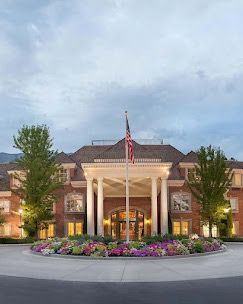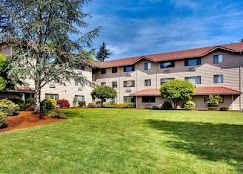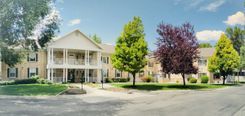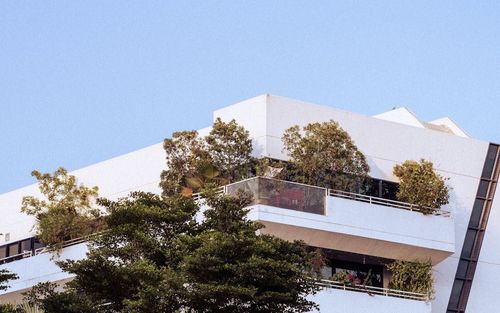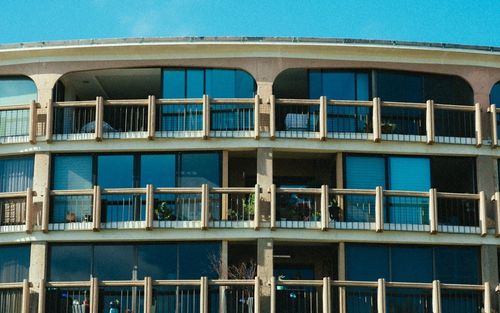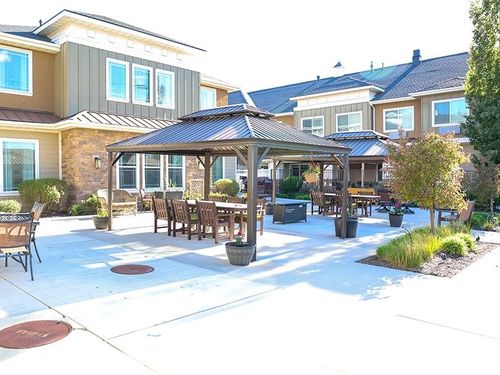

Active-retiree apartments in the Heber Valley point to a single address. Spring Gardens Heber, the 100-apartment Avista Senior Living community at 551 East 1200 South, runs apartment inventory alongside an assisted-living wing and a 17-apartment secured memory-care neighborhood. A Wasatch Back retiree choosing the apartment tier moves into a multi-purpose building rather than a stand-alone retirement campus, so the social texture spans the broader community and any later tier change would stay under the same roof.
Geography is the second piece: Wasatch State Park sits minutes east, the Provo River corridor and Jordanelle Reservoir frame the valley, and Park City sits fifteen minutes over the divide. Retirees built around four-season outdoor access, or who want adult children in Park City and Utah Valley both inside a twenty-minute drive, find the building lines up with the life they already live.
Daily Life and Building Services
Apartment-tier residents at Spring Gardens keep their own schedule. The main dining room serves flexible seatings, so an evening with grandchildren in from Park City does not require advance opt-out paperwork. Housekeeping runs weekly, the on-site fitness room and activity calendar fill the week without crowding it, and building transportation covers Main Street Heber, the Wasatch State Park approach, and the resort-side loop.
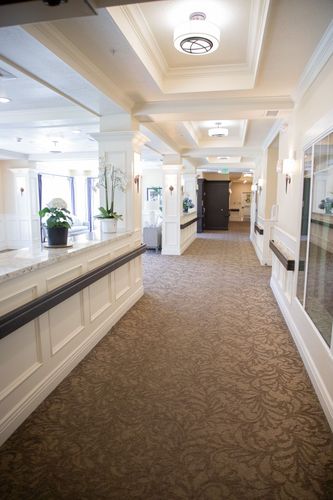
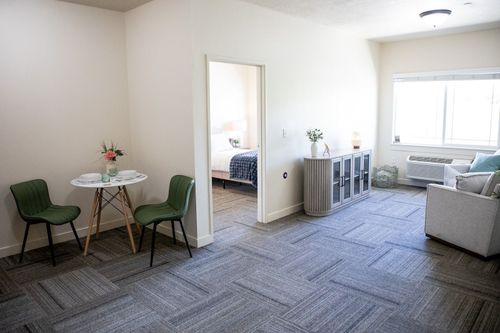
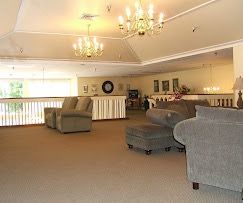
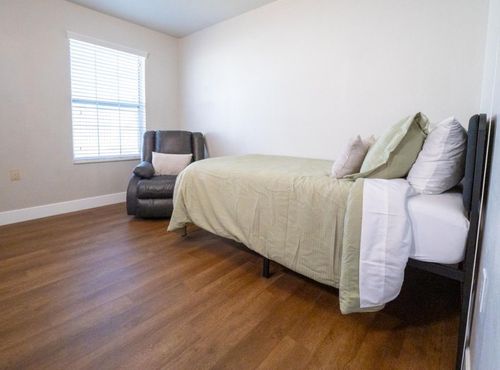
Floorplans run studios through two-bedrooms, with kitchens or kitchenettes and in-unit laundry across most configurations. Pets are welcome on the apartment tier. On-site amenities include a beauty salon, library, chapel, and interior courtyard. The trade-off against a dedicated retirement-only campus is the continuum structure under one roof, which reads as reassurance for households planning multi-decade or as a mixed-tier setting depending on preference.
Pricing and Affordability
Apartment-tier rent at Spring Gardens runs $2,800 to $4,200 a month in 2026, holding under the building's assisted-living tier because none of the daily caregiver labor is bundled in. Inside the band, the floorplan does the work: studios anchor the entry, one-bedrooms hold the middle, two-bedrooms reach the top.
Move-in fees fall between $1,200 and $4,500 by apartment. Utah's Aging Waiver does not enter the picture at this care level because the program activates only once needs reach the nursing-facility threshold the state sets for it; long-term-care insurance generally does not pay out at this stage either. Most Heber Valley apartment-tier households cover the move through retirement income, pension distributions, and assets built up during the working years, with veterans and surviving spouses sometimes looking at VA Aid and Attendance once a future care assessment qualifies.
A Resort-Corridor Retirement Mix
Heber's senior demographic does not follow a single archetype. Multi-generational ranching families whose roots run back to the 1859 settlement share the valley with Park City workforce households who bought Heber-side homes to dodge resort prices, and out-of-state recreation retirees who arrived for Deer Valley and Soldier Hollow keep adding to the mix.
Turnover on the apartment tier moves on household timing. Studios clear inside a four-to-eight-week window, one-bedrooms cycle less often because residents settle in for years, and two-bedrooms hold longest because the floorplan attracts couples and singles who want room for visiting grandchildren or a home-office setup.
Why Families Choose the Heber Valley for Retirement
The outdoor identity that brought many Heber Valley households here carries straight through retirement at Spring Gardens. Wasatch State Park trails, the Provo River corridor, the Jordanelle, and the Soldier Hollow Olympic venues shape the weekly rhythm beyond what the building schedules internally. Heber City itself, now past 20,800 residents and climbing, supports a Main Street restaurant set, a hospital five minutes north, the Wasatch County Senior Center on East 100 North, and a year-round community calendar.
Geography also keeps families close: adult children driving in from Park City, Midway, Charleston, or up Provo Canyon from Utah Valley reach the building inside fifteen to twenty minutes, which preserves the weekday drop-in pattern most Heber households built around shared meals and Sunday dinners. For long-tenured ranching families, longtime ward connections and in-valley primary-care relationships stay intact through the move.
What a Local Advisor Brings to Heber
Apartment-tier inquiries in the Heber Valley arrive on a household timeline rather than a clinical clock. Conversations usually start with proactive planning: a single-family property whose upkeep has shifted from satisfying to draining, a spouse passes and the long-held home becomes oversized, or a couple chooses an apartment-based setting before household management reshapes the decision for them. The advisor's first move is reading the longer-horizon plan and weighing Spring Gardens against dedicated retirement campuses out over Parley's Summit or down Provo Canyon, on cost, amenity depth, and family geography.
A short conversation several months ahead of the household's preferred move window opens more apartment configurations than waiting until the calendar tightens, since the most-requested layouts cycle slower than studios. Reaching out early keeps the choice on the household's terms.