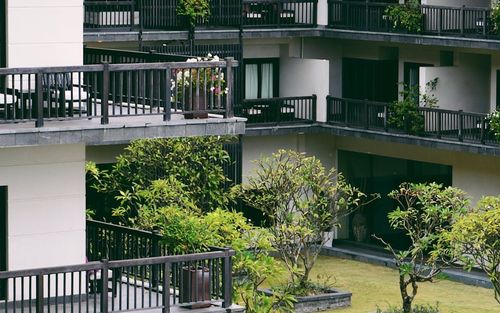

Skilled-nursing-level care in Salt Lake City runs through a small set of channels. Hospital-based long-term-care programs at LDS Hospital and the University of Utah Hospital handle most short-term post-surgical and rehabilitation stays, while Auberge at Aspen Park, the city's only matching community in the directory, provides skilled-nursing-level clinical support inside a 136-resident memory-care setting for advanced dementia residents whose clinical needs have grown past what a standard memory-care neighborhood covers.
Most families looking for skilled-nursing care in Salt Lake City are working a discharge timeline rather than a long planning window. Salt Lake City counts close to 26,000 residents past sixty-five in 2026, and demand for skilled-nursing capacity tends to spike around hospital releases, which is why the city's case managers and the family usually coordinate on the same email thread from day one.
Daily Care and Clinical Oversight
Auberge at Aspen Park staffs around the clock with licensed nurses on duty rather than on call, awake-overnight caregivers throughout the building, and clinical oversight calibrated to advanced dementia care needs. The day moves on a tighter clinical cadence than a standard memory-care community, with medication administered by nursing rather than caregivers, behavioral interventions handled by dementia-trained nurses, and pain or symptom management handled in-house rather than referred out.
Therapy access for residents who can still participate runs through partnerships with regional rehabilitation providers, and the building keeps a clinical team alongside the dementia-care team so medical needs and cognitive needs are managed together. Family visitation is open across the day, and the building maintains quieter sitting rooms for visits that come during difficult afternoons.
Most of Auberge's residents arrive after a stretch at LDS Hospital, University of Utah Hospital, or Intermountain Medical Center, and the building maintains case-manager relationships with each so the medical history transfers cleanly into the move-in week.
Costs and Medicaid
Skilled-nursing-level care in Salt Lake City prices as a daily private-pay rate rather than a monthly figure for most facility-based stays. Hospital-based long-term-care programs typically run $350 to $450 a day, which translates to roughly $10,500 to $13,500 a month, with the actual figure moving on three variables: how clinically intensive the resident's care needs are, whether the room is private or shared, and how heavily therapy hours weight the daily plan.
Medicaid coverage in Utah for skilled nursing runs through traditional state Medicaid rather than the Aging Waiver, with eligibility tied to a nursing-facility level of care assessment and household income and asset limits that fall below the Aging Waiver thresholds. Medicare covers the first hundred days of a qualifying post-acute stay, after which residents either pay privately, transition to Medicaid coverage, or move to a different setting depending on the family's planning. Auberge at Aspen Park, as the directory's lone matching skilled-care community, accepts private pay and selected long-term-care insurance plans; families typically work the Medicaid path through the hospital case manager and the state Medicaid eligibility office in parallel.
How Families Approach the Decision
Skilled-nursing decisions in Salt Lake City rarely start with a search; they usually start with a phone call from a hospital case manager during the discharge window after an unplanned event. Families pick local skilled-care options because keeping the resident inside the same medical network, often the same primary-care physicians and the same specialty consultants the resident has worked with for years, keeps the post-discharge plan coherent.
The proximity to University of Utah Health's geriatric clinic and the behavioral-health services that handle advanced dementia cases is a particular draw for families considering Auberge at Aspen Park, where coordinated care across a single building is the difference between a stable recovery and a string of re-admissions.
What a Local Advisor Brings
The advisor's role in a Salt Lake City skilled-care decision is usually compressed into a few hours rather than a planning conversation, because the discharge window is short and the clinical complexity is high. The advisor confirms availability at Auberge at Aspen Park, lays out the hospital-based long-term-care options as alternatives when the matching community is full or the clinical fit is closer to a rehabilitation profile, and walks the family through the Medicaid-versus-Medicare paperwork tied to the next thirty days.
The advisor stays on the discharge thread until the resident has settled into the new address. Reaching out to the advisor inside the discharge window often surfaces an opening at Auberge at Aspen Park or a hospital-based program that would not otherwise show up through case-management channels alone.
Skilled-nursing capacity in the Salt Lake area shifts on a weekly cadence as discharge cycles turn through the hospital long-term-care wings. Start the conversation inside the discharge window, or see the matching skilled-care community on your own time.

