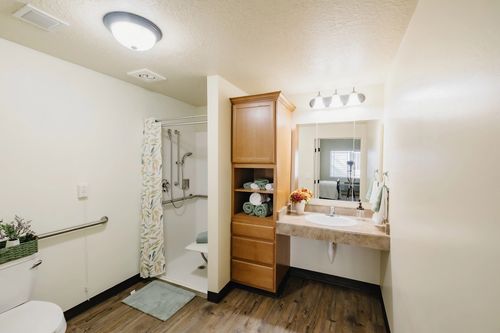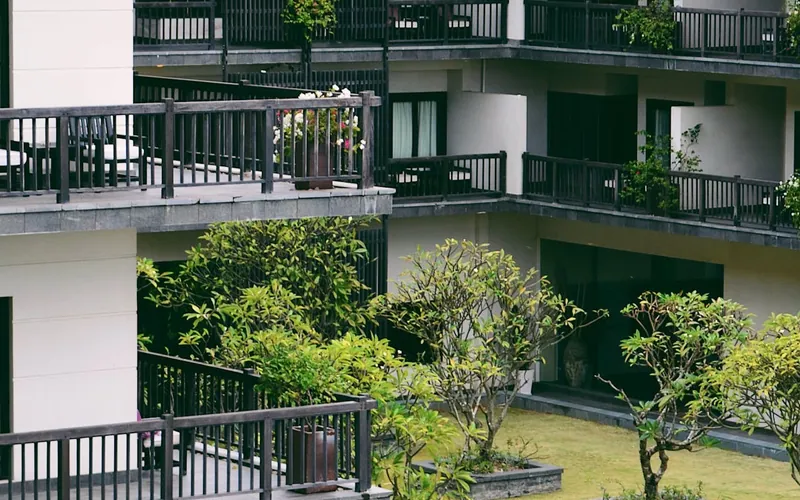

Snow Canyon Retirement Community's memory-care capacity sits inside the same 69-apartment building on Lava Hills Road that runs Santa Clara's assisted-living wing. What is genuinely distinctive about a Santa Clara dementia-care decision is the geography of the alternatives: St. George's twelve secured memory-care neighborhoods sit inside a ten-to-fifteen-minute drive east, which gives Santa Clara families one of the deepest dementia-care corridors in Utah within a short reach of the home address. The local-versus-corridor calculation that anchors most rural Utah dementia-care decisions runs differently here because the alternatives are abundant and genuinely close.
For a Santa Clara family weighing memory care, the practical question is rarely a stark choice between staying local and accepting a distant relocation, the way it would be in a more isolated southern Utah town. It is more often "which of the thirteen southern Utah secured neighborhoods (Snow Canyon plus the twelve St. George options) actually fits the resident's specific dementia stage, behavioral profile, and the family's financial and policy constraints." That kind of close-corridor comparison is part of the planning work, and it tends to produce a different placement outcome than a single-building default would.
Snow Canyon's Memory-Care Setup
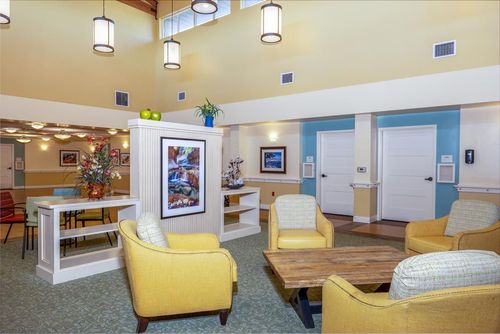
The memory-care capacity at Snow Canyon Retirement Community operates as a structurally distinct secured space within the larger 69-apartment building, separate from the assisted-living wing. Awake licensed clinical presence holds through the overnight hours. Dementia-trained caregivers rotate through the shifts. The secured perimeter, the monitored outdoor courtyard reaching out toward the Snow Canyon State Park backdrop, and the layout cues designed to reduce dementia-related disorientation match what state licensing requires for dedicated memory-care neighborhoods.
What differs from most Utah secured-side settings is the operating context. Snow Canyon is independently managed, not part of a multi-state senior-living chain, which gives the building's leadership unusual room to shape activities, staffing rhythms, and care policies to its own standards. The offsetting cost is that the cross-location quality controls and clinical-leadership resources a brand network typically supplies are absent; what the building delivers comes from what its own management and care team build directly.
Cost and Coverage
Secured-side rates at Snow Canyon in 2026 run roughly $5,500 to $7,200 a month. The number sits roughly $1,000 above the building's assisted-living rate, with the lift funding the staffing pattern required for dedicated dementia neighborhoods (overnight awake clinical staff, dementia-trained caregivers covering each shift) plus the physical-plant features state licensing mandates. Apartment size and the resident's care-tier rating account for most variance inside the band.
Snow Canyon does not currently accept Aging Waiver residents on the secured side or the assisted-living wing, which is a real constraint for Santa Clara families whose memory-care budget depends on Medicaid support. The St. George corridor's depth includes several Waiver-participating secured neighborhoods inside a ten-to-fifteen-minute drive east, which makes the Waiver question less of a placement barrier than it would be in a more isolated Utah location. Move-in fees on the secured side run $1,500 to $4,500. Respite stays cost $200 to $275 daily.
A Retirement-Migrant Dementia Caseload
Santa Clara's twenty-two to twenty-four percent over-sixty-five demographic produces a meaningful dementia caseload, but the population mix differs from the Wasatch Front senior cities. A large share of Santa Clara seniors arrived from out of state in their fifties or sixties for the warm-weather climate, which means many of the dementia residents at Snow Canyon do not have multi-generational family networks anchored in southern Utah. Their adult children often live in California, the Pacific Northwest, or the Midwest, and the visiting patterns work differently than they would for a longtime local family.
Snow Canyon's secured-side turnover follows a roughly four-to-six-week cadence for standard configurations under normal conditions, with stretches in the timeline when St. George Regional Hospital discharge events push multiple memory-care placements through the corridor at once.
Why Families Choose Memory Care in Santa Clara
Familiar visual anchors matter more in dementia care than in any other care type because cognitive disorientation in a new environment compounds the disease itself. For a Santa Clara dementia resident, the Snow Canyon State Park red-rock landscape visible from the building, the warm-weather climate that has shaped their daily life for years, and the gentle Lava Hills setting all stay accessible from the secured neighborhood. A resident who relocated to Santa Clara from out of state for those specific features keeps that environmental connection through the dementia trajectory rather than losing it in a move to a more institutional setting elsewhere.
St. George Regional Hospital's regional referral catchment also matters specifically for dementia care because the hospital's neurosciences program and geriatric services run at a depth most Utah small-town hospitals cannot match. Behavioral events, urinary infections presenting as confusion, medication-interaction issues, and post-fall workups all get clinical evaluation at a specialist level inside a fifteen-minute drive.
What a Local Advisor Brings to Santa Clara
Santa Clara memory-care conversations typically open once dementia has crossed the threshold where nighttime home supervision stops being safe, where wandering has shifted from theoretical worry to a thing that has actually happened, or where the lead caregiver (often a spouse or a long-distance-coordinating adult child) has run past sustainable bandwidth. The advisor's opening move is reading Snow Canyon's secured-side availability against the family's timing and clarifying whether the no-Waiver constraint rules out the building for Medicaid-track households.
What the corridor depth lets the advisor do here is genuinely valuable: rather than presenting Snow Canyon as the only local option and a long-distance move as the alternative, the advisor lays out four-to-six close-by St. George secured neighborhoods alongside Snow Canyon in the same conversation. That gives the family room to weigh dementia-care quality, Waiver participation, pet policies (Snow Canyon does not accept pets; several St. George buildings do), and resident-community fit against each other rather than choosing among one local and a generic "corridor" set.
Reaching out before the dementia trajectory has pushed the household into a same-week placement gives the family the room to compare those options properly. Start a memory-care conversation with the advisor when the diagnosis is taking up more of the household's daily attention, or browse our directory for context on the southern Utah dementia-care set.