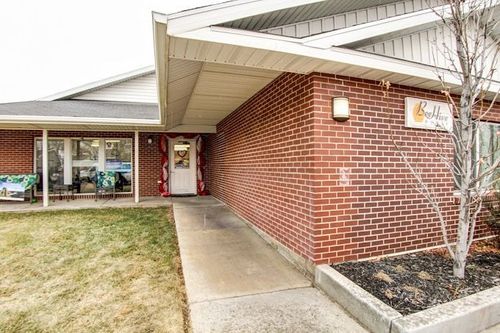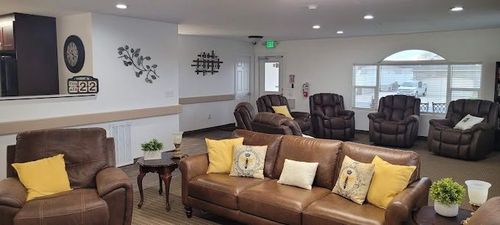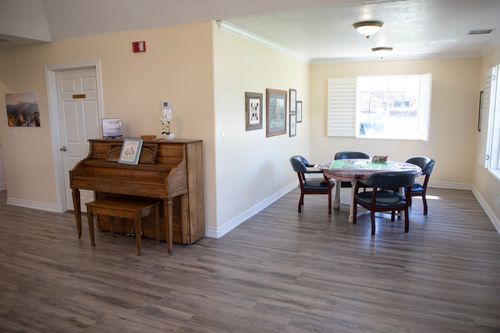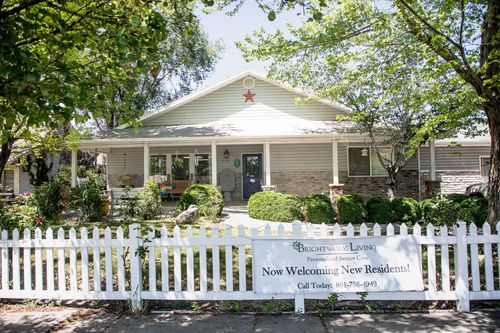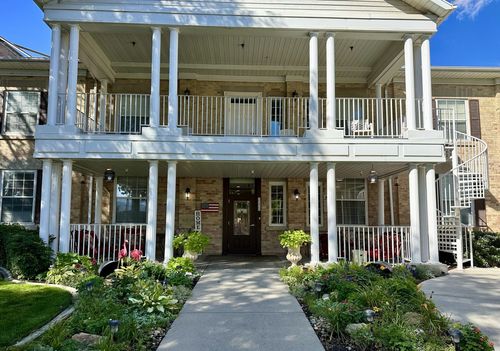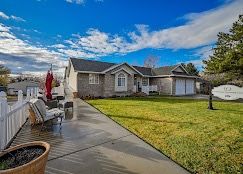
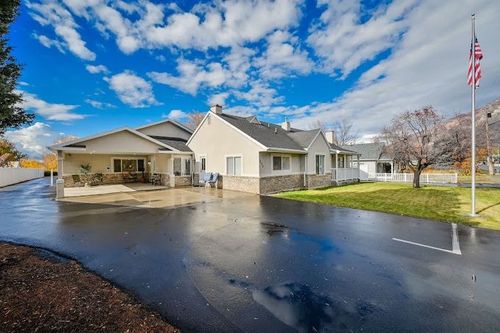

Both of Springville's home-style care homes share a single name, Canterbury Assisted Living, yet they sit at opposite ends of town and answer different needs. One is an eight-resident house on 1300 East, up on the bench near Hobble Creek; the other holds up to sixteen residents in the older grid on 400 East, a few blocks south of the Art City downtown. Together they give Springville 2 home-style residential care homes, the small, house-based settings that also go by board-and-care or care home. Each is an ordinary house holding a few residents with a caregiver always nearby, with a kitchen, a common room, and the same staff each day.
Families in Springville turn to a house like this when a resident wants a small group and a shared table more than the larger activity rooms and long corridors of an apartment-style community. A resident who is calmer in a small group, who prefers short halls, or who is moving further into dementia often settles well with a few housemates than on a campus of a hundred units. The Canterbury homes are built around exactly that smaller scale, which is what a search like this one is usually after.
Eight Residents on the Bench, Sixteen Near Downtown
The two Canterbury homes take the same approach at two different scales. The east house on 1300 East keeps about eight residents, small enough that a caregiver knows every routine in the building; the larger home on 400 East holds up to sixteen and adds a secured setting for residents living with dementia, where doors are managed so someone prone to wandering stays safe. Both deliver assisted-living-level help rather than clinical care: bathing, dressing, grooming, medication reminders, help moving around the house, three home-cooked meals around one table, light housekeeping, and someone awake all night.
Because the home on 400 East carries that secured memory-care setting and the 1300 East house runs as a smaller assisted-living home, which one fits depends on the resident, and that is worth settling before a visit. The trade-offs of any small home apply here too: no full activity calendar, no nurse on site, and a smaller social circle than a sixty-apartment Springville community offers. In return a resident gets quiet, continuity, and staff who catch a change in one of eight or sixteen people quickly, which for the right person matters more than a longer amenity list.
The Money, From a $4,000 Start
Both Canterbury homes run around $4,000 a month, a figure that sits under what the latest 2026 cost-of-care surveys put on assisted living across Utah. That starting rate usually reflects a shared room and a lighter level of help; a private room, or heavier daily care, raises it, and the secured memory-care setting on 400 East prices differently again. A large Springville assisted-living community bundles a fuller activity program, more shared features, and on-site clinical staff into its rate, while a small home charges for a room, meals, and hands-on care, with the low caregiver ratio built into the price. The honest comparison runs both ways: a shared room in one of these houses can land below a large community's starting rate, while a private memory-care room can match or pass it. Because the published start is only the floor, a family paying privately should ask what the rate becomes at the level of care a resident actually needs, and what moves it later.
A Town of 35,000 With Two Houses
Springville is a town of about 35,000, and roughly one in ten residents is 65 or older, which works out to a few thousand seniors and only two house-based care homes among them. Most of the local senior market is larger assisted-living and memory-care communities; the small-home format is a narrow slice, and with eight and sixteen beds, the two Canterbury homes do not hold many rooms between them. The practical result is that openings are limited and can carry a wait, especially in the secured memory-care setting. A family that starts looking a few weeks ahead, rather than the day a hospital is ready to discharge, has a real shot at the right room instead of the only one available.
The Pull of a Smaller Place in Springville
What draws a Springville family to one of these houses is usually the feel of the place. A resident who wants a familiar daily rhythm tends to settle into a home where the same caregiver greets them each morning, the kitchen actually smells like cooking, and the living room holds a handful of people rather than a crowd. Springville's own pace helps: this is the Art City, with the Springville Museum of Art downtown and Hobble Creek Canyon a short drive east, an unhurried town where a small home blends into the block. Keeping a move local also keeps adult children and grandchildren in easy reach for an ordinary weekday visit. None of that makes a large community a worse choice; the smaller place is simply the better fit for a certain kind of resident, and naming who that is before touring is the step worth slowing down for.
Telling the Two Houses Apart, With Help
Two homes under one name complicate an otherwise simple choice, and that is where a local advisor earns the introduction. The advisor who works Springville placements knows which Canterbury home has a genuine opening, that the 400 East home carries the secured memory-care setting while the 1300 East home runs smaller and lighter, and which of the two suits a resident who wanders, who needs only a little daily help, or who may need more over time. Walking that difference before a tour is what keeps a family from settling someone into the wrong one of two otherwise similar houses.
Our directory for Springville keeps growing as we review the homes and communities worth a family's time in 2026. Get in touch about residential care homes in Springville, or see the communities we've already reviewed at your own pace.